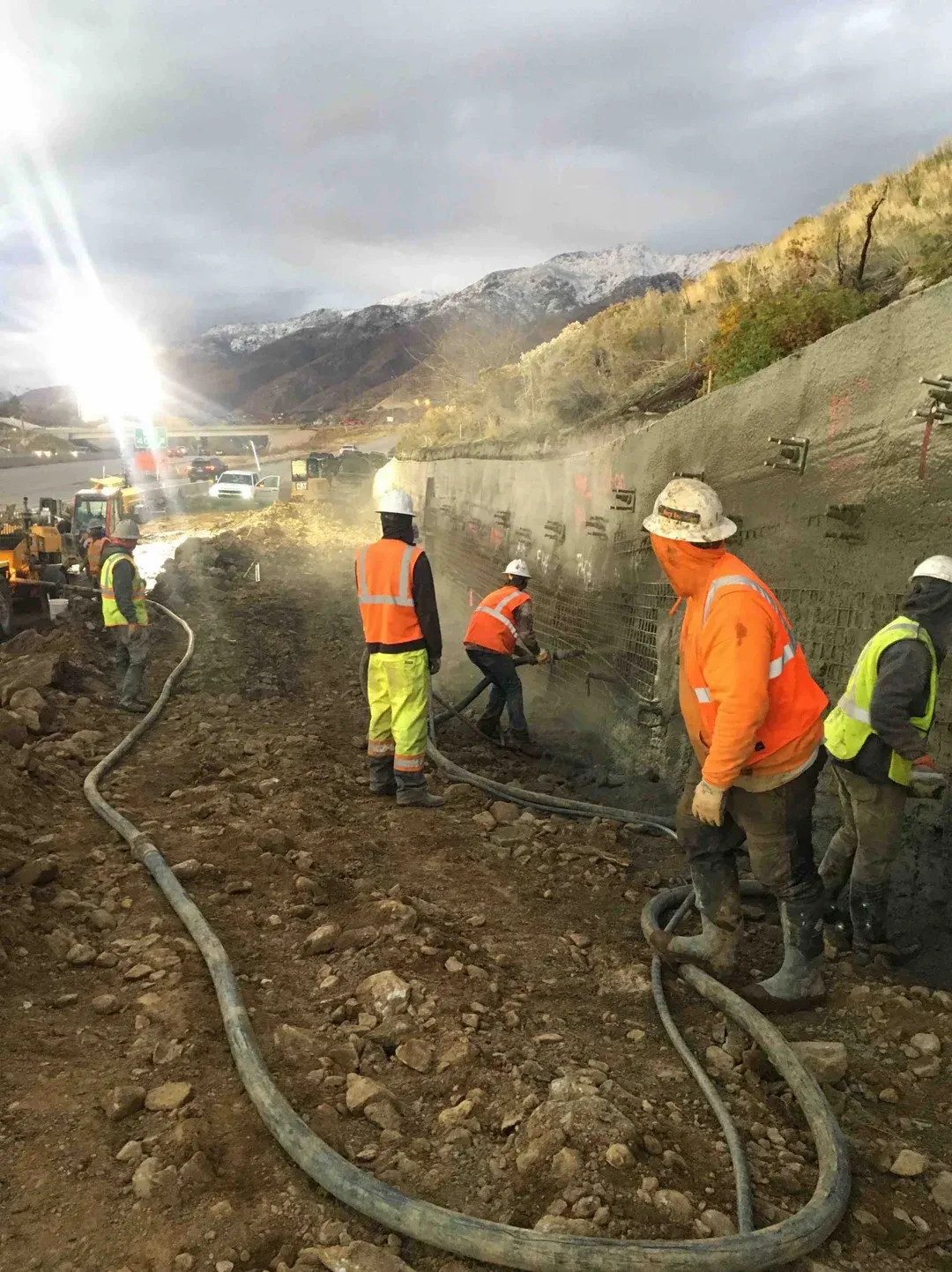
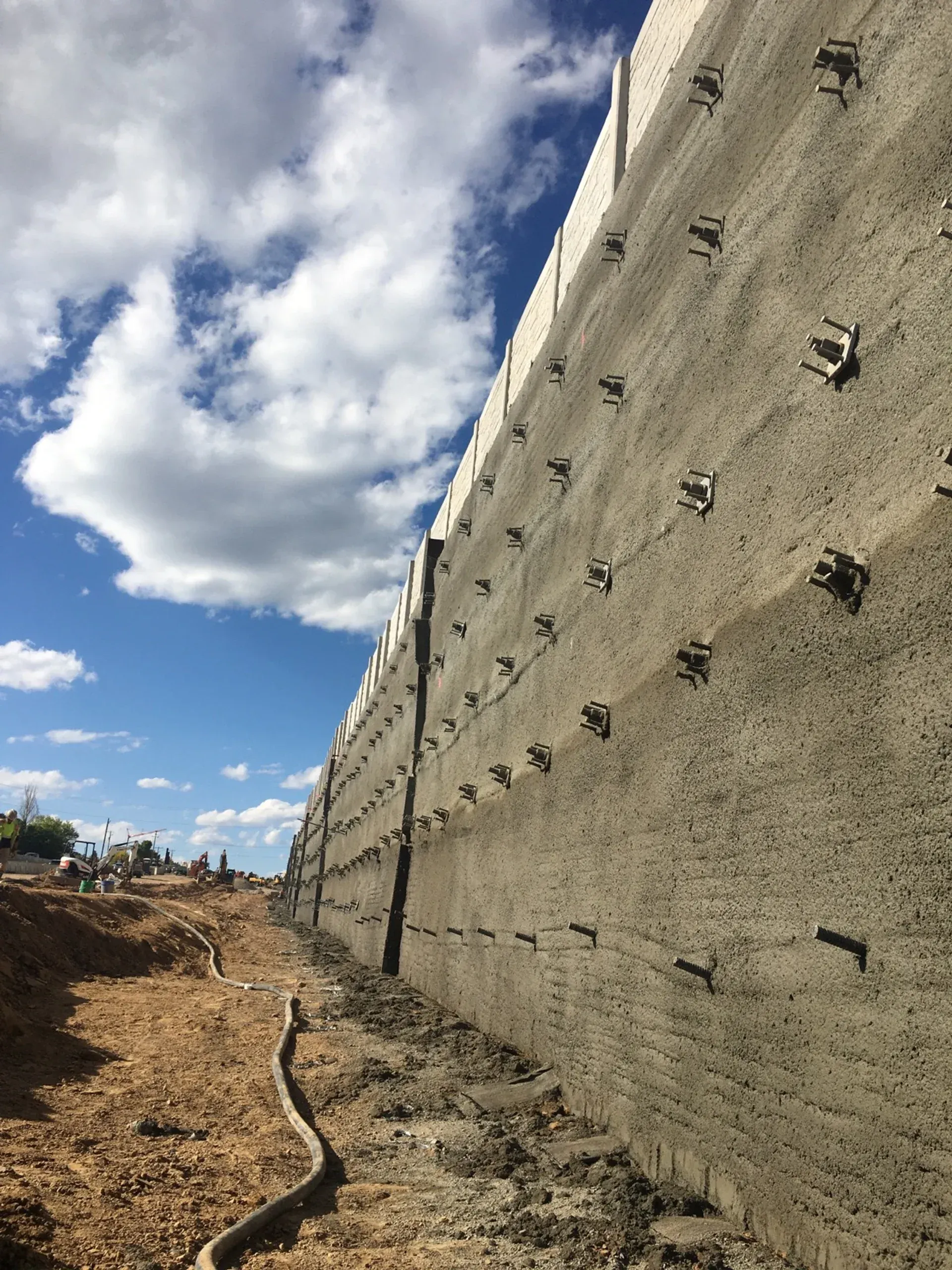
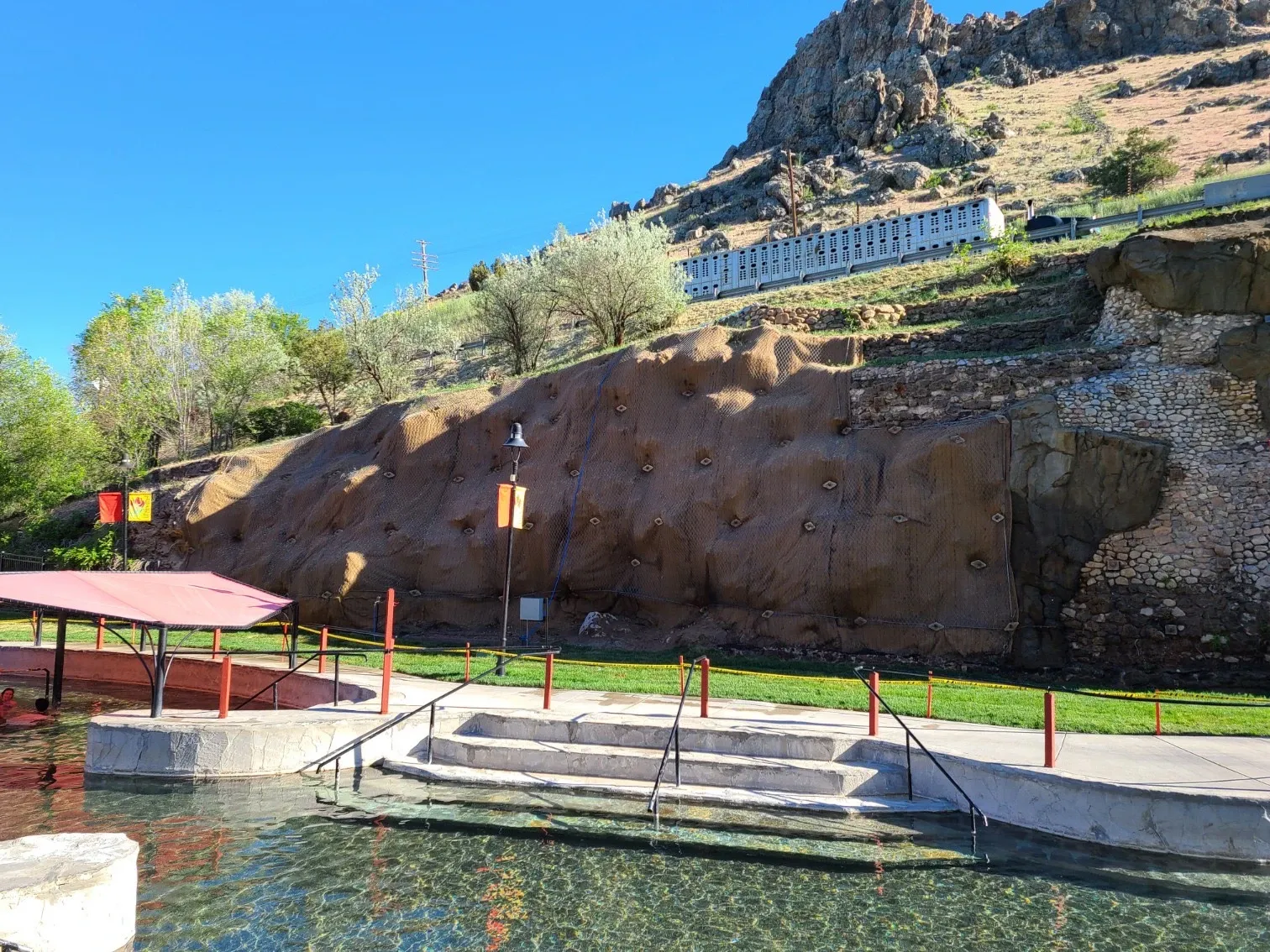
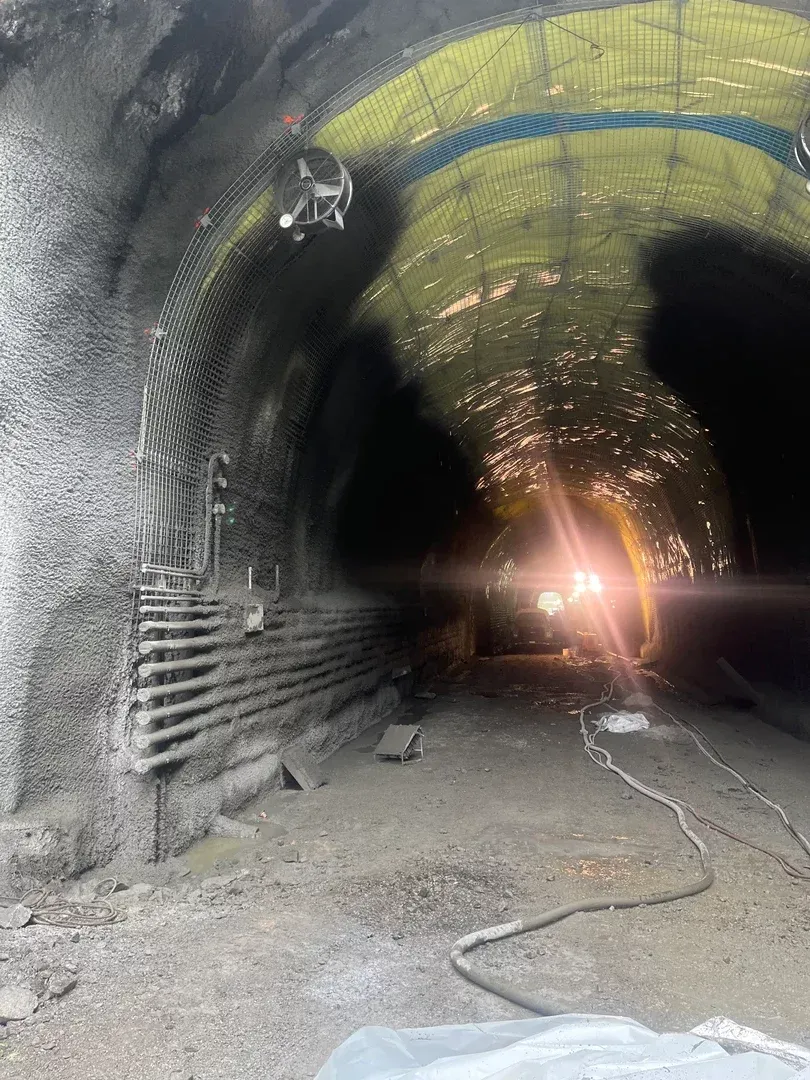
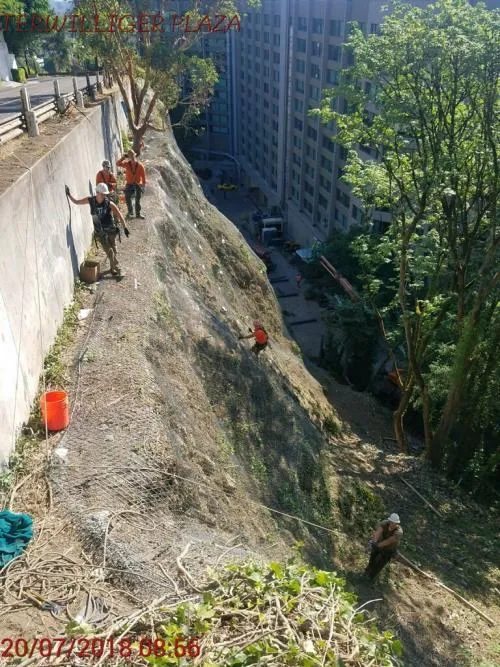
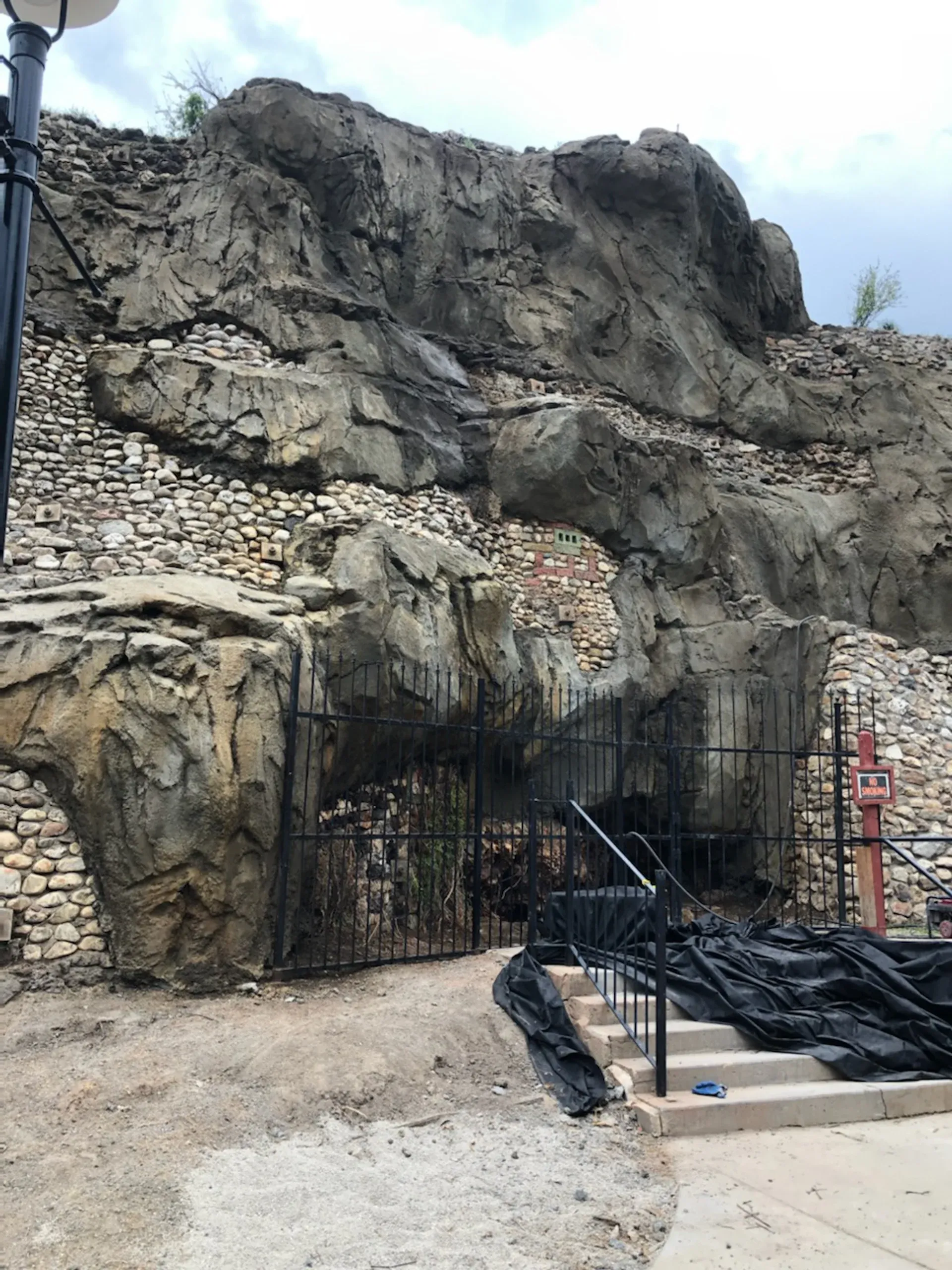
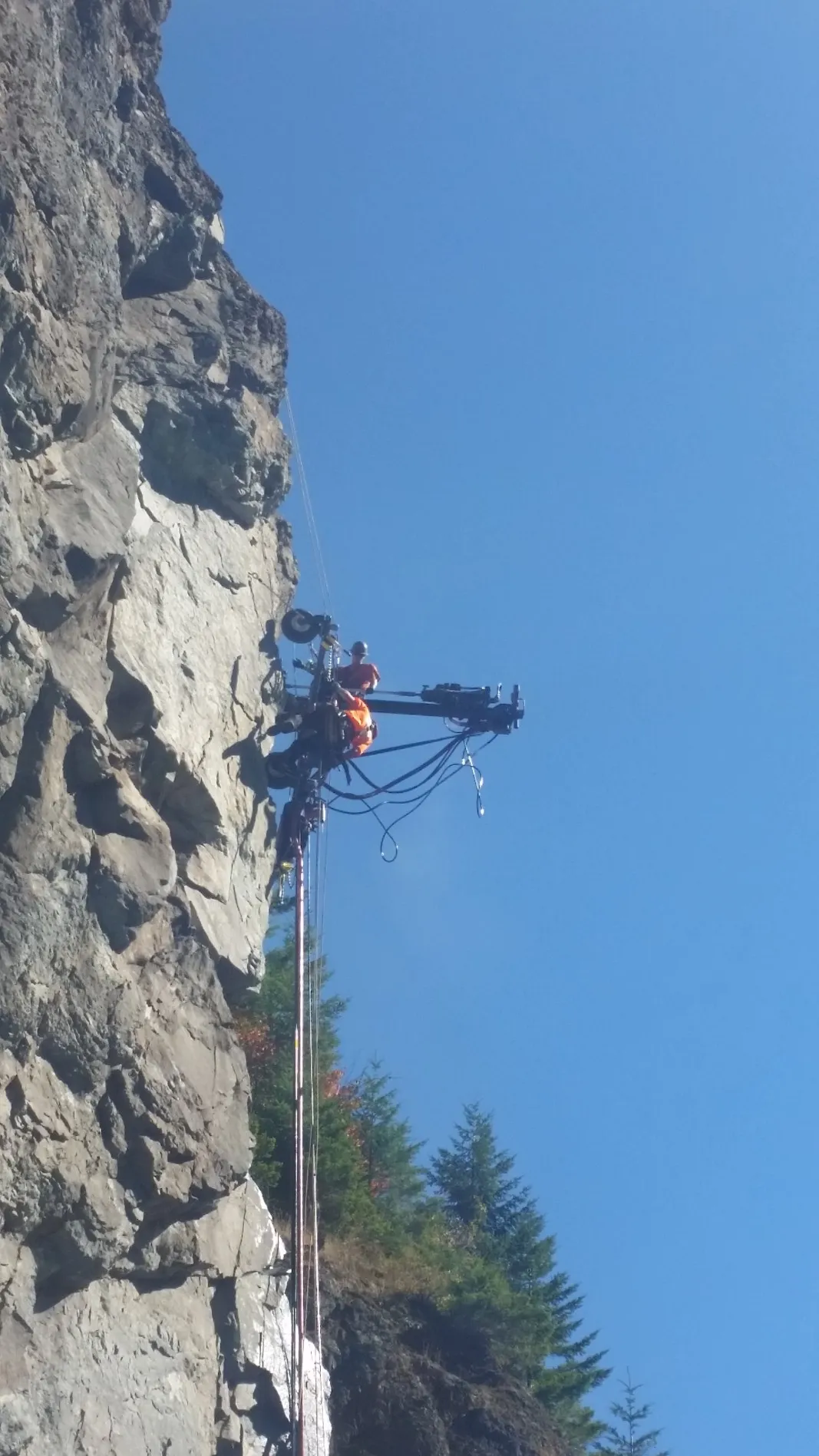
Construction begins with substrate preparation. Loose material is scaled and removed, the surface is dampened to control absorption, and edge forms or ground wires are set to define the finished face line and total thickness. Reinforcement is installed next: rebar grids are tied to chairs and spacers to maintain the specified cover (typically 1 to 2 inches behind the finished face), or welded wire mesh is fastened to soil nail or rock bolt bearing plates. For fiber-only sections, fibers are batched into the mix at the plant or hopper, eliminating the bar-placement step.
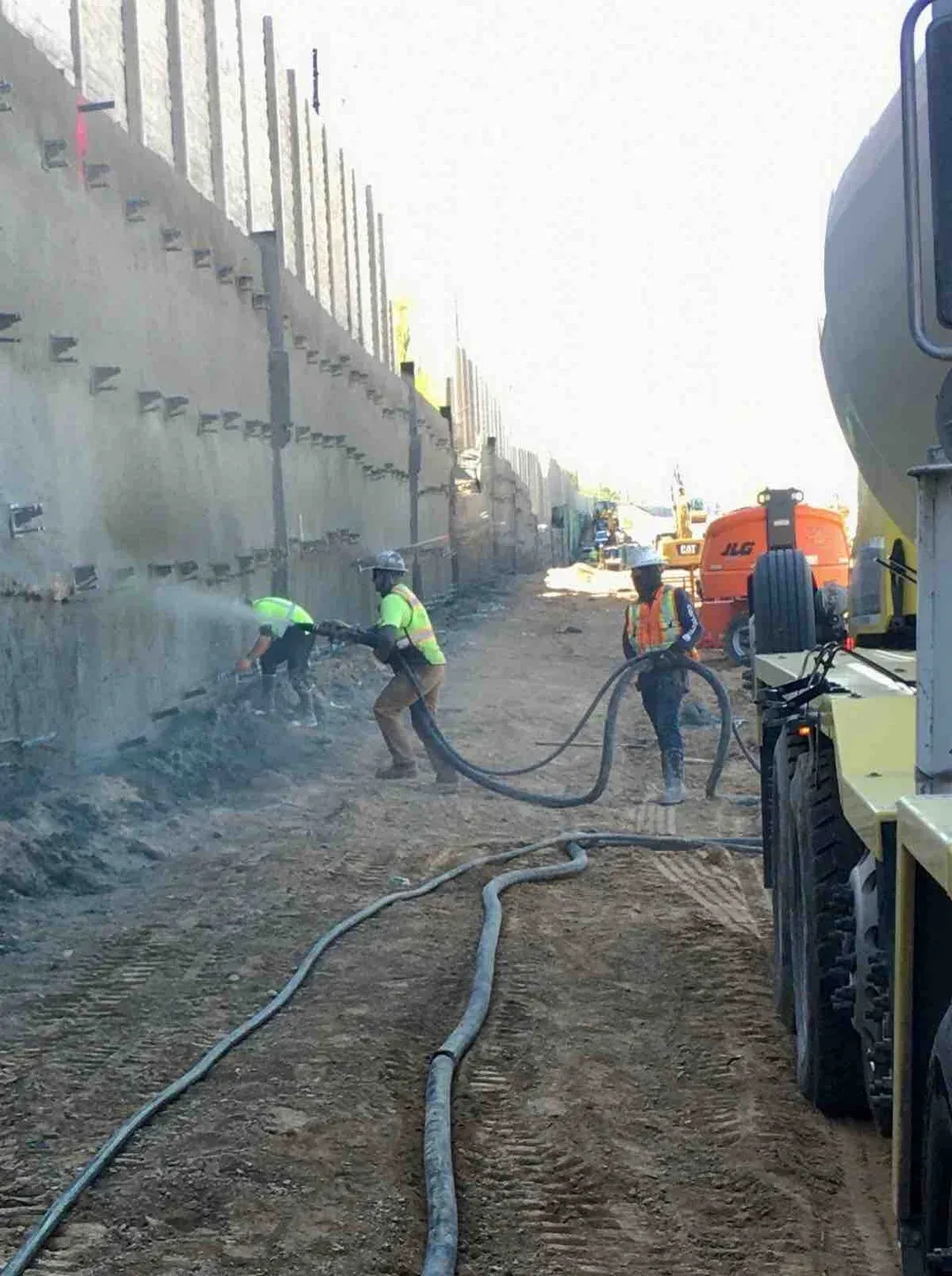
Placement proceeds in lifts of 2 to 4 inches per pass. The nozzleman holds the nozzle approximately perpendicular to the face at a distance of 3 to 6 feet, applying material in a continuous overlapping pattern that fills behind every reinforcing bar before building up cover. Encapsulation discipline is the key skill. Shadows and voids behind rebar are the dominant mode of structural shotcrete failure, so the nozzleman cuts the spray angle to gun behind each bar from both sides before closing the face. Successive lifts are placed after the prior lift has stiffened enough to support new material without sloughing, typically 30 to 60 minutes for wet-mix in moderate temperatures.
Quality control follows ACI 506.2 protocols. Test panels, typically 18 by 18 by 4 inches, are shot alongside production at specified frequencies, cured under matched site conditions, and cored at 7 and 28 days for compressive strength testing per ASTM C1604. In-place cores from the production work verify thickness, reinforcement cover, and consolidation. ACI CP-60 certified nozzlemen perform the placement, with hands-on certification differentiated by orientation (vertical, overhead, horizontal) because each orientation demands different gun angle, distance, and pacing.
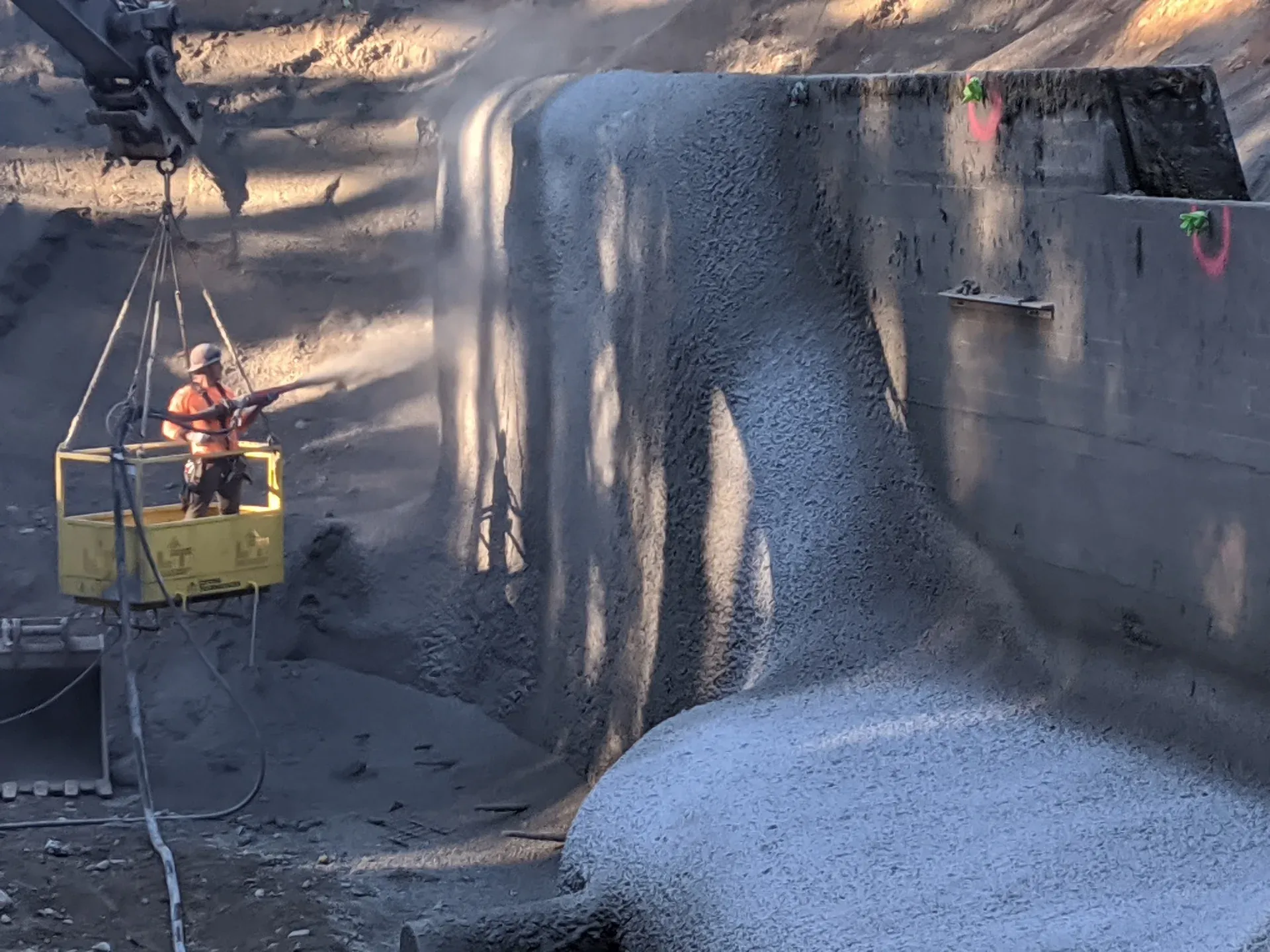
 Shotcrete
  Soil Nailing