Debris Flow Barriers

Debris Flow Barriers

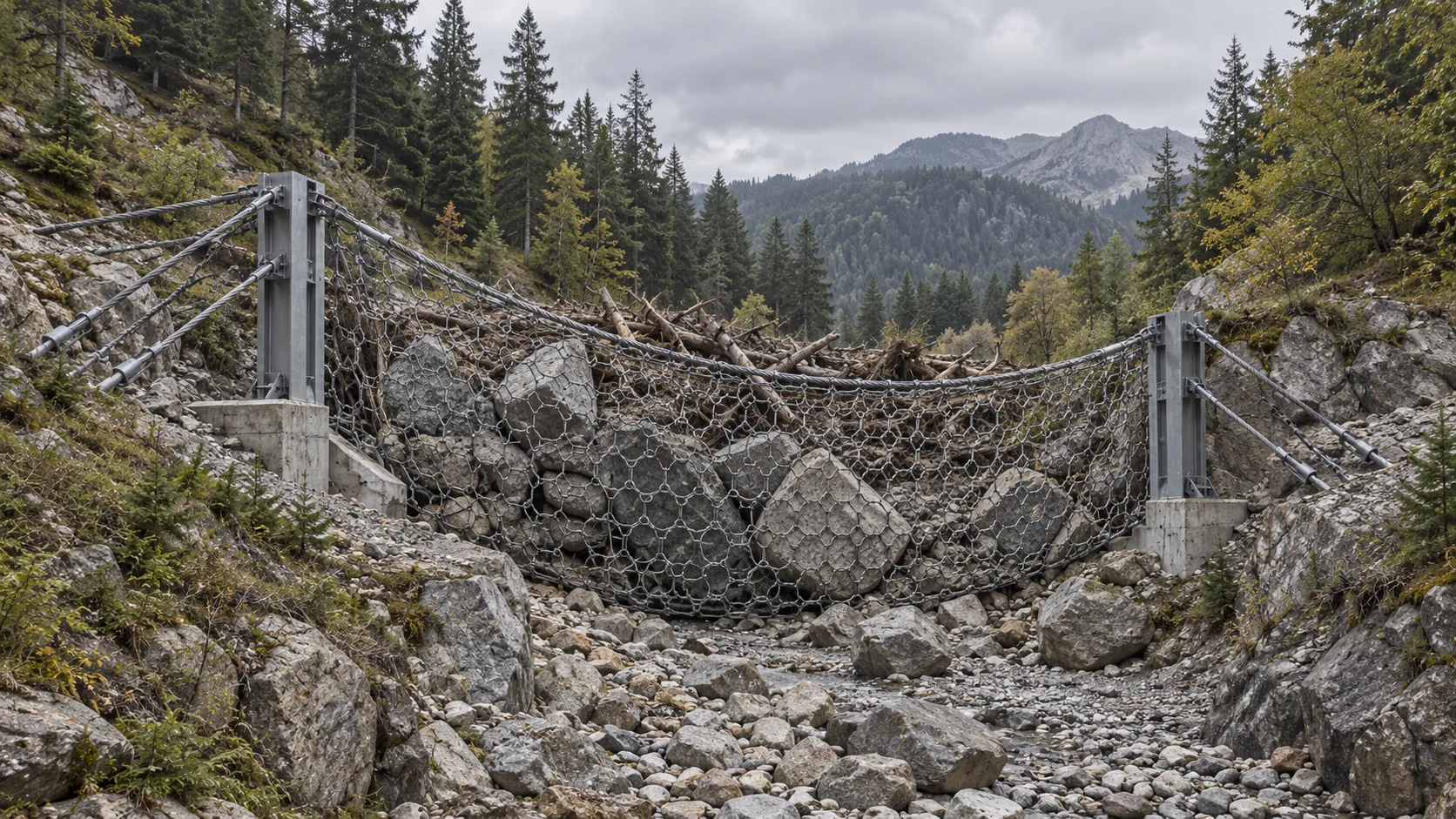
Debris flow barriers are high-capacity interception systems designed to capture fast-moving flows of soil, rock, logs, and water during heavy storms or post-fire conditions. Unlike rockfall barriers, these systems are engineered to withstand dynamic, fluidized debris forces.

20,000+
Cubic Meter Capacity
10,000
kJ Impact Energy
25 ft
Barrier Height
Reusable
After Cleanout
Overview

Understanding Debris Flow Barriers

Debris flow barriers are high-capacity interception systems designed to capture fast-moving flows of soil, rock, logs, and water during heavy storms or post-fire conditions. Unlike rockfall barriers, these systems are engineered to withstand dynamic, fluidized debris forces.

These barriers protect infrastructure in vulnerable drainages, capturing thousands of cubic meters of material while allowing normal water and sediment transport between events.

Protects infrastructure from catastrophic flows
Retains large volumes of debris material
Allows normal water and sediment transport
Reusable after material cleanout
Fast deployment in steep channels

This technique is used in our services for:

Debris Flow Barriers
Use Cases

Typical Applications

Post-wildfire drainage channels
Steep gullies prone to debris flows
Mountain roadways and communities
Mining and quarry drainage zones
Infrastructure below unstable watersheds
Residential canyon development
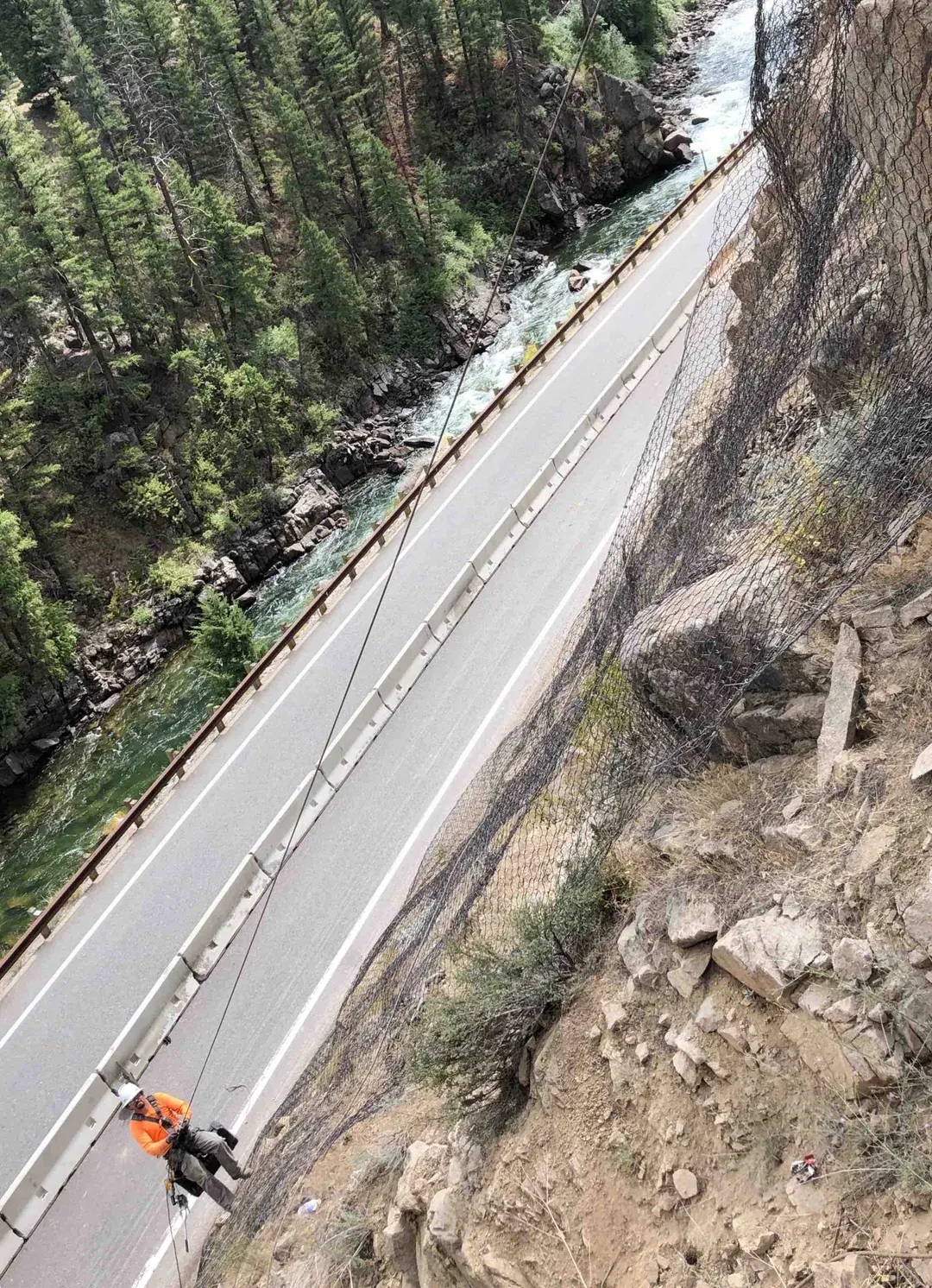
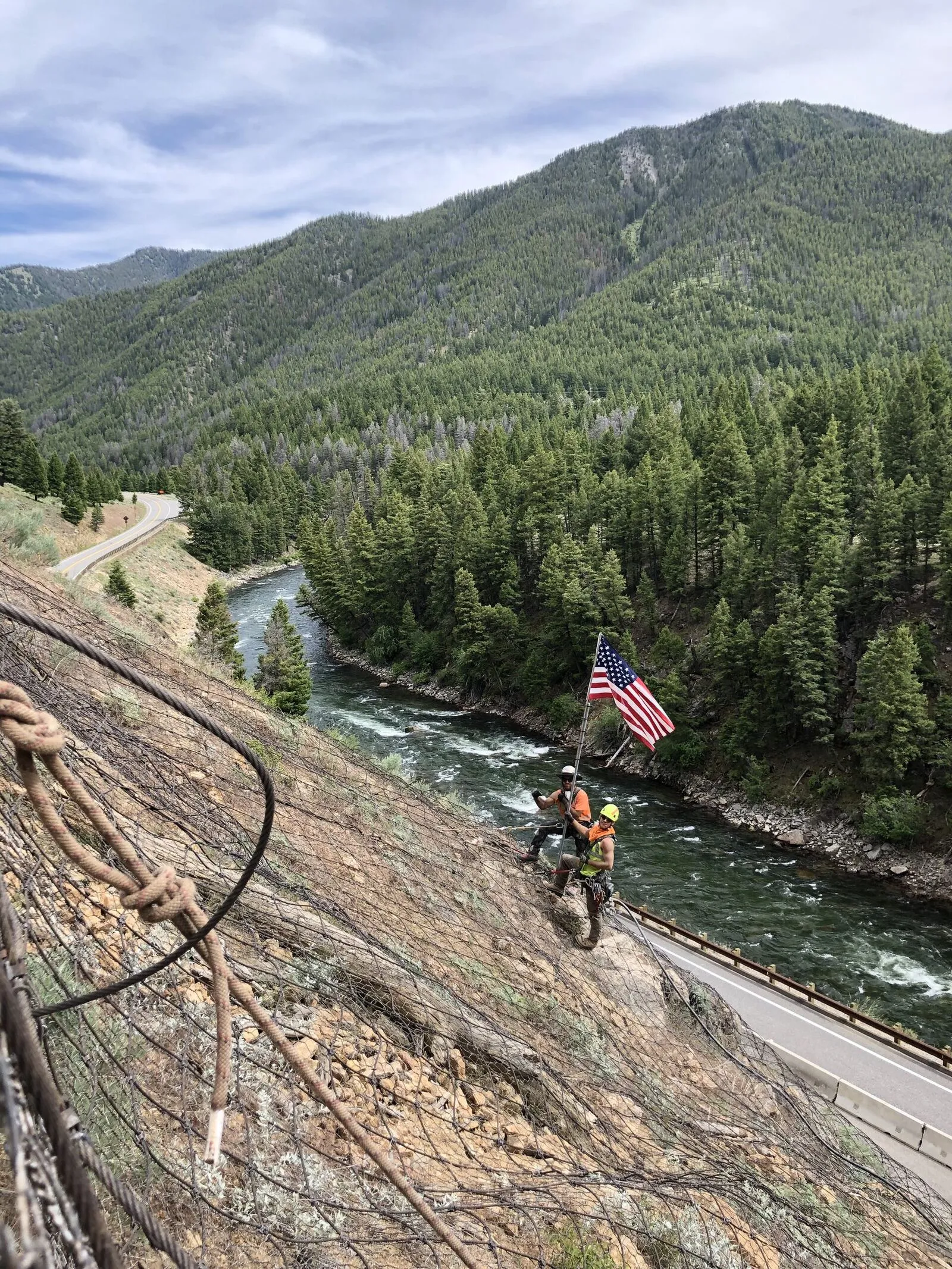
Debris Flow Barriers - Image 1
Process

How It Works

Our proven methodology ensures consistent, high-quality results for every installation.

1

Site Analysis

Model debris flow paths, volumes, velocities, and impact forces for barrier design.

2

Foundation Installation

Install concrete foundations and anchor systems sized for design loads.

3

Structure Erection

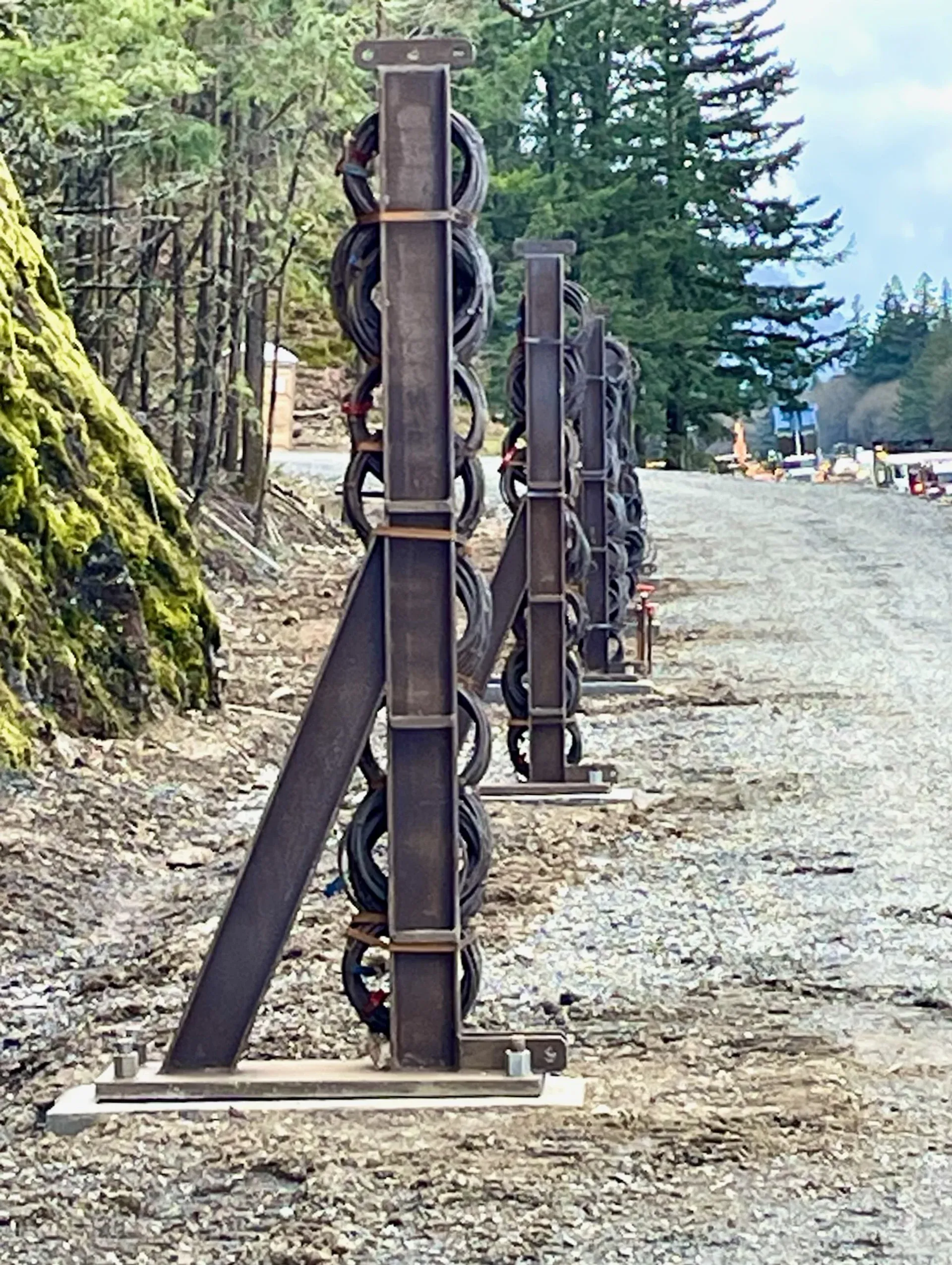
Erect steel posts with energy-absorbing connections and brake elements.

4

Net Installation

Mount ring net or cable net with bottom gap for normal sediment transport.

Benefits

Key Advantages

High-Volume Retention

Single barriers can retain thousands of cubic meters of debris, protecting downstream infrastructure from catastrophic events.

Dynamic Load Design

Engineered specifically for fluidized debris impact forces that differ fundamentally from static rockfall loads.

Sediment Pass-Through

Bottom gap design allows normal sediment transport, maintaining channel function between debris events.

Reusable System

After debris events, barriers are cleaned out and remain functional for future flows without reconstruction.

Rapid Installation

Barriers can be installed quickly in steep channels where concrete structures would be impractical.

Engineering

Technical Considerations

Soil/Rock Conditions

Foundations must resist dynamic debris impact and anchor loads. Rock anchors or concrete foundations depending on channel geology.

Groundwater

Barriers are permeable—water flows through during normal conditions. Channel hydraulics analyzed for proper sizing.

Load Capacity

Capacity determined by debris flow modeling including volume, velocity, density, and impact duration.

Spacing

Multi-barrier arrays used for long channels or very high volumes. Spacing based on retention capacity and channel gradient.

Installation Method

Foundations installed first, posts erected with energy-absorbing connections, nets mounted with proper tensioning.

Equipment Used

  • Drill rigs for anchor installation
  • Concrete delivery and placement
  • Crane for post and net erection
  • Helicopter for remote site access
  • Channel access equipment

Limitations

  • Requires periodic cleanout after events
  • Access needed for maintenance
  • Foundation requirements in steep channels
  • Design requires debris flow modeling

Technical Specifications

Capacity
500-20,000+ cubic meters
Impact Energy
Up to 10,000 kJ
Barrier Height
10-25 ft
Net Type
Ring net / Cable net
Options

System Variations

Ring-Net Barriers

Flexible ring-net systems that deform under impact, absorbing energy through brake elements.

Best For:

  • High-energy flows
  • Large debris loads
  • Standard installations

Cable-Net Barriers

Cable mesh barriers for moderate debris flows with lower impact energies.

Best For:

  • Moderate flows
  • Smaller channels
  • Cost-sensitive projects

Multi-Barrier Arrays

Series of barriers providing staged retention for long channels or extreme volumes.

Best For:

  • Long channels
  • Very high volumes
  • Critical infrastructure protection

Hybrid Systems

Debris barriers combined with check dams or sediment basins for comprehensive drainage management.

Best For:

  • Complex watersheds
  • Post-fire restoration
  • Mining applications
Combinations

Integration With Other Systems

Rockfall Barriers icon

Rockfall Barriers

Rockfall barriers on adjacent slopes complement debris barriers in the channel.

Learn More

Channel Armoring

Gabions or riprap armor channels upstream and downstream of debris barriers.

Erosion Control

Slope treatments reduce sediment input to channels, extending barrier capacity.

Horizontal Drains icon

Horizontal Drains

Drainage reduces groundwater contribution to debris flow initiation zones.

Learn More
Experience

Example Project Types

  • Post-wildfire protection
  • Mountain highway protection
  • Residential community defense
  • Mining drainage management
  • Railroad corridor protection
  • Critical infrastructure defense
  • Watershed restoration
Gallery

Our Work in Action

Expertise

Why Choose Rock Supremacy for Debris Flow Barriers

Debris Flow Expertise

Experience with dynamic debris flow systems, not just static rockfall barriers.

Remote Installation Capability

Helicopter and steep-terrain access for barrier installation in challenging channels.

Custom Foundation Design

Engineered foundations for site-specific geology and impact loading.

Rapid Response

Fast mobilization for post-fire protection before the first storms arrive.

Integrated Watershed Solutions

Debris barriers combined with slope stabilization for comprehensive hazard mitigation.

Questions

Debris Flow Barriers FAQ

Debris flows are fluid mixtures of soil, rock, water, and organic material that travel as a mass down channels. Rockfall involves individual blocks traveling through the air. The dynamic forces are fundamentally different.
Capacity ranges from hundreds to over 20,000 cubic meters depending on barrier size and channel geometry. Multiple barriers can be used in series for very high volumes.
Retained material is excavated from behind the barrier. The net and posts remain in place for future events. Damaged components are replaced as needed.
Yes, we can rapidly deploy debris barriers before the first post-fire storms. Early installation is critical as the highest debris flow risk occurs in the first few years after a fire.
The bottom gap design allows normal water and sediment transport, maintaining aquatic connectivity. Barrier design can be modified for specific fish passage requirements.
Testimonials

Client Testimonials

Trusted by DOTs, engineering firms, and property owners nationwide.

Contact

Deploy Us

Ready to discuss your project? Our team is standing by to assess your site conditions and develop a custom solution using Debris Flow Barriers and other proven techniques.

Emergency (24/7)

(541) 383-7625

Bidding & Estimates

Info@RockSupremacy.com

Headquarters

Western Division (HQ)
65147 N Hwy 97
Bend, OR 97701
Eastern Division
915 Millennium Ct
Blountville, TN 37617

Licensed in CO, UT, WY, ID, MT, CA, WA, OR, TN, VA

Request Consultation