Rock Dowels

Rock Dowels

Rock dowels are passive ground-reinforcement elements installed in fractured or jointed rock to provide shear resistance across discontinuities. The bar is fully grouted along its entire length and develops tension only as the rock attempts to deform.

75+
Year Design Life
8-30
Ft Typical Length
Passive
Shear-Key Mechanism
ASTM F432
Materials Standard
Overview

Understanding Rock Dowels

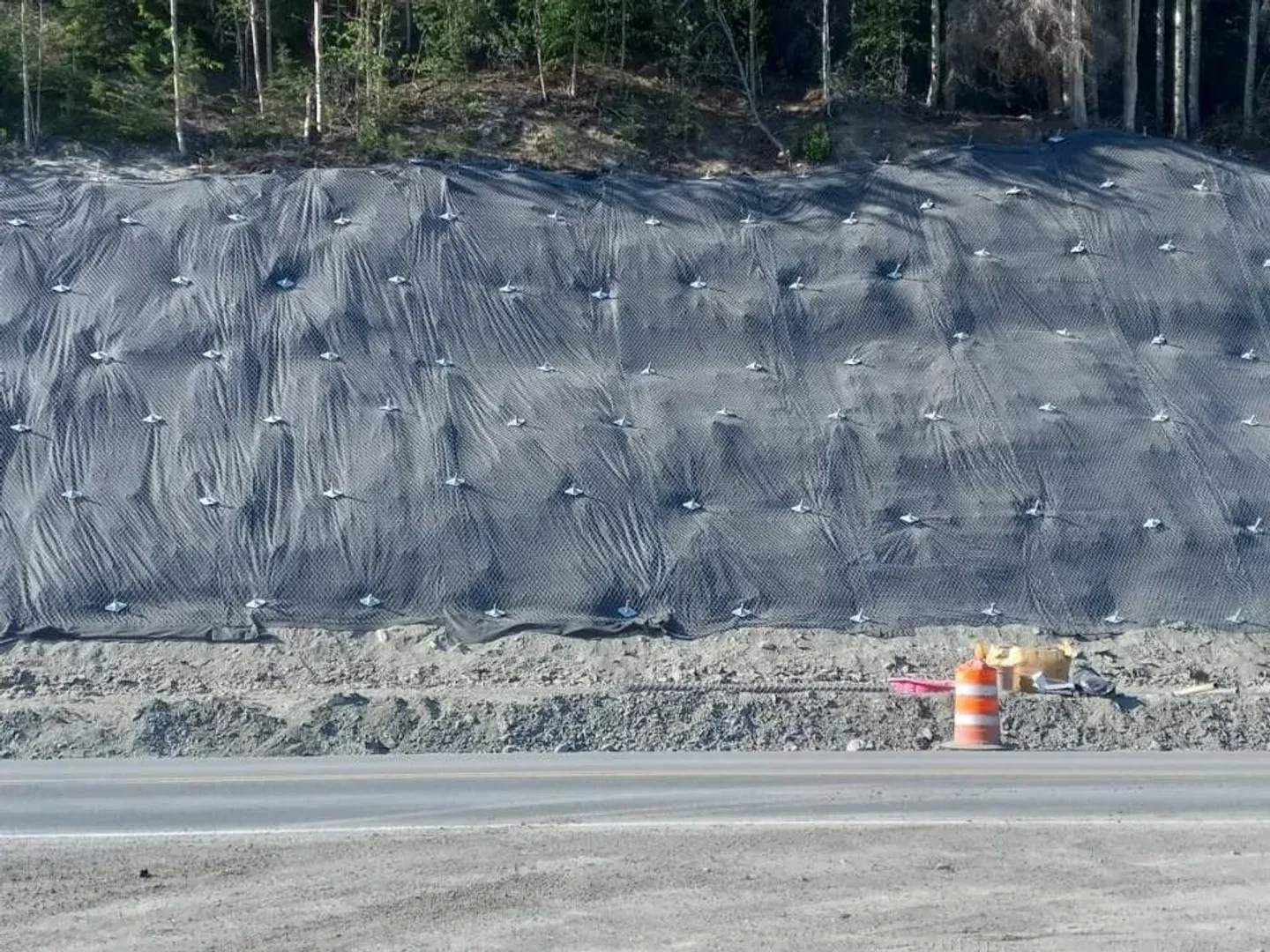
Rock dowels are passive reinforcement elements installed across joints, bedding planes, and other discontinuities in a rock mass to lock fractured surface blocks back to competent rock at depth. Unlike tensioned rock bolts, which apply immediate clamping force through a torqued head nut, dowels carry no preload at install. The bar is bonded along its full length with cement or polyester resin grout and develops tension only as joints attempt to open or slip, acting as a passive shear key across the discontinuity. Rock dowels frequently appear together with pinned mesh systems as the anchorage element behind the mesh, with structural shotcrete as composite surface support, and immediately following rock scaling work to lock down the remaining rock once loose blocks are removed.

What Is a Rock Dowel?

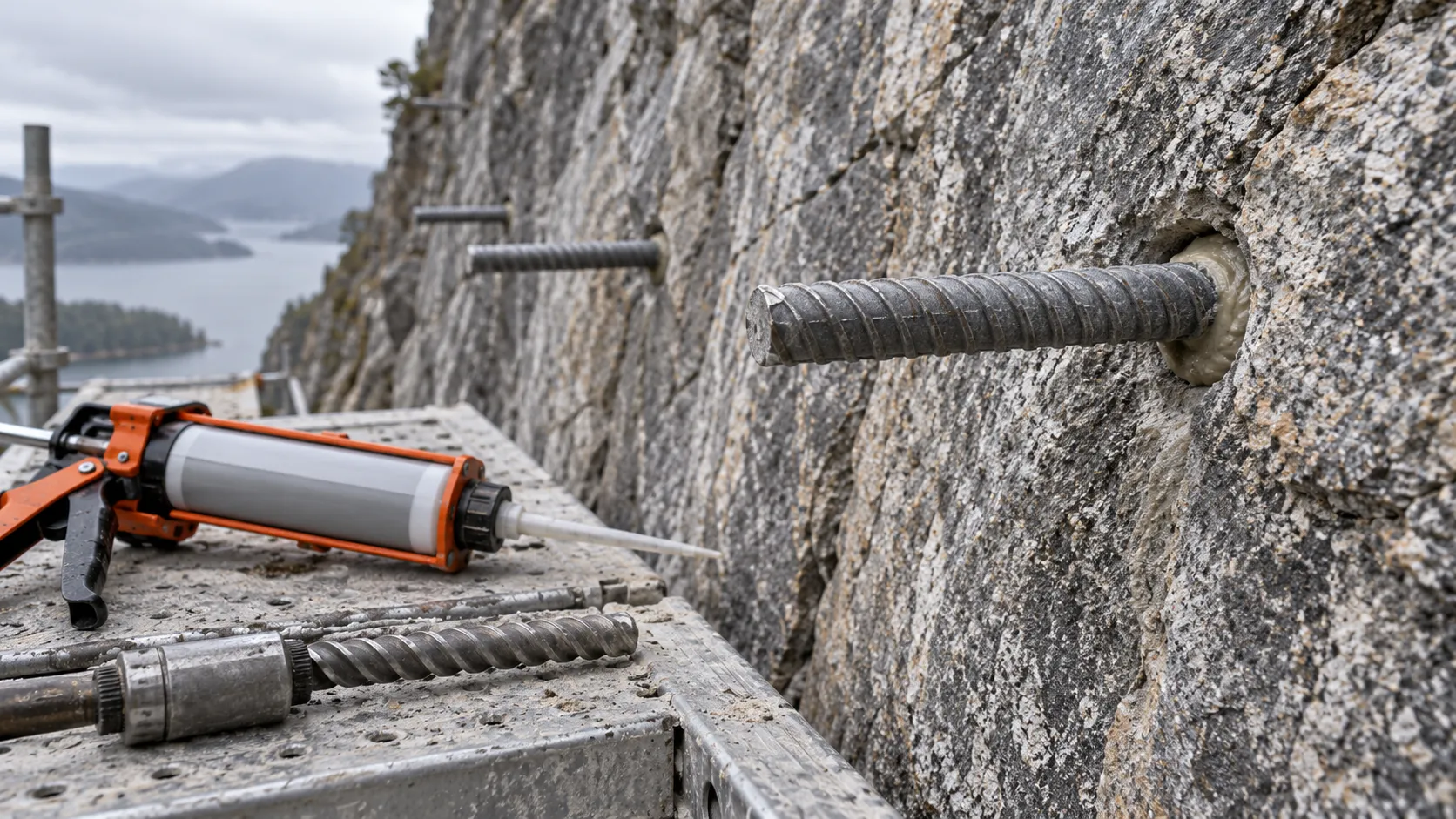
A rock dowel is a steel bar installed into a borehole drilled across joints or other discontinuities in a rock mass and bonded along its full length with cement or polyester resin grout. The defining characteristic of a dowel, distinguishing it from a tensioned rock bolt, is that load is never applied at install. The bar is a passive reinforcement element, developing tension and shear resistance only as the rock mass attempts to deform. When a joint tries to open or slip, the grout column transfers load into the bar in tension and shear, locking the loose surface block to the competent rock behind it.

Three terms appear interchangeably in older specifications and need to be distinguished. A rock dowel is short, typically 8 to 30 feet, fully grouted, and always passive. A rock bolt may be active (torqued head nut, immediate preload) or passive, and may be either fully grouted or end-anchored with an expansion shell. A tieback anchor is long, typically 25 to 200 feet, with an unbonded free length and a bonded fixed length, post-tensioned to high loads (100 to 600 plus kips) for retaining-wall and dam-abutment applications. Rock dowels carry the lowest unit cost of the three and dominate large-area pattern treatments where most blocks are stable and immediate confinement is not required.

Key Benefits

  • Economical alternative to tensioned bolts
  • Excellent long-term stability
  • No stressing equipment required
  • Works well in access-limited terrain
  • Corrosion protection options available
The Engineering

How Rock Dowels Work

How the system carries load in service, and how we build it on site.

Construction begins with rotary or rotary-percussion drilling of a borehole oriented to cross the target joint set or potential failure surface at a steep enough angle to mobilize the bar in shear and tension as the joint attempts to slip. Hole diameter is typically 2 to 4 inches, sized for the bar, the centralizer assembly, and the required minimum grout cover. The bar, typically a Grade 60 or Grade 75 deformed reinforcing bar (ASTM A615) or a threaded rod, is staged at the collar with centralizers spaced along its length to maintain consistent grout cover and prevent the bar from resting against the borehole wall.

Grouting follows by tremie placement from the toe of the hole upward, displacing air and fines as the column rises. Type II portland cement grout is the default for permanent civil work, with water-cement ratios of 0.40 to 0.45 producing the unconfined compressive strength typically specified by FHWA NHI-10-034 and USACE EM 1110-1-2907. Polyester resin in cartridge form is used where rapid load capability is required, with cartridges spun into the hole by rotating the bar through them as it is driven home. Once the grout reaches design strength (7 to 28 days for cement, hours for resin), the dowel is engaged. A bearing plate and nut may be installed at the collar where the dowel pins surface elements such as mesh or a shotcrete liner, but the nut is not torqued to design preload as it would be on a tensioned bolt.

Load develops only when the rock mass attempts to deform. As a joint dilates or slips, the grouted bar resists in tension and shear, transferring load from the unstable surface block into the competent rock behind the discontinuity. Because the bar engages the entire grouted length rather than relying on point anchorage, dowels are forgiving of variable rock quality along the borehole and tolerant of partial debonding zones, making them well suited to highly fractured ground where end-anchored mechanical bolts would be unreliable.

1

Borehole Drilling

A borehole is drilled into the rock mass at the designed angle and depth.

2

Bar Insertion

A steel bar is inserted (typically #5–#8 rebar or threaded rod) with centralizers.

3

Cement Grouting

Cement grout fills the annulus, bonding the bar to the entire hole length.

4

Curing & Activation

Once cured, the dowel acts as a shear key across rock joints and discontinuities.

System Variants

Types of Rock Dowels

Type 01

Fully Grouted Cement Dowels

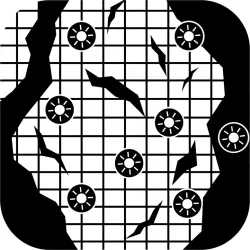
Fully grouted cement dowels are the default for permanent civil applications, including highway rock cuts, tunnel portals, dam abutments, and mining development drifts. A solid bar (typically Grade 60 or Grade 75 deformed bar per ASTM A615) is inserted into the borehole with centralizers, and the annular space is filled with neat Type II portland cement grout placed by tremie line from the toe upward. Bond develops between the bar and the grout, and between the grout and the rock, with the bar bonded continuously over its full length. Design bond strength is reached in 7 to 28 days. The grout column itself provides significant corrosion protection by maintaining a high-pH passive environment around the bar, and supplemental protection (galvanizing, epoxy coating, or full encapsulation in a corrugated PVC sheath) is specified where chloride exposure or aggressive groundwater warrants. Cement-grouted dowels carry the lowest material cost of the three types and dominate large-area pattern installations.
Type 02

Resin-Grouted (Epoxy or Polyester) Dowels

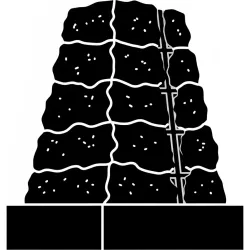
Resin-grouted dowels use cartridge-loaded polyester resin or two-part structural epoxy in place of cement, achieving handling strength in minutes and full bond strength in hours rather than days. The bar is rotated through pre-loaded resin cartridges as it is driven into the hole, mixing the resin and hardener and forcing the resulting grout up the annular space around the bar. Resin is the system of choice for time-critical work, including emergency stabilization of failing slopes, mining production cycles where the next round cannot wait for cement cure, and key block security where an individually unstable block has been identified during scaling and must be tied back before further work proceeds. Cost per linear foot is significantly higher than cement, so resin is typically reserved for situational use rather than large-area pattern dowel installations.

Type 03

Fiberglass (GFRP) Sacrificial Dowels

Fiberglass-reinforced polymer dowels use a non-metallic glass-fiber composite bar in place of steel. The bar can be cut by mechanical excavators, tunnel boring machines, and standard demolition equipment, which makes GFRP the only viable dowel where the reinforced rock will later be excavated through. Common applications include TBM breakout zones at portal faces, sacrificial face support immediately ahead of an advancing tunnel, and temporary support of rock that will be removed in subsequent stages. GFRP has lower stiffness and tensile capacity than steel, so design must account for higher elongation under load and longer development length, and these systems are typically specified as temporary rather than permanent reinforcement.

Side By Side

Rock Dowels vs Other Reinforcement Systems

VS

Rock Dowel vs Rock Bolt

The defining difference is whether load is applied at install. A rock bolt may carry preload from a torqued head nut, applying immediate clamping force across joints and converting a fractured rock mass into a confined volume from the moment the bolt is set. A rock dowel never carries preload at install, and develops tension only as joints attempt to open or slip. Geometrically, dowels are always fully grouted along their entire length and act as shear keys across discontinuities, while bolts may be fully grouted, end-anchored with an expansion shell, or combination-anchored. The selection criterion in design is whether the rock mass requires immediate confinement (use a tensioned rock bolt with mechanical or resin anchor) or only post-deformation reinforcement (use a passive grouted dowel). On large-area pattern installations where most blocks are stable, dowels are typically lower cost; on critical individual rock pieces in tunnel crowns, overhanging slope faces, or above active portals, tensioned bolts are preferred.

VS

Rock Dowel vs Soil Nail

Both are drilled, fully grouted, passive ground-reinforcement bars, but they apply to different ground media and develop bond over different lengths. A rock dowel is installed in competent rock, with bond developed over the grouted length engaging the rock mass through cement or resin, and bar lengths typically 8 to 30 feet. A soil nail is installed in soil or weathered rock and is fully grouted along its length to engage the surrounding ground continuously, with nail lengths typically 15 to 60 feet because soil develops bond resistance over a longer distance than competent rock. Both elements are passive, never tensioned at install, but soil nails specifically support a faced excavation cut top-down with shotcrete on the face, while rock dowels reinforce the rock mass internally without necessarily requiring a continuous facing. Mixed-face cuts that pass through both rock and soil zones often combine soil nailing in the upper soil or saprolite section with rock dowels in the lower competent rock section.

VS

Rock Dowel vs Tieback Anchor

The defining differences are length, capacity, and load mode. A rock dowel is short (8 to 30 feet), fully grouted along its entire length, and resists local block displacement as joints try to open or slip. A tieback anchor (also called a rock anchor, ground anchor, or post-tensioned rock anchor) is long (25 to 200 plus feet), has an unbonded free length plus a bonded fixed length seated deep in stable rock, and is post-tensioned against a soldier pile, secant pile, or wall facing to apply 100 to 600 plus kips of holding force. Rock dowels work as the internal stabilization of a fractured rock mass; tieback anchors work as the lateral restraint for excavation shoring walls and dam-abutment retention. Both can be present on the same project, with rock dowels handling near-surface block stability across the rock face and tieback anchors carrying the deep retaining load behind the wall.

Not sure which system fits? We'll walk through the tradeoffs for your site conditions.

Talk Through Your Options
Where It Fits

Common Applications and Project Types

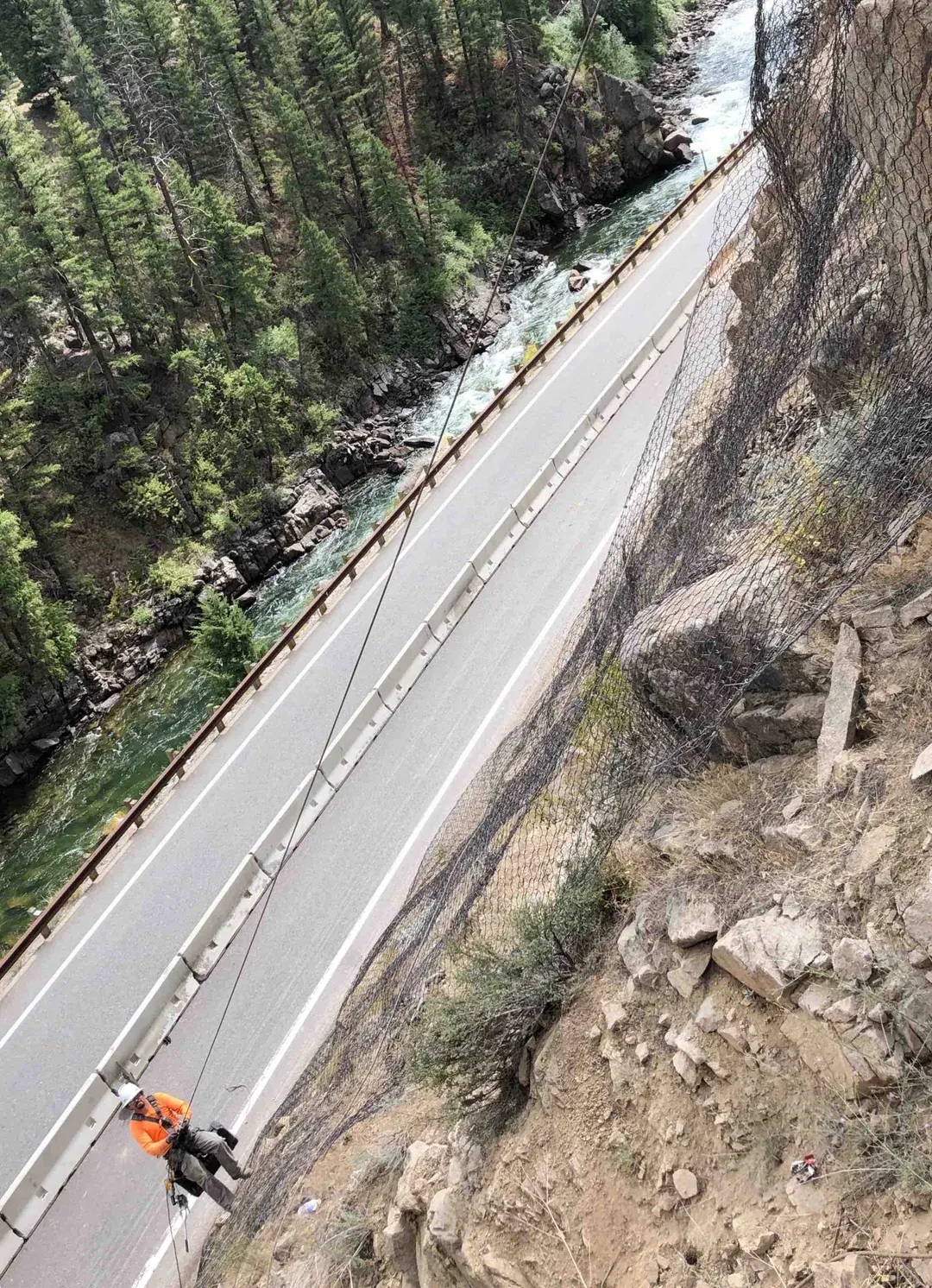
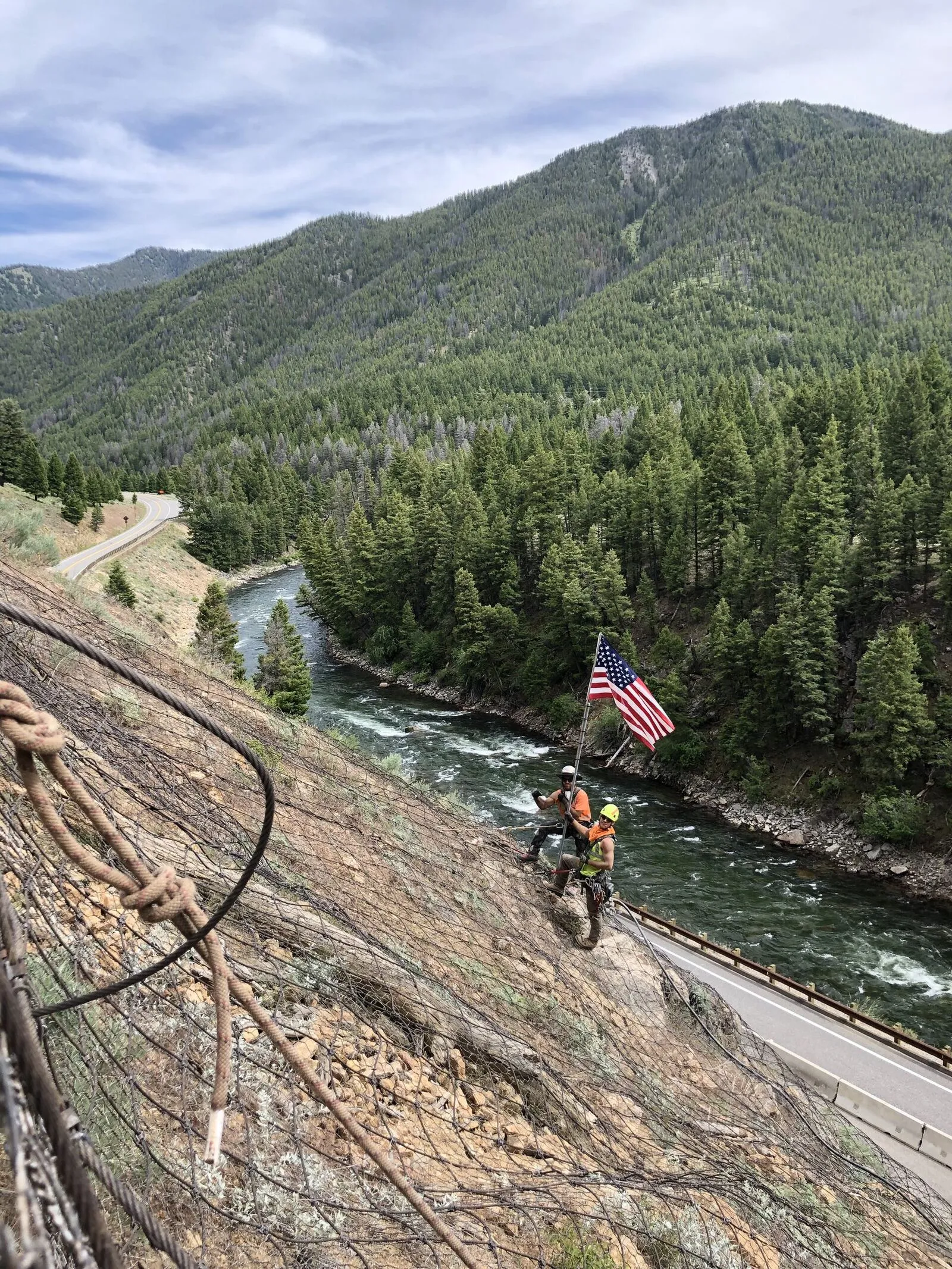
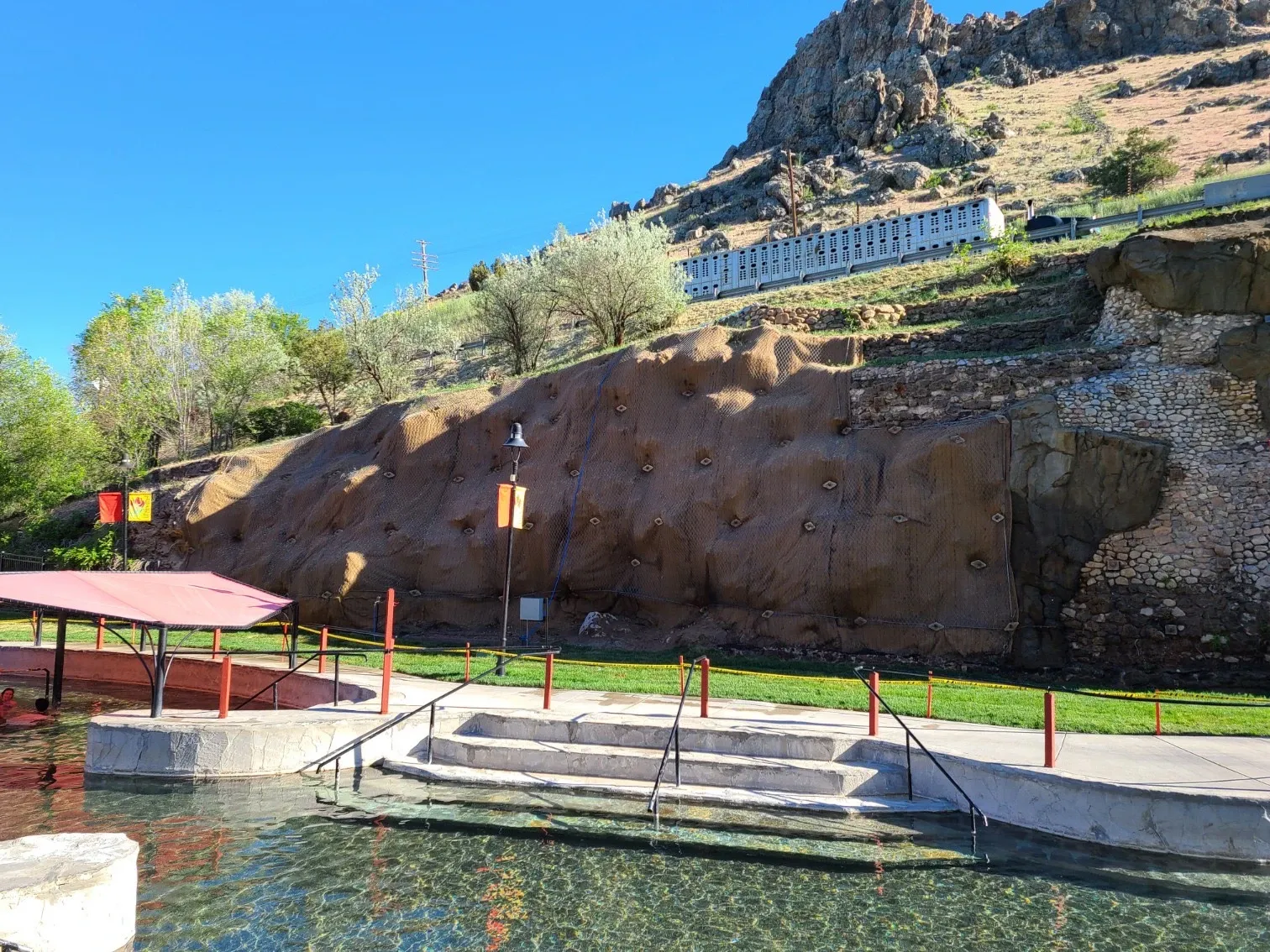
Highway and railway rock cut stabilization is the largest civil rock dowel market, with state DOT specifications calling for fully grouted dowel patterns on permanent rock support work along transportation corridors through mountainous terrain. Tunnel portal reinforcement and underground excavation support is the second major application, with dowels installed immediately after blasting or boring to lock loose blocks in the freshly exposed rock face, often paired with pinned mesh systems or structural shotcrete as composite surface support under the New Austrian Tunneling Method. Mining drift and stope ground control uses dowel patterns engineered to local rock mass classification, frequently combined with resin-grouted bolts in production headings and cement-grouted dowels in development drifts. Dam abutment and spillway rock reinforcement falls under USACE rock support practice, often combined with longer post-tensioned cable anchors for deep block stability. Slope stabilization on jointed rock faces, particularly following rock scaling work to remove immediate hazards, uses dowels to lock the remaining rock mass to competent substrate behind the failure zone.

Stabilizing small to medium rock blocks
Supporting mesh or shotcrete facings
Reinforcing portal entrances
Long-lasting slope stabilization
Mining drifts and headings
Highway and railway cut slopes
Benefits

Key Advantages

Cost-Effective Reinforcement

Rock dowels provide reliable stabilization at lower cost than tensioned systems, making them ideal for large-area treatments.

Simple Installation

No specialized tensioning equipment required, drill, insert, grout, and move to the next location.

Full-Length Bond

Complete grouting along the entire bar length provides uniform load transfer and excellent corrosion protection.

Low Maintenance

Passive reinforcement requires no periodic re-tensioning or adjustment after installation.

Rapid Production

Simplified installation process allows crews to achieve high daily production rates.

Engineering

Technical Considerations

Soil/Rock Conditions

Works best in controlled geological conditions with identifiable joint sets. Requires competent rock for full grout bond development.

Groundwater

Groundwater can dilute grout during installation. May require water control measures or rapid-set grout formulations in wet conditions.

Load Capacity

Load capacity develops through shear resistance along the grouted length. Not intended for applications requiring immediate active load.

Spacing

Spacing determined by block geometry and joint patterns. Typical patterns range from 4-8 ft centers.

Installation Method

Rotary or percussion drilling followed by gravity or pressure grouting. Full-column grouting is essential for performance.

Equipment Used

  • Track or wagon-mounted drills
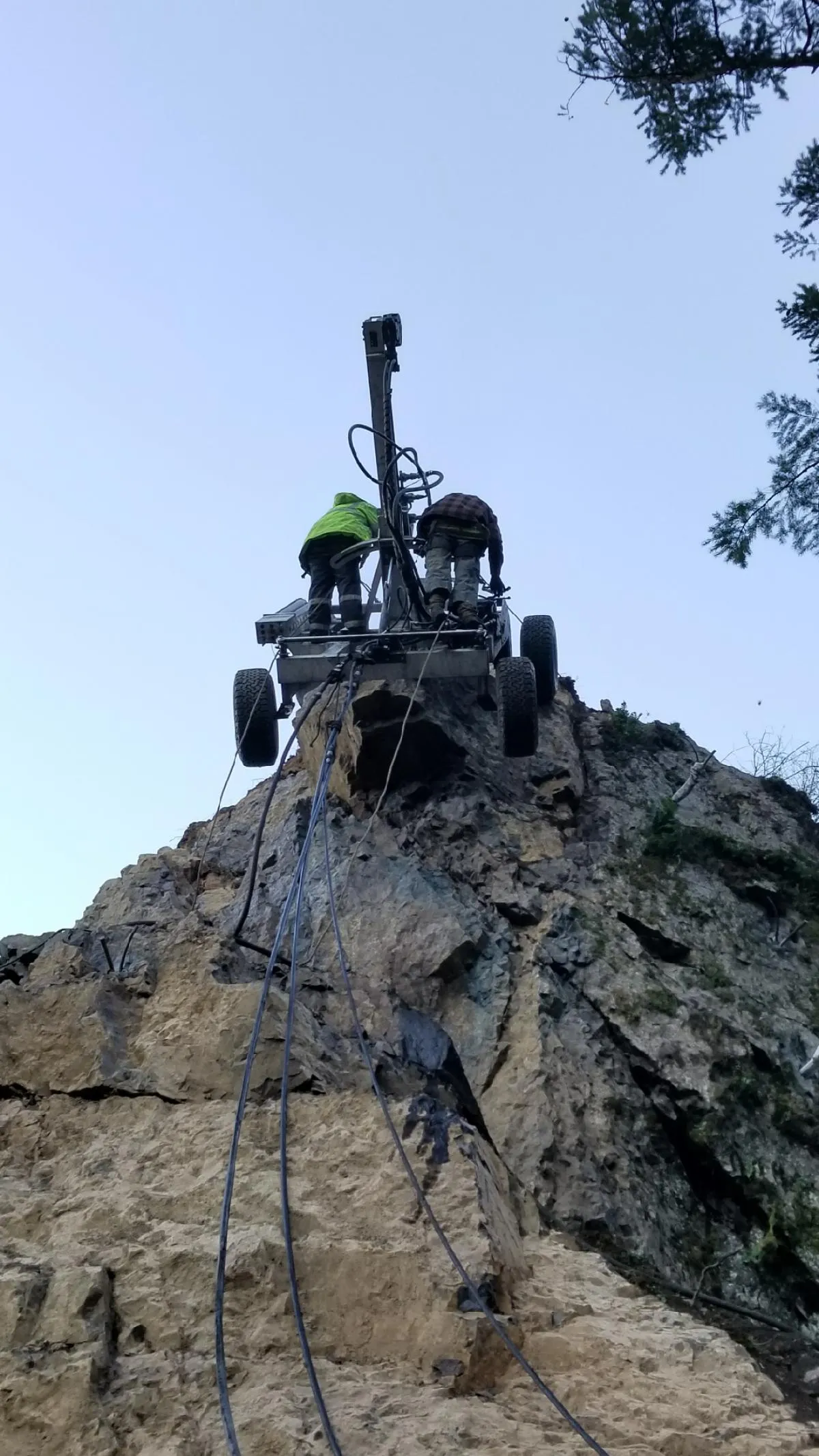
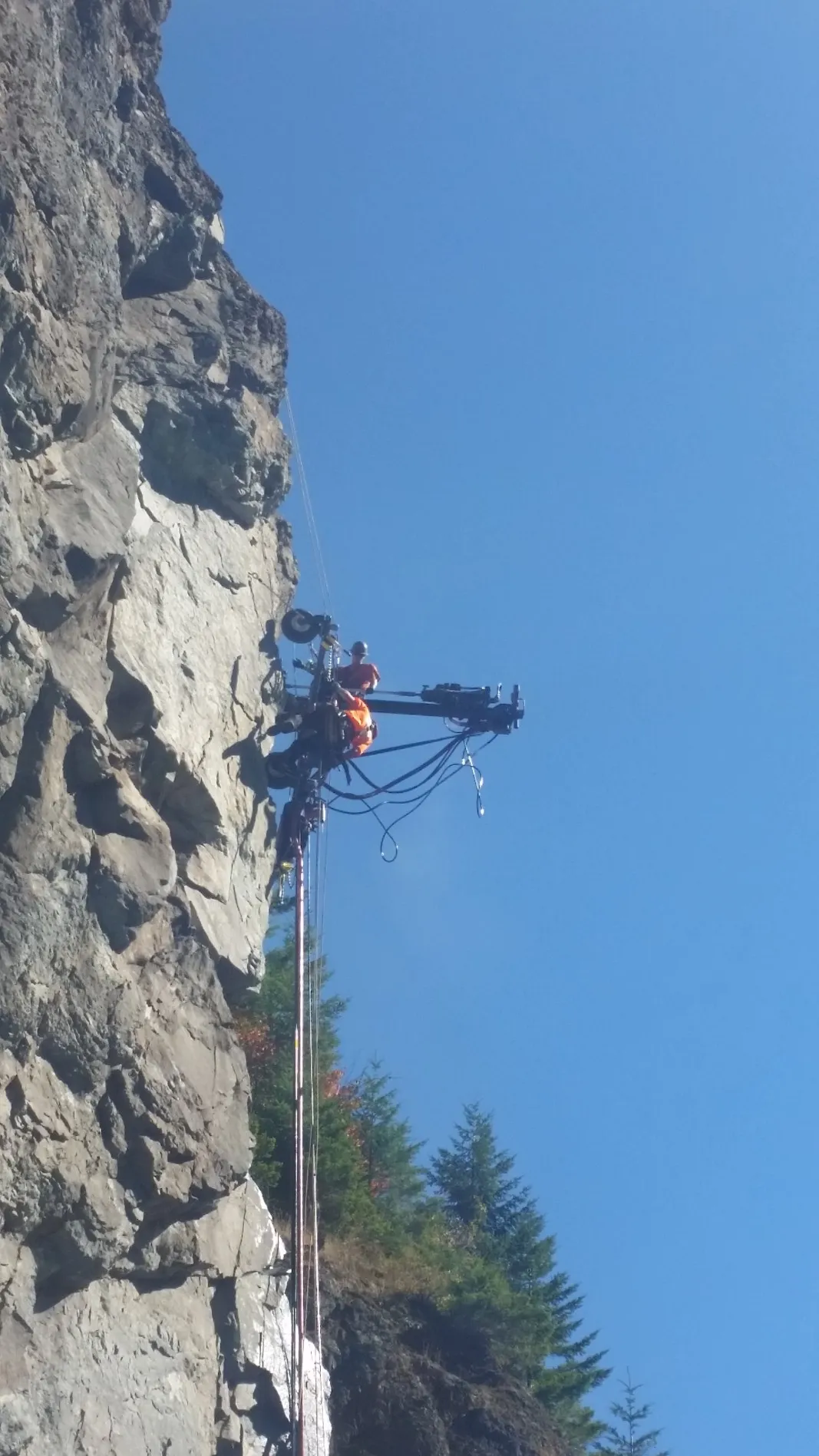
  • Rope-access drilling platforms
  • Grout mixers and pumps
  • Centralizers and grout tubes
  • Hand tools for plate installation

Limitations

  • Not intended for load-tensioning applications
  • Requires full grout cure before loading
  • Less effective for active block movement
  • Hole stability required during grouting

Technical Specifications

Bar Size
#5 to #11 Rebar
Bar Type
Grade 60 or 75 Steel
Hole Diameter
2-4 inches
Grout Type
Type I/II Portland Cement
Codes And References

Engineering Standards and References

USACE

EM 1110-1-2907

Rock Reinforcement

Canonical engineering manual for civil rock support practice. Covers passive grouted dowel design, bar selection, grout specifications, corrosion protection, and acceptance protocols.

FHWA

NHI-10-034

Technical Manual for Design and Construction of Road Tunnels (Civil Elements)

Section 6 covers rock reinforcement including passive dowel design for portal stabilization and tunnel ground control under the New Austrian Tunneling Method.

ASTM

F432

Standard Specification for Roof and Rock Bolts and Accessories

Materials standard for steel bars, plates, nuts, and accessories used in rock dowel and rock bolt installations across mining and civil work.

ASTM

A615/A615M

Standard Specification for Deformed and Plain Carbon-Steel Bars for Concrete Reinforcement

Materials standard for the Grade 60 and Grade 75 deformed reinforcing bars commonly used as the steel element in fully grouted cement dowels.

Gallery

Our Work in Action

Expertise

Why Choose Rock Supremacy for Rock Dowels

Precision Drilling

Our experienced crews deliver accurate hole placement in steep and challenging terrain.

Rope-Access Capability

We install dowels on vertical faces and remote slopes where conventional equipment cannot operate.

In-House Drill Platforms

Custom drill platforms allow access to difficult terrain without expensive crane support.

Rapid Emergency Response

48-hour mobilization for emergency stabilization of failing slopes and rockfall hazards.

Quality Grouting

Proper grout mixing and tremie placement ensures full-column bond and long-term performance.

Questions

Rock Dowels FAQ

A rock dowel is a steel bar installed into a borehole drilled across joints or other discontinuities in a rock mass and bonded along its full length with cement or polyester resin grout. The dowel is a passive reinforcement element: load is never applied at install. The bar develops tension and shear resistance only as the rock attempts to deform, transferring load from the unstable surface block into the competent rock behind the discontinuity. Rock dowels are typically 8 to 30 feet long and dominate large-area pattern treatments where most blocks are stable and immediate confinement is not required.
The defining difference is whether load is applied at install. A rock bolt may carry preload from a torqued head nut, applying immediate clamping force across joints. A rock dowel never carries preload and develops tension only as joints attempt to open or slip. Geometrically, dowels are always fully grouted along their entire length and act as shear keys across discontinuities, while bolts may be fully grouted, end-anchored with an expansion shell, or combination-anchored. The same physical bar can serve either role depending on whether the head nut is torqued. Dowels are typically lower cost on large-area pattern installations; bolts are preferred where critical individual blocks need immediate confinement.
Both are drilled, fully grouted, passive ground-reinforcement bars, but they apply to different ground media and develop bond over different lengths. A rock dowel is installed in competent rock, with bond developed over the grouted length engaging the rock mass through cement or resin, and bar lengths typically 8 to 30 feet. A soil nail is installed in soil or weathered rock, fully grouted along its length to engage the surrounding ground continuously, with nail lengths typically 15 to 60 feet because soil develops bond resistance over a longer distance than rock. Soil nails specifically support a faced cut top-down with shotcrete on the face; rock dowels reinforce the rock mass internally without necessarily requiring a continuous facing. Mixed-face cuts often combine both.
The defining differences are length, capacity, and load mode. A rock dowel is short (8 to 30 feet), fully grouted along its entire length, and resists local block displacement as joints try to open or slip. A tieback anchor (often called a rock anchor, ground anchor, or post-tensioned rock anchor) is long (25 to 200 plus feet), has an unbonded free length plus a bonded fixed length seated deep in stable rock, and is post-tensioned against a wall or pile facing to apply 100 to 600 plus kips of holding force. Rock dowels work as the internal stabilization of a fractured rock mass; tieback anchors work as the lateral restraint for excavation shoring walls and dam-abutment retention. Both can be present on the same project.
The three principal types are fully grouted cement dowels, resin-grouted (epoxy or polyester) dowels, and fiberglass (GFRP) sacrificial dowels. Cement-grouted dowels are the default for permanent civil applications and develop design bond strength in 7 to 28 days. Resin-grouted dowels achieve handling strength in minutes and full bond in hours, used for emergency stabilization, mining production cycles, and key block security where cement cure time would block the next operation. GFRP dowels use a non-metallic glass-fiber bar that mechanical excavators and tunnel boring machines can cut through, making them the only viable choice for sacrificial face support and TBM breakout zones.
Dowels are appropriate when passive reinforcement is sufficient: large-area pattern treatments where most blocks are stable, portal-face reinforcement under mesh or shotcrete, mining development drifts, and slope stabilization following rock scaling work. Bolts are preferred where the rock mass requires immediate confinement: critical individual blocks in tunnel crowns, overhanging slope faces, blocks above active portals, and any location where waiting for cement cure would expose the work to unacceptable risk. The selection often follows cost as well, with dowels carrying a meaningfully lower per-bar installed cost than tensioned bolts of equivalent length.
Cement grout reaches handling strength in 24 to 48 hours and design strength in 7 to 28 days, with the actual cure time depending on temperature, water-cement ratio, and admixtures. Polyester resin and structural epoxy reach handling strength in minutes and full bond strength in 2 to 4 hours at moderate temperatures. Cold temperatures slow both systems; hot temperatures accelerate the resin and shorten its working time. Where the construction sequence cannot wait for cement cure, resin-grouted dowels are specified instead, with the materials premium offset by the cycle-time gain.
Yes. Cement grout tolerates wet boreholes and can displace water from the bottom up when placed by tremie line, with rapid-set or water-resistant grout formulations specified where heavy inflow is expected. Resin systems are more sensitive: standard polyester and epoxy lose bond strength in wet holes, so underwater-grade resins are specified for wet conditions or cement is selected instead. Where groundwater inflow is severe, packers can be set to isolate the borehole during grout placement and allow the column to set before water pressure is restored to the rock mass.
Standard cement grout itself provides significant corrosion protection by maintaining a high-pH passive environment around the bar, sufficient for most permanent applications in non-aggressive groundwater. Supplemental protection options include hot-dip galvanizing of the bar and accessories, fusion-bonded epoxy coating, and full encapsulation in a corrugated PVC sheath grouted both inside and outside the sheath (double corrosion protection). For aggressive environments, including chloride-bearing groundwater, acid mine drainage, and marine exposure, stainless steel bars or GFRP composite bars are specified. The corrosion protection class is typically driven by service life requirements and the environmental exposure category in the project specifications.
In the United States, rock dowel practice follows several authoritative references. USACE EM 1110-1-2907 (Rock Reinforcement) is the canonical engineering manual for civil rock support practice, covering classification, dowel selection, design loads, corrosion protection, and acceptance protocols. FHWA NHI-10-034 (Technical Manual for Design and Construction of Road Tunnels, Civil Elements) covers rock reinforcement including dowel design in Section 6 for portal stabilization and tunnel ground control. ASTM F432 specifies the materials standard for steel bars, plates, and accessories used across rock dowel and rock bolt installations. ASTM A615/A615M covers the deformed reinforcing bars commonly used as the steel element. State DOT specifications and project-specific contract documents add jurisdiction-specific testing and corrosion-protection requirements.
Testimonials

Client Testimonials

Trusted by DOTs, engineering firms, and property owners nationwide.

Contact

Deploy Us

Ready to discuss your project? Our team is standing by to assess your site conditions and develop a custom solution using Rock Dowels and other proven techniques.

Emergency (24/7)

(541) 383-7625

Bidding & Estimates

Info@RockSupremacy.com

Headquarters

Western Division (HQ)
65147 N Hwy 97
Bend, OR 97701
Eastern Division
915 Millennium Ct
Blountville, TN 37617

Licensed in CO, UT, WY, ID, MT, CA, WA, OR, TN, VA

Request Consultation