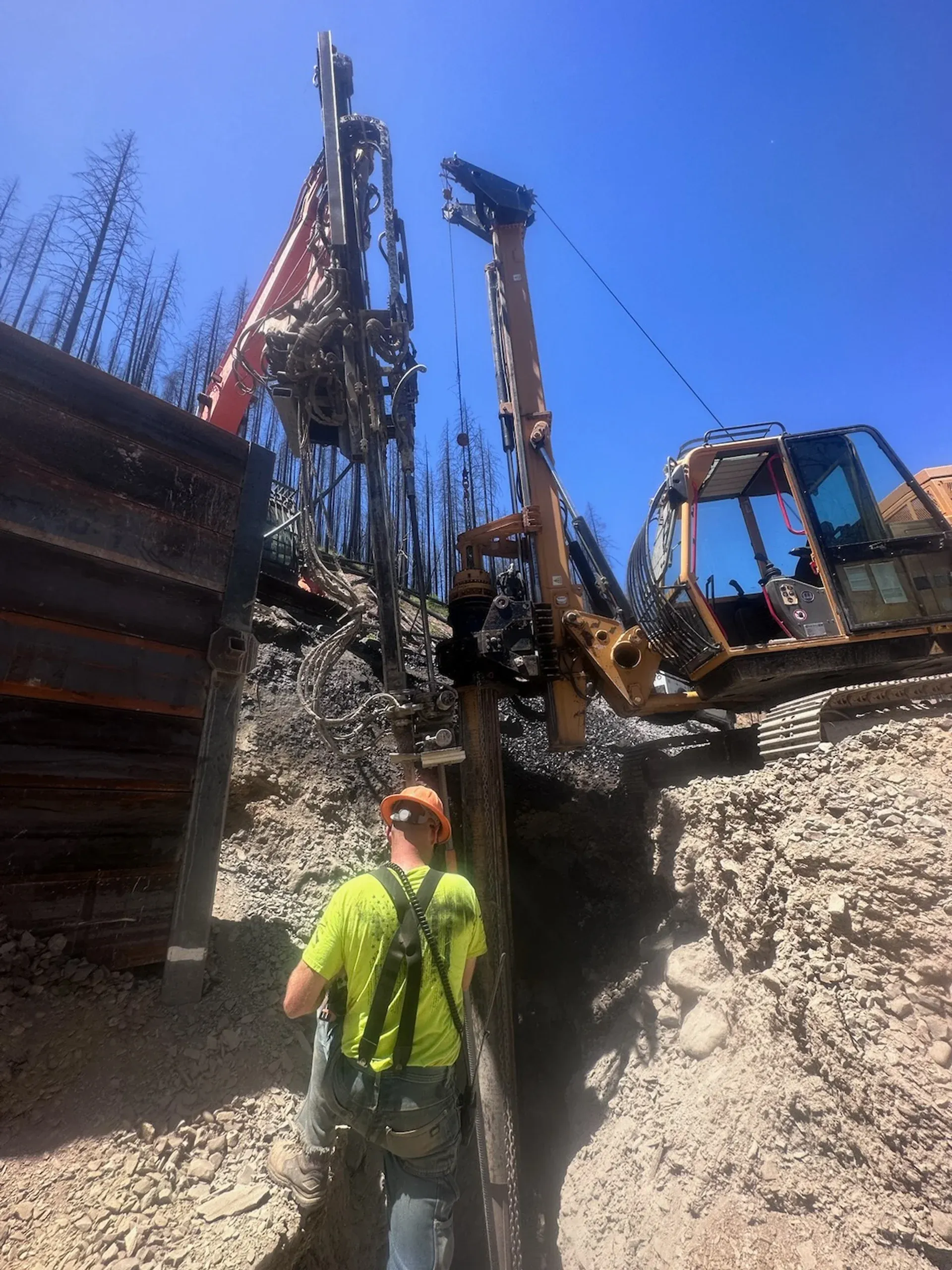
Secant Pile Walls

Secant Pile Walls

Secant pile walls are interlocking drilled concrete piles that create continuous structural walls with groundwater cutoff capability for deep excavations in saturated soils and urban environments.

100+ ft
Max Wall Depth
48 in
Max Pile Diameter
Watertight
Groundwater Control
75+ yr
Design Life
Overview

Understanding Secant Pile Walls

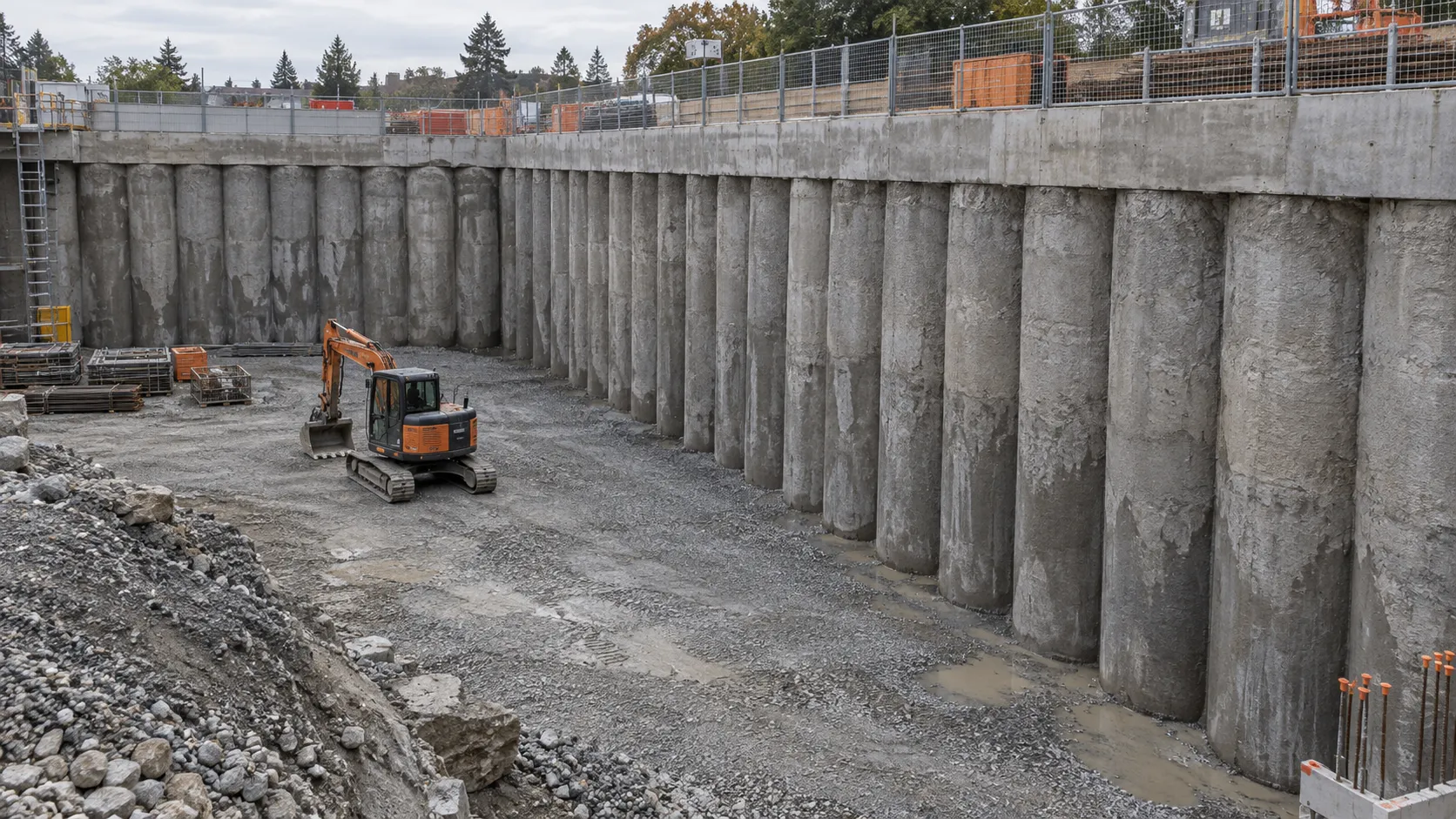
Secant pile walls consist of overlapping drilled shafts that interlock to form a continuous underground wall. Primary (female) piles are installed first at wider spacing, then secondary (male) piles are drilled between them, cutting into the still-curing primary piles to create a watertight structural barrier.

This construction sequence creates walls that simultaneously provide structural earth retention and groundwater cutoff—critical for deep excavations below the water table. Secant walls can be designed as temporary shoring or integrated into permanent building foundations, making them cost-effective for projects where the wall becomes part of the final structure.

Combined structural and groundwater cutoff function
Suitable for difficult ground with boulders and obstructions
Low vibration installation (drilling vs. driving)
Can be incorporated into permanent foundation walls
Effective in high water table conditions
Works in cohesionless soils where sheet piles fail
No dewatering required during construction
Adaptable to variable ground conditions

This technique is used in our services for:

Secant Pile Walls
Use Cases

Typical Applications

Deep basement excavations in high water table areas
Below-grade parking structures
Metro and subway station construction
Tunnel portal and shaft walls
Waterfront bulkheads and cofferdams
Contaminated site containment barriers
Building foundation walls (permanent)
Industrial facility excavation support
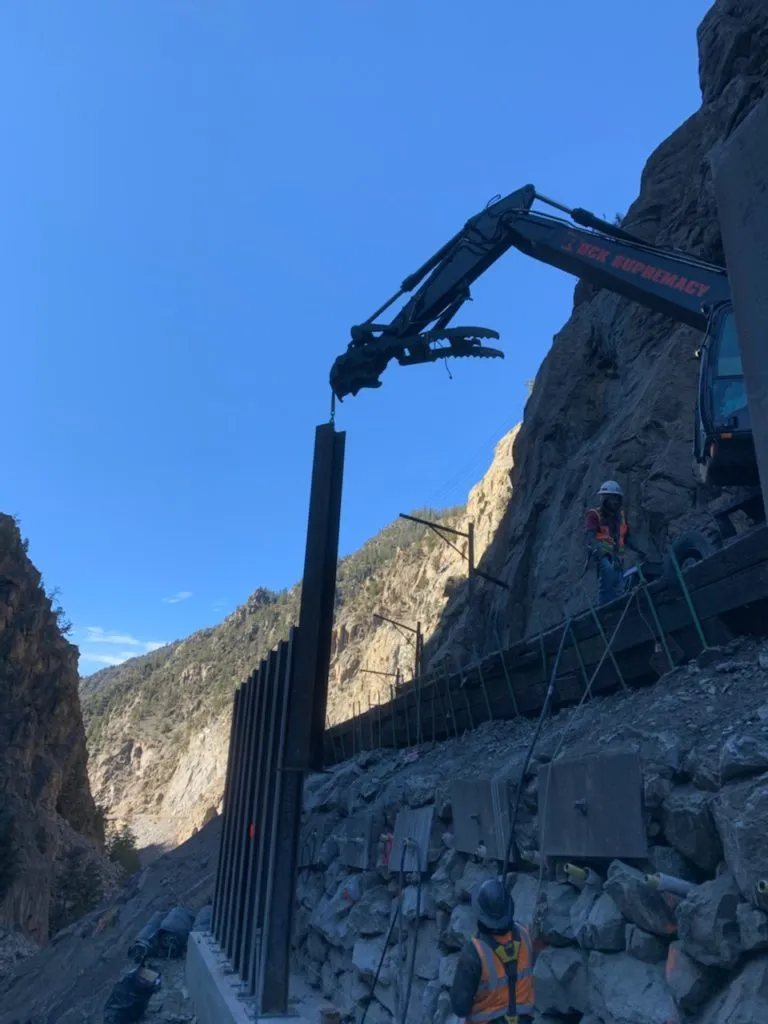
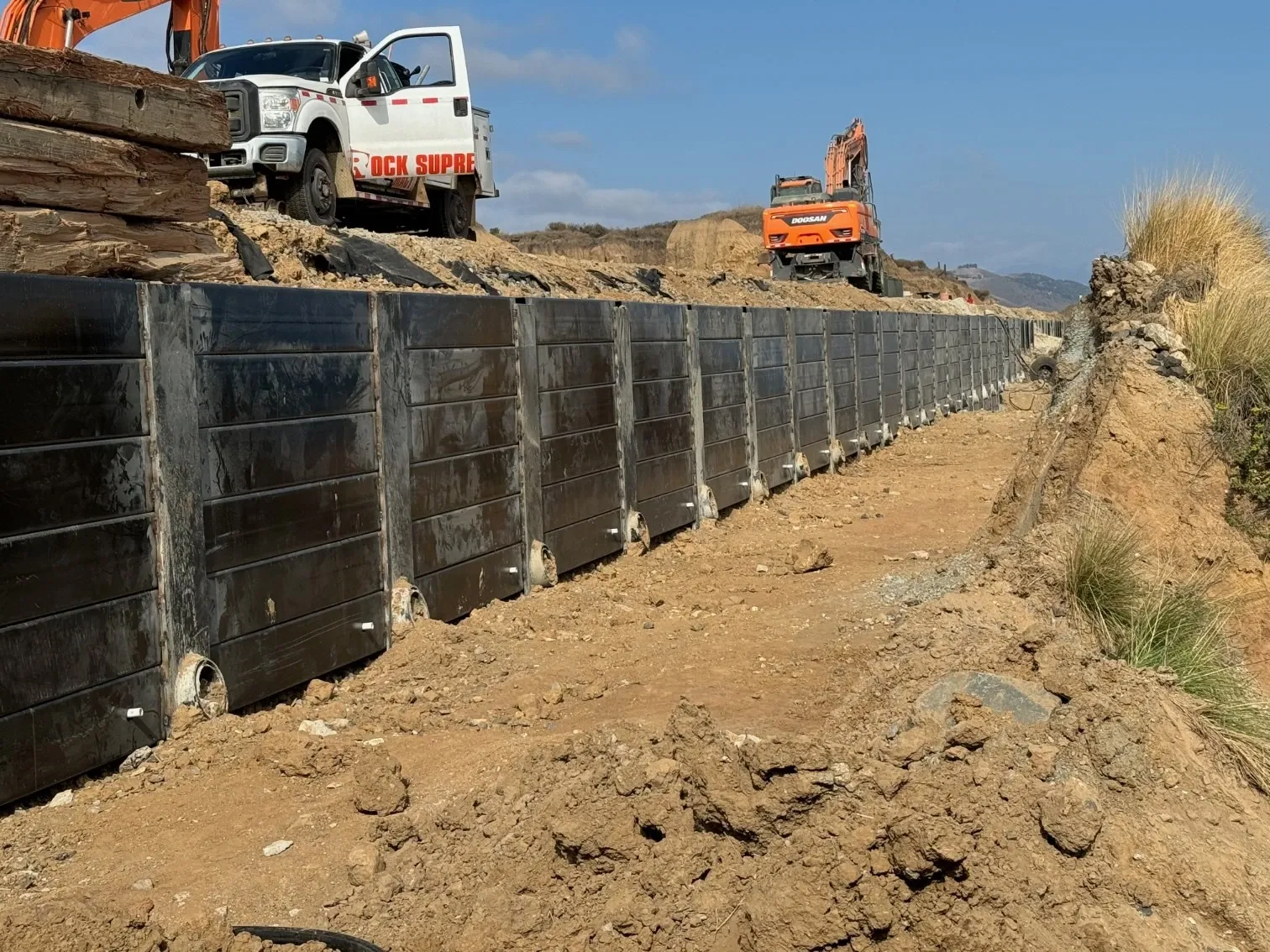
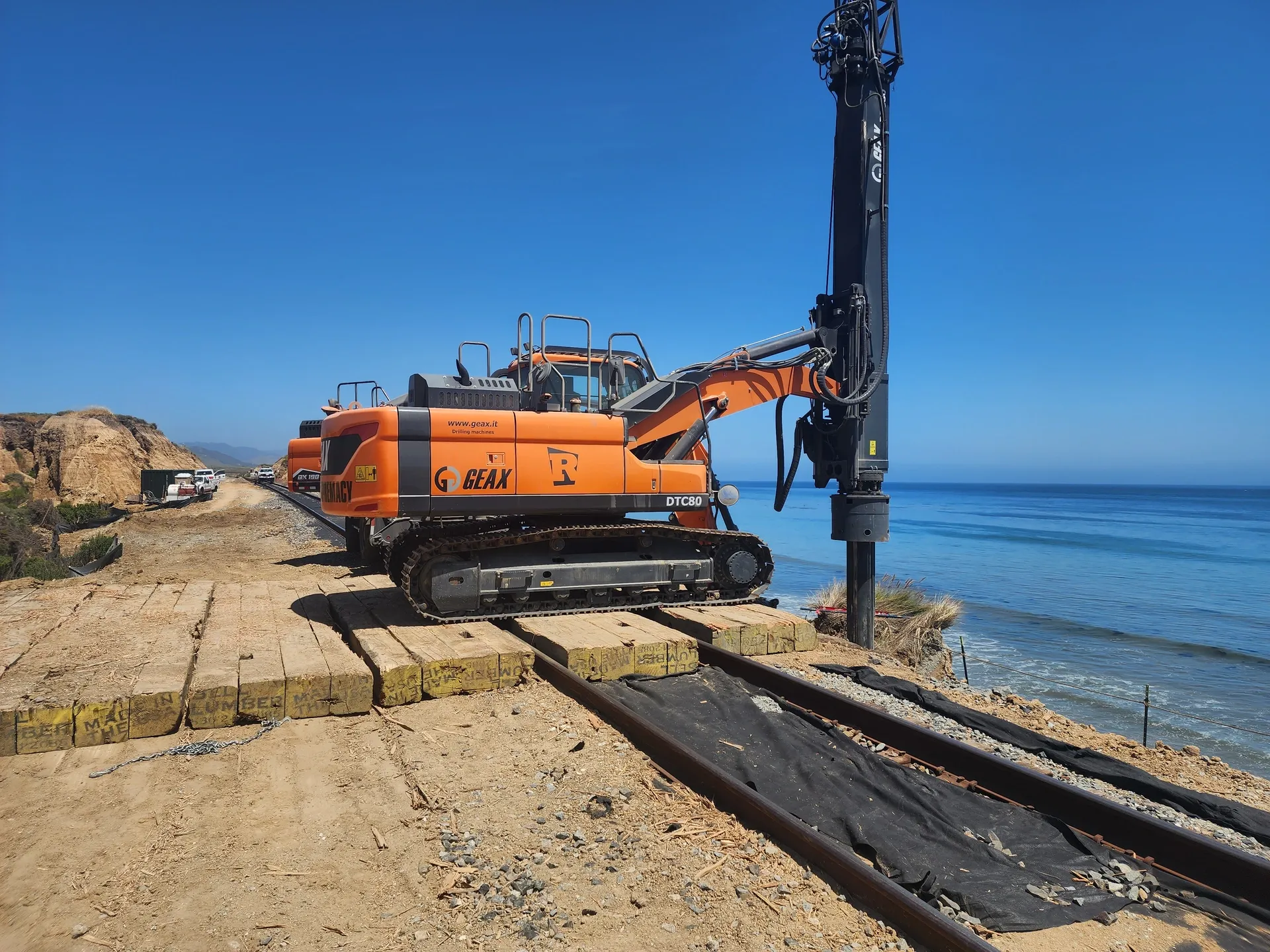
Secant Pile Walls - Image 1
Process

How It Works

Our proven methodology ensures consistent, high-quality results for every installation.

1

Survey and Guide Wall Construction

Survey pile locations precisely—secant walls require tight tolerances. Construct concrete guide walls (typically 12-18 inches deep) to align drilling equipment and maintain pile spacing accuracy throughout installation.

2

Primary Pile Drilling

Drill primary (female) piles at every other location using casing or slurry to maintain hole stability. Primary pile spacing equals the design overlap plus secondary pile diameter. Install reinforcement if specified.

3

Primary Pile Concrete

Place concrete in primary piles using tremie method if below water table. For soft secant walls, use low-strength concrete (1,000-2,000 psi) in primaries to facilitate cutting. For hard secant walls, use structural concrete throughout.

4

Secondary Pile Drilling

After primary pile concrete reaches design strength for cutting (typically 12-48 hours), drill secondary (male) piles overlapping into both adjacent primaries. The drill cuts through the primary pile concrete to create the interlock.

5

Secondary Pile Reinforcement and Concrete

Install steel reinforcement cages in secondary piles. Place structural concrete. Secondary piles carry the structural loads while overlaps provide continuity and water cutoff.

6

Wall Completion and Excavation

Allow secondary piles to cure. Begin excavation in controlled lifts, installing tiebacks or bracing at design elevations. Expose and clean wall face. Apply waterproofing or architectural finish if required.
Benefits

Key Advantages

Watertight Excavation Support

Secant pile walls create continuous barriers that cut off groundwater flow. Excavate below the water table without extensive dewatering—critical for deep basements, tunnels, and waterfront construction.

Permanent Foundation Integration

Unlike temporary shoring, secant walls can serve as permanent basement walls. The structural concrete and reinforcement become part of the building, eliminating the cost of separate foundation walls.

Difficult Ground Capability

Drilling handles conditions that stop sheet pile driving: cobbles, boulders, buried debris, and variable soil layers. Secant piles install successfully where other wall systems fail.

Low Vibration and Noise

Rotary drilling creates minimal vibration compared to pile driving or vibratory sheet pile installation. Essential for urban sites near sensitive structures, hospitals, and historic buildings.

Deep Wall Capability

Secant walls can extend 100+ feet deep with appropriate equipment. For the deepest excavations—metro stations, high-rise basements, tunnels—secant walls provide both depth and structural capacity.

Engineering

Technical Considerations

Soil/Rock Conditions

Secant walls work in nearly all soil conditions including cohesionless sands, soft clays, and grounds with obstructions. Hard secant walls (structural concrete in all piles) handle the most demanding conditions. Rock socketing extends capacity into bedrock.

Groundwater

Primary application is groundwater cutoff. Proper overlap and concrete quality ensure watertight construction. Minor seepage at joints can be addressed with post-construction grouting. Combine with dewatering only for exceptional inflows.

Load Capacity

Wall structural capacity depends on pile diameter, reinforcement, and concrete strength. Secondary piles carry primary structural loads. Tiebacks or bracing required for walls over 20-25 feet depending on soil conditions and surcharge.

Spacing

Pile spacing equals secondary pile diameter minus overlap. Typical 36-inch piles at 33-inch centers create 3-inch overlaps. Closer spacing (more overlap) increases waterproofing reliability; wider spacing reduces cost.

Installation Method

Kelly bar drilling with casing in unstable ground, or slurry-supported drilling in stable conditions. Secondary pile drilling uses rock augers or core barrels to cut through primary pile concrete. Guide walls are critical for tolerance control.

Equipment Used

  • Large-diameter drill rigs (rotary drilling)
  • Kelly bar systems with casing
  • Rock augers and core barrels
  • Concrete tremie equipment
  • Reinforcement cages and handling equipment
  • Guide wall formwork systems

Limitations

  • Requires large drill rig access (significant overhead clearance)
  • Higher cost than soldier pile walls in simple conditions
  • Verticality tolerance critical—deviations compromise interlock
  • Concrete timing coordination between primary and secondary piles
  • Limited curve radius capability

Technical Specifications

Pile Diameter
24 to 48 inches
Overlap
3-6 inches (25-50mm)
Wall Depth
Up to 100+ feet
Primary Concrete
1,000-4,000 psi (soft/hard)
Secondary Concrete
4,000-6,000 psi structural
Verticality
1:200 tolerance typical
Options

System Variations

Soft Secant Wall

Primary piles use low-strength concrete (1,000-2,000 psi) that is easily cut by secondary pile drilling. Most economical for temporary excavation support where permanent wall integration is not required.

Best For:

  • Temporary construction excavations
  • Sites with no permanent wall requirement
  • Cost-sensitive projects

Hard Secant Wall

Both primary and secondary piles use structural concrete (4,000+ psi). Primary piles are reinforced. Creates the strongest wall for permanent applications and high structural demands.

Best For:

  • Permanent basement walls
  • High-load applications
  • Deep excavations with significant surcharge

Firm Secant Wall

Primary piles use medium-strength concrete (2,500-3,500 psi) without reinforcement. Intermediate option balancing drilling ease with improved structural performance.

Best For:

  • Moderate-depth basements
  • Permanent walls with lower load demands
  • Balanced cost-performance requirements

Secant Tangent Hybrid

Secant configuration (overlapping) at the water table with tangent (touching but not overlapping) configuration above. Reduces cost while maintaining groundwater cutoff where needed.

Best For:

  • Sites with shallow water table
  • Cost optimization on deep walls
  • Conditions where full-depth waterproofing not required
Experience

Example Project Types

  • High-rise building foundations
  • Underground parking structures
  • Metro and transit stations
  • Tunnel shafts and portals
  • Waterfront development
  • Industrial facility basements
  • Hospital and institutional construction
  • Contaminated site containment
Gallery

Our Work in Action

Expertise

Why Choose Rock Supremacy for Secant Pile Walls

Large-Diameter Drilling Expertise

Our drilling teams operate the equipment and possess the skills needed for precision large-diameter pile installation. Tight tolerances and proper sequencing are essential for successful secant walls.

Integrated Wall Systems

We provide complete secant wall construction including drilling, reinforcement, concrete placement, and tieback installation. One team delivers the entire wall system.

Difficult Ground Experience

Our crews have installed secant walls through cobbles, boulders, and variable conditions that stop other contractors. When ground conditions are challenging, experience matters.

Quality Control

Secant wall performance depends on execution quality. We monitor verticality, concrete placement, and timing to ensure the watertight, structural walls your project requires.

Urban Construction Capability

Low-vibration drilling and professional site management make us effective partners for sensitive urban projects near existing structures and active facilities.

Questions

Secant Pile Walls FAQ

Secant pile walls overlap—secondary piles cut into adjacent primary piles—creating a continuous watertight barrier. Tangent pile walls touch but do not overlap, leaving small gaps at pile interfaces. Secant walls provide groundwater cutoff; tangent walls do not. Choose secant walls when water control matters.
Guide walls establish precise pile positions. We use drilling equipment with built-in inclinometers and survey verification during drilling. For deep walls, we may use downhole deviation measurement. Verticality tolerance of 1:200 is typical; tighter tolerances are achievable for critical applications.
Yes, hard secant walls with structural concrete and reinforcement in all piles are designed for permanent service. The wall becomes the building's foundation wall, eliminating the cost of separate basement wall construction. Design life exceeds 75 years with proper concrete cover on reinforcement.
Secant walls cost more than soldier pile walls but provide groundwater cutoff that soldier piles cannot. They often cost less than diaphragm (slurry) walls while providing similar performance. When secant walls eliminate dewatering costs or serve as permanent walls, the total project cost advantage can be substantial.
Our drilling equipment handles cobbles, boulders, and buried debris that stop sheet pile driving. Rock augers, core barrels, and down-hole hammers address hard obstructions. If an obstruction prevents pile completion, we can grout around it or adjust the pile layout. This obstruction capability is a key secant wall advantage.
Testimonials

Client Testimonials

Trusted by DOTs, engineering firms, and property owners nationwide.

Contact

Deploy Us

Ready to discuss your project? Our team is standing by to assess your site conditions and develop a custom solution using Secant Pile Walls and other proven techniques.

Emergency (24/7)

(541) 383-7625

Bidding & Estimates

Info@RockSupremacy.com

Headquarters

Western Division (HQ)
65147 N Hwy 97
Bend, OR 97701
Eastern Division
915 Millennium Ct
Blountville, TN 37617

Licensed in CO, UT, WY, ID, MT, CA, WA, OR, TN, VA

Request Consultation