Cable Anchors
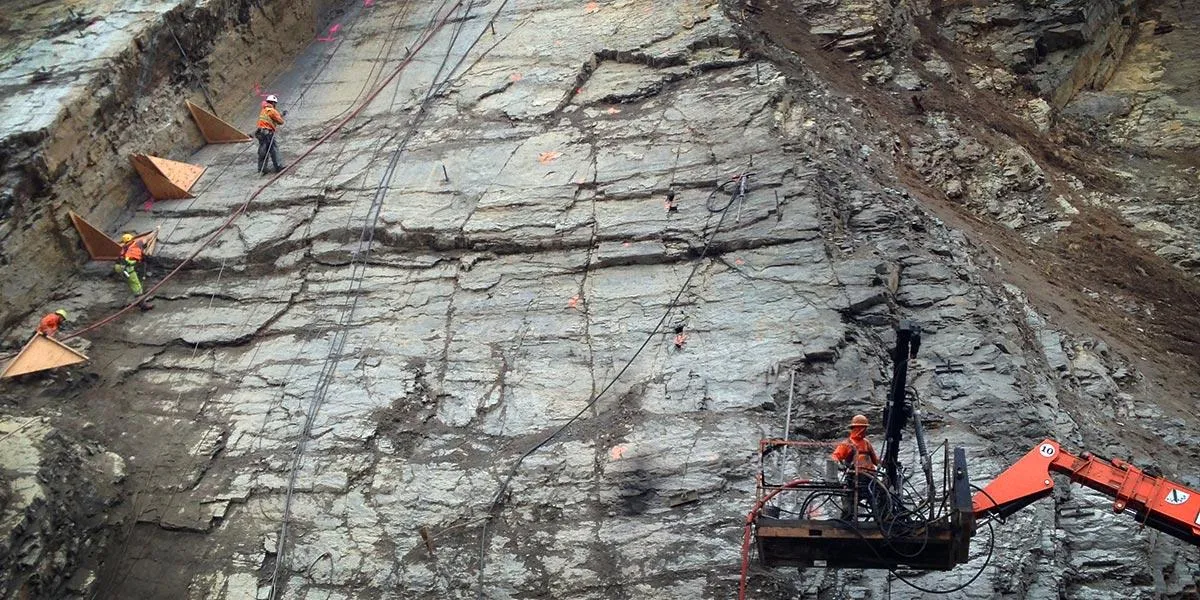
Cable anchors (also known as strand anchors or post-tensioned anchors) provide high-capacity reinforcement for slopes, retaining systems, cut faces, and rock masses. These anchors transfer load deep into competent ground, offering reliable, long-term stabilization.
Understanding Cable Anchors
Cable anchors (also known as strand anchors or post-tensioned anchors) provide high-capacity reinforcement for slopes, retaining systems, cut faces, and rock masses. These anchors transfer load deep into competent ground, offering reliable, long-term stabilization in areas where passive reinforcement alone is insufficient.
Post-tensioning applies immediate active load to the structure, making cable anchors critical for high-load applications and engineered retaining systems.
This technique is used in our services for:
Typical Applications
How It Works
Our proven methodology ensures consistent, high-quality results for every installation.
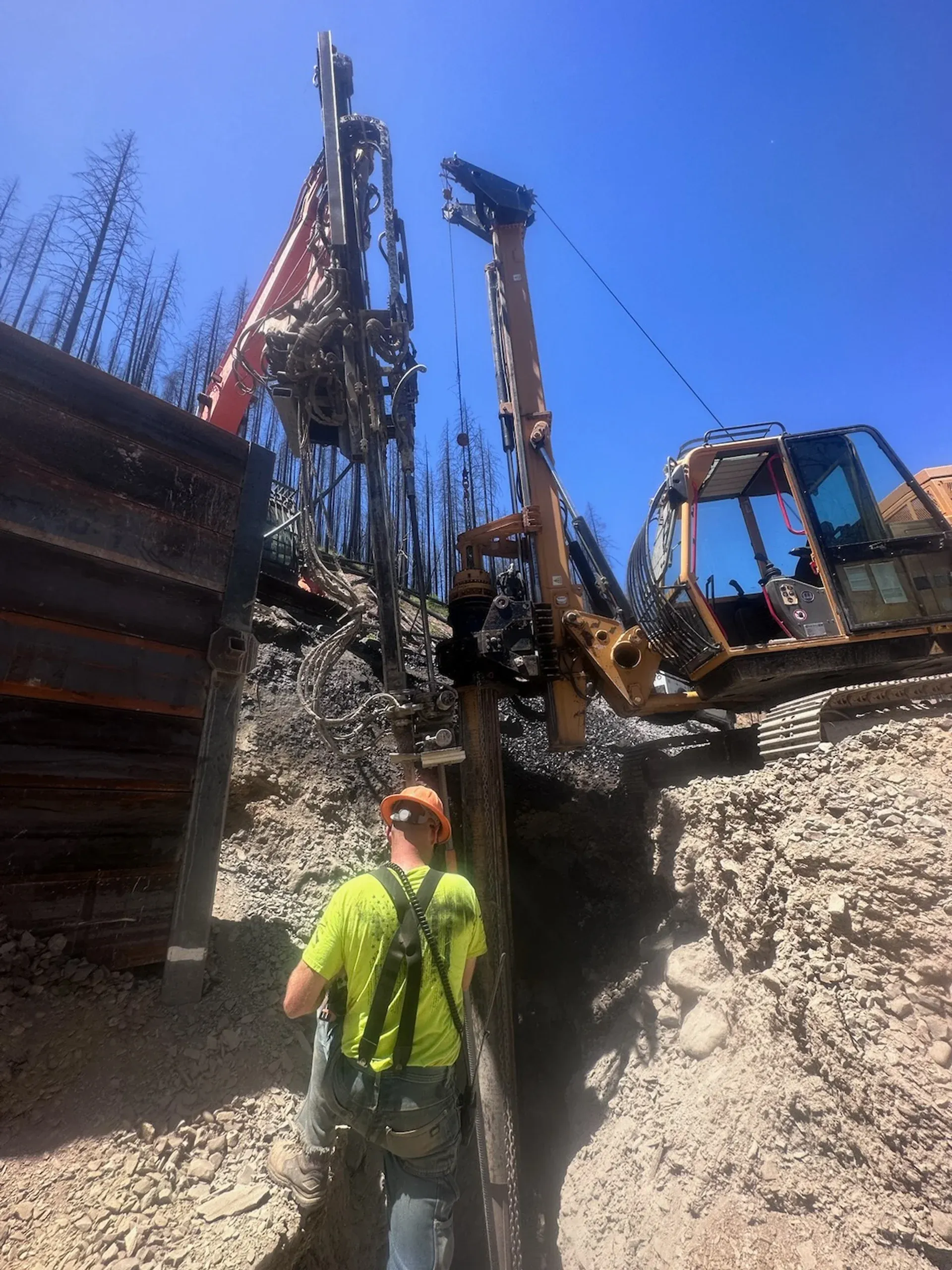
Borehole Drilling
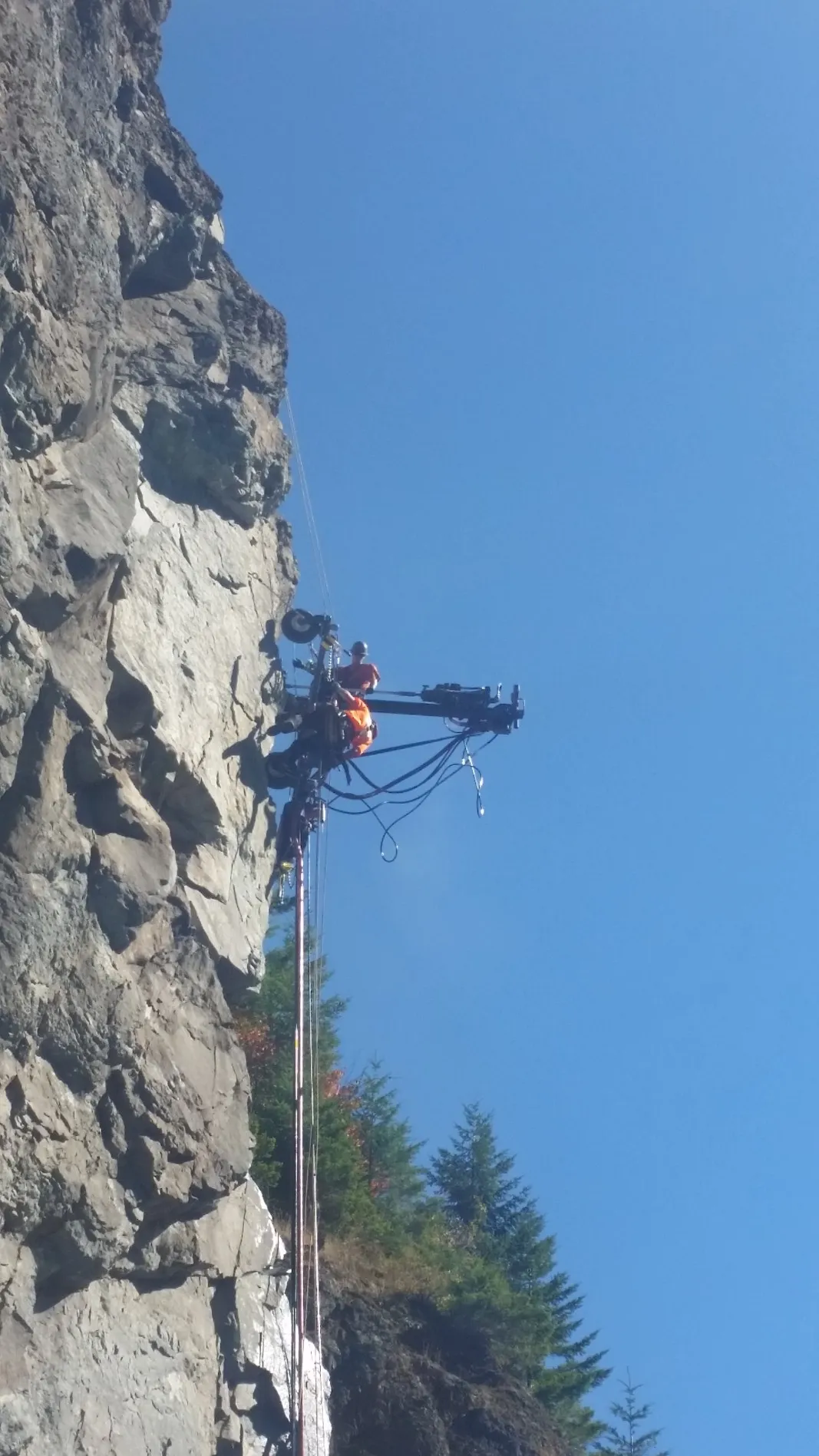
A borehole is drilled into the slope or rock mass to the design depth, reaching competent bearing strata.
Tendon Installation
A multi-strand steel tendon is placed inside a protective sheath with spacers and centralizers.
Bond Zone Grouting
Grout is injected to bond the anchor into the competent rock zone while free length remains unbonded.
Tensioning
After curing, the anchor is tensioned using hydraulic jacks to apply active load.
Lock-Off & Testing
Anchor head assemblies distribute load; proof testing verifies design capacity.
Key Advantages
Extreme Load Capacity
Multi-strand tendons achieve capacities from 100 to over 2000 kips—far exceeding rock bolts or soil nails.
Active Reinforcement
Post-tensioning applies immediate load to the structure, preventing movement before it starts.
Deep Anchorage
Anchor lengths of 200+ feet reach competent bearing zones even in challenging geology.
Verified Performance
Every anchor is proof-tested to design load, providing documented verification of capacity.
Long Design Life
Double corrosion protection systems provide 75-100 year service life for permanent installations.
Technical Considerations
Soil/Rock Conditions
Bond zone must be established in competent rock or dense soil. Geotechnical investigation determines suitable bearing stratum and required bond length.
Groundwater
Groundwater can affect grout placement and long-term durability. DCP systems with grease-filled sheaths protect tendons in aggressive environments.
Load Capacity
Design loads determined by structural requirements. Multi-strand configurations allow capacity optimization. All anchors proof-tested to 133% of design load.
Spacing
Anchor spacing determined by load distribution requirements and structural design. Typical spacing 8-12 ft for retaining walls.
Installation Method
Large-diameter drilling followed by tendon installation, pressure grouting of bond zone, curing period, then multi-strand stressing with hydraulic jacks.
Equipment Used
- Large-diameter rotary drill rigs
- Multi-strand hydraulic stressing jacks
- Grout mixing and pumping plants
- Load cells and dial gauges
- Anchor head assemblies and bearing plates
Limitations
- Requires competent rock or soil for bond zone
- Higher cost than passive reinforcement
- Specialized stressing equipment required
- Alignment tolerances critical for performance
Technical Specifications
System Variations
Permanent Strand Anchors
Double corrosion protected tendons designed for 75-100 year service life in permanent structures.
Best For:
- Dam stabilization
- Bridge abutments
- Permanent retaining walls
Temporary Anchors
Single corrosion protection for construction-phase support with service life up to 2 years.
Best For:
- Excavation support
- Shoring systems
- Construction staging
Bar Anchors
High-strength threaded bar anchors for shorter lengths or limited-access installations.
Best For:
- Shallow anchorage
- Low-headroom conditions
- Supplemental capacity
Removable Anchors
Anchors designed for extraction after temporary service, avoiding permanent encroachment.
Best For:
- Property line excavations
- Temporary construction support
Integration With Other Systems
Soldier Pile Walls
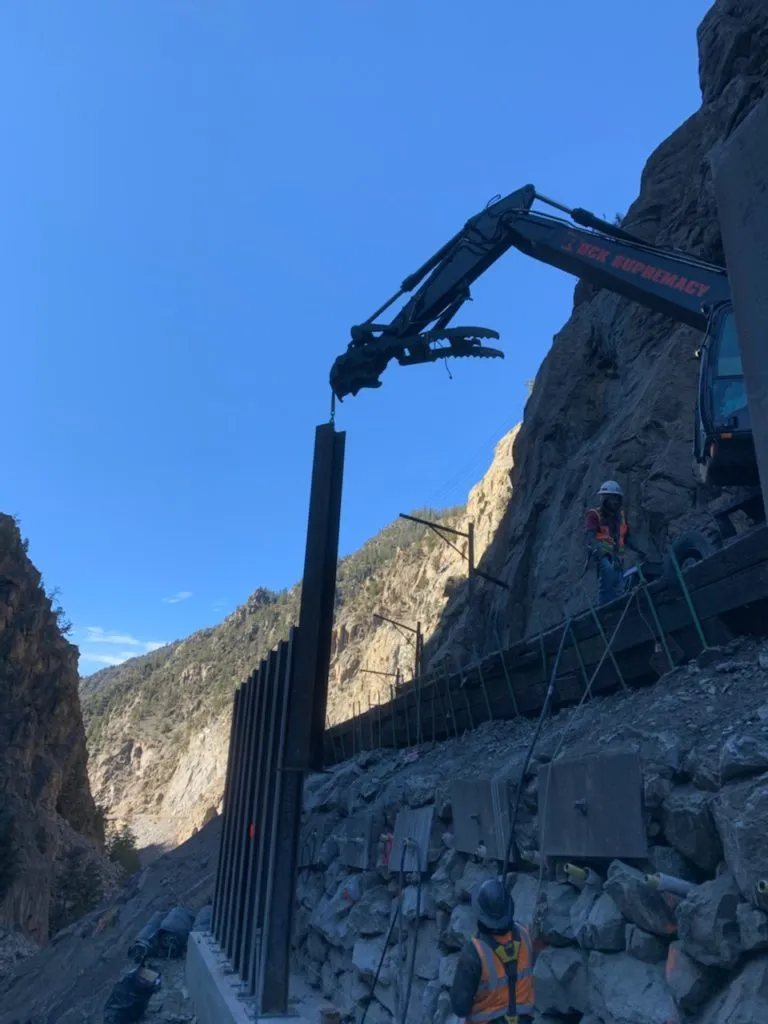
Cable anchors provide tieback support for soldier pile walls, allowing deep excavations with minimal wall deflection.
Learn More
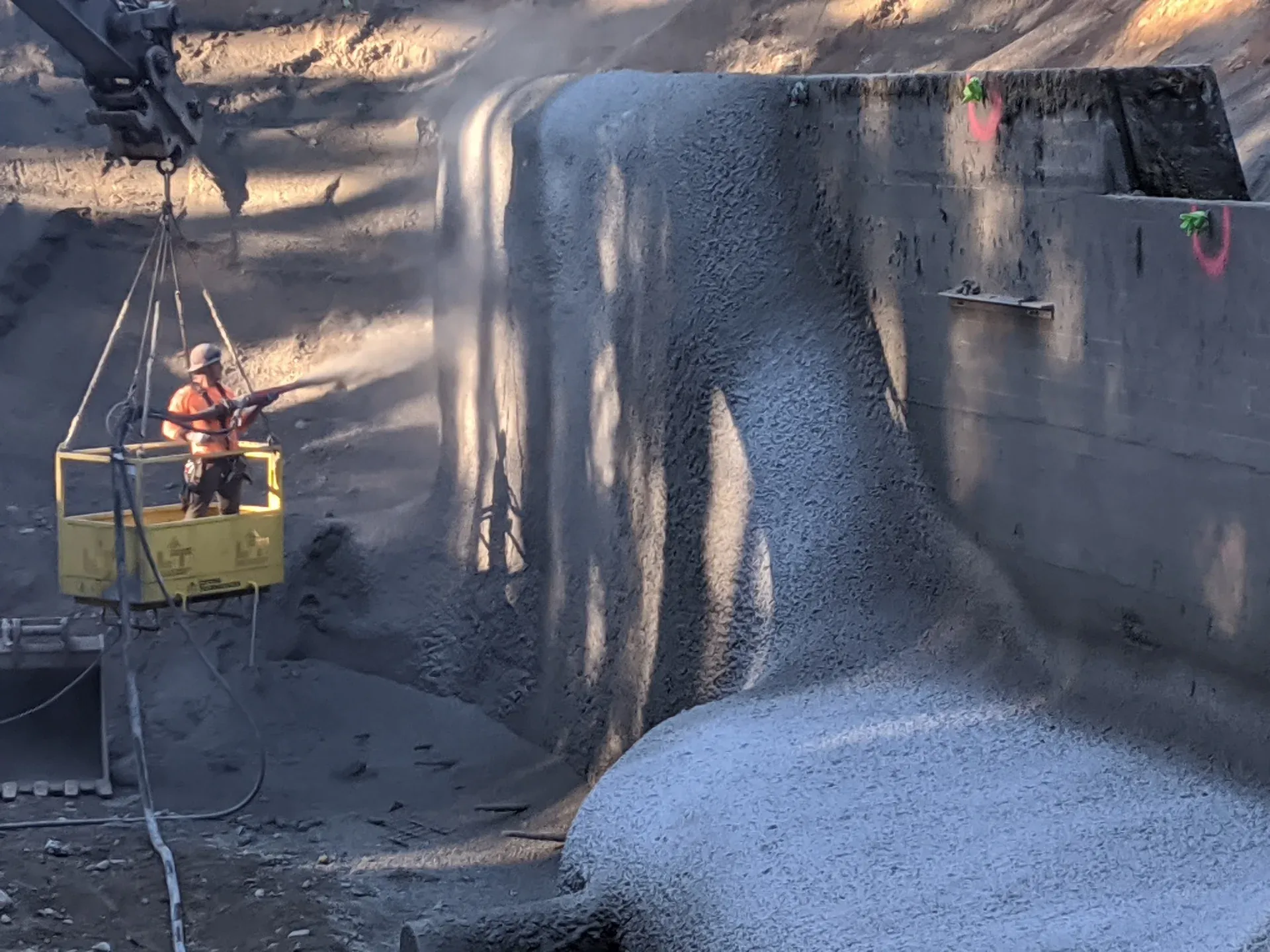
Structural Shotcrete
Anchors stress against shotcrete facing to create integrated structural stabilization systems.
Learn More
H-Pile Walls
Cable anchors increase the capacity and height of H-pile retaining systems.
Learn More
Rockfall Barriers
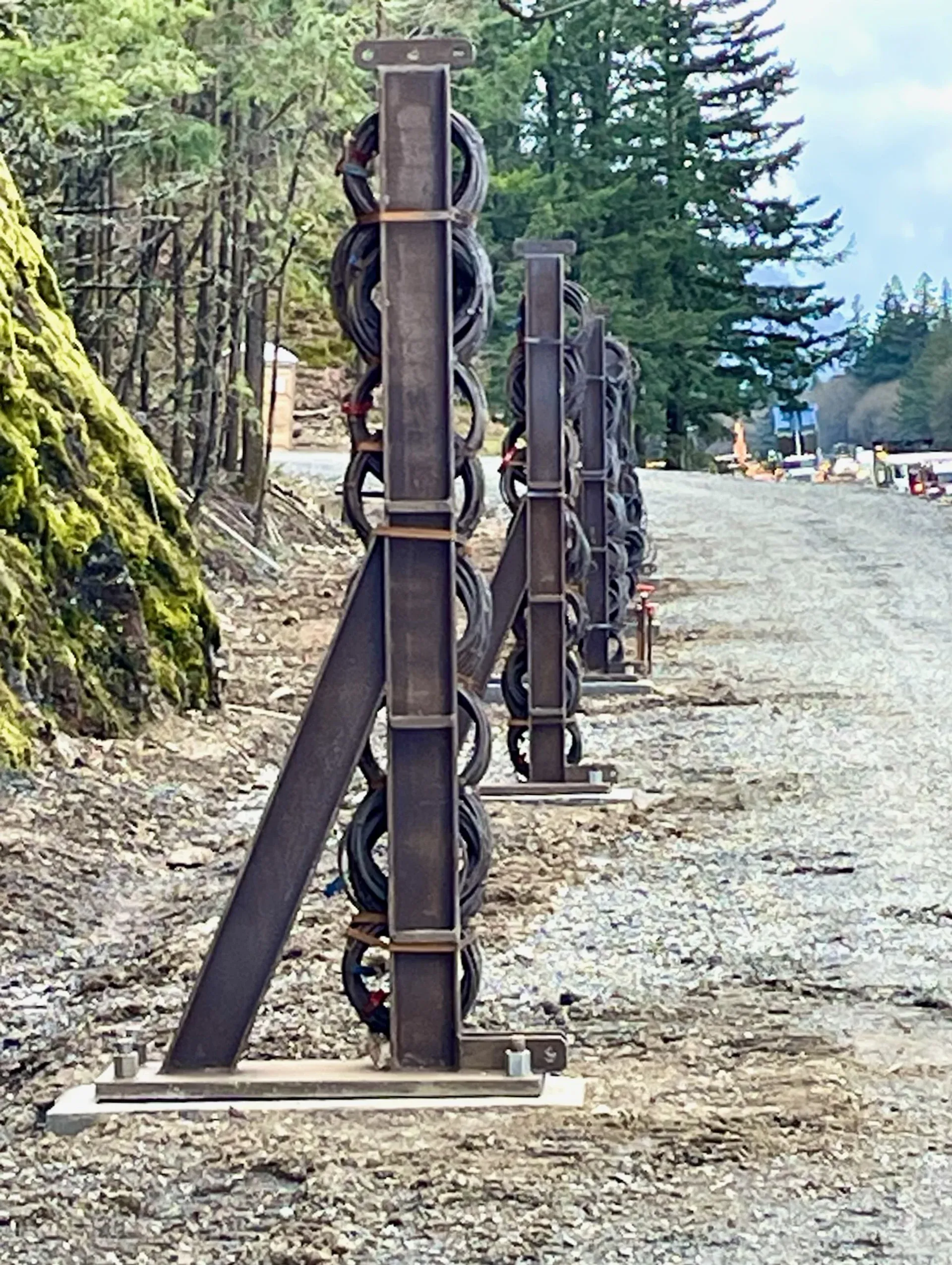
High-capacity anchors secure rockfall barrier post foundations in steep terrain.
Learn MoreExample Project Types
- Large-scale slope stabilization
- Deep excavation support
- Retaining wall reinforcement
- Dam and spillway anchoring
- Bridge abutment stabilization
- Mining highwall support
- Landslide remediation
- Tunnel portal reinforcement
Our Work in Action
Why Choose Rock Supremacy for Cable Anchors
Precision Drilling
Our experienced crews deliver accurate hole placement in fractured, blocky, and challenging rock conditions.
Certified Tensioning
Trained technicians perform multi-strand stressing with calibrated equipment and complete documentation.
Steep Terrain Access
In-house drill platforms and rope-access capability allow installation where conventional equipment cannot operate.
Rapid Emergency Response
48-hour mobilization for emergency stabilization of failing slopes and structures.
Complete Testing
Every anchor is proof-tested to verify design capacity with full documentation for owner records.
Our Work
See how we've applied this technique and others to solve real-world geotechnical challenges.

Bingham Canyon Mine Support
Highwall stabilization in one of the world's largest open-pit mines to ensure safe ongoing extraction.

I-70 Corridor Stabilization
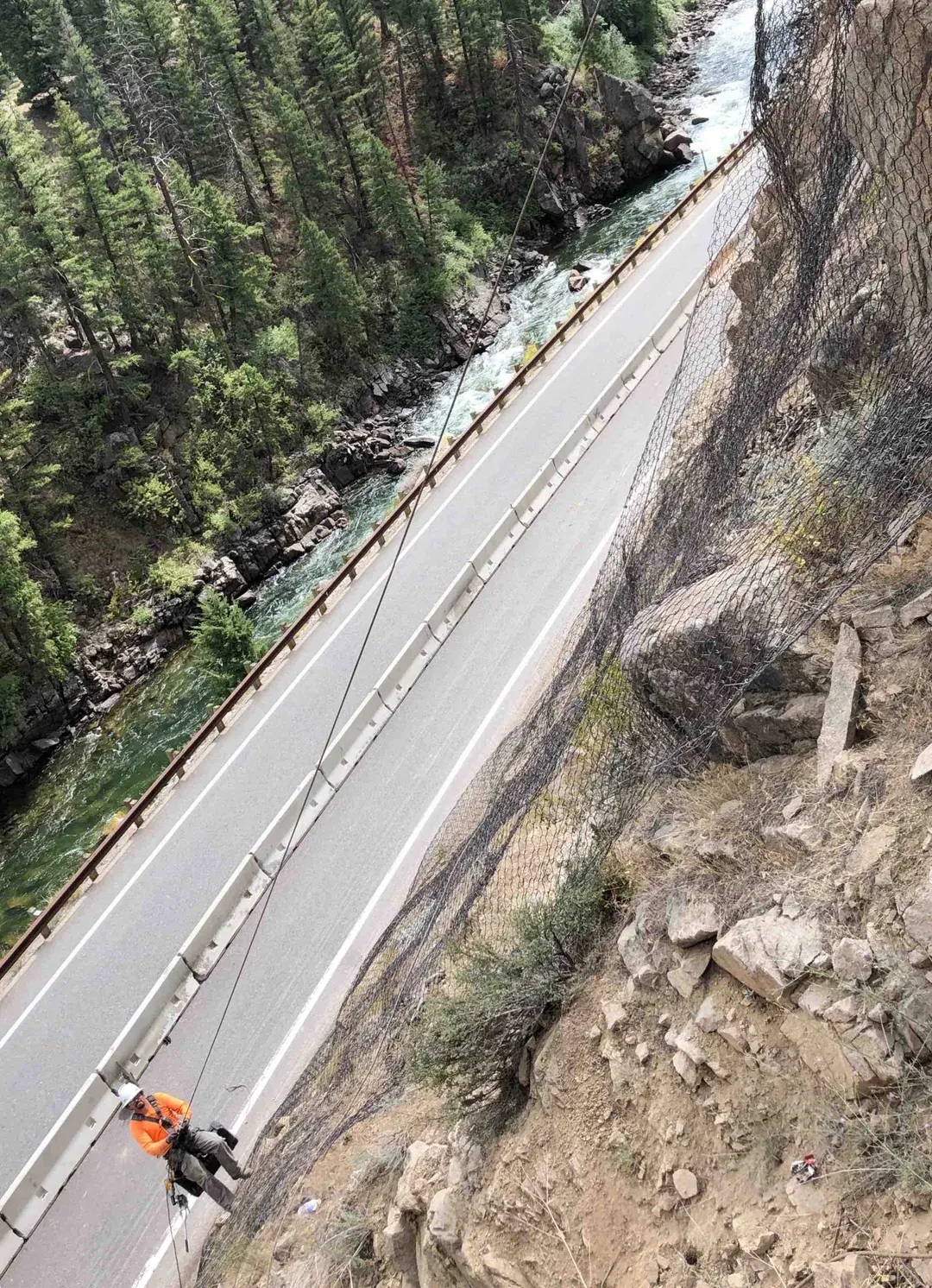
Installed 50,000 sq ft of high-tensile mesh and performed extensive scaling after a major weather event.

Lava Hot Springs Slope Stabilization
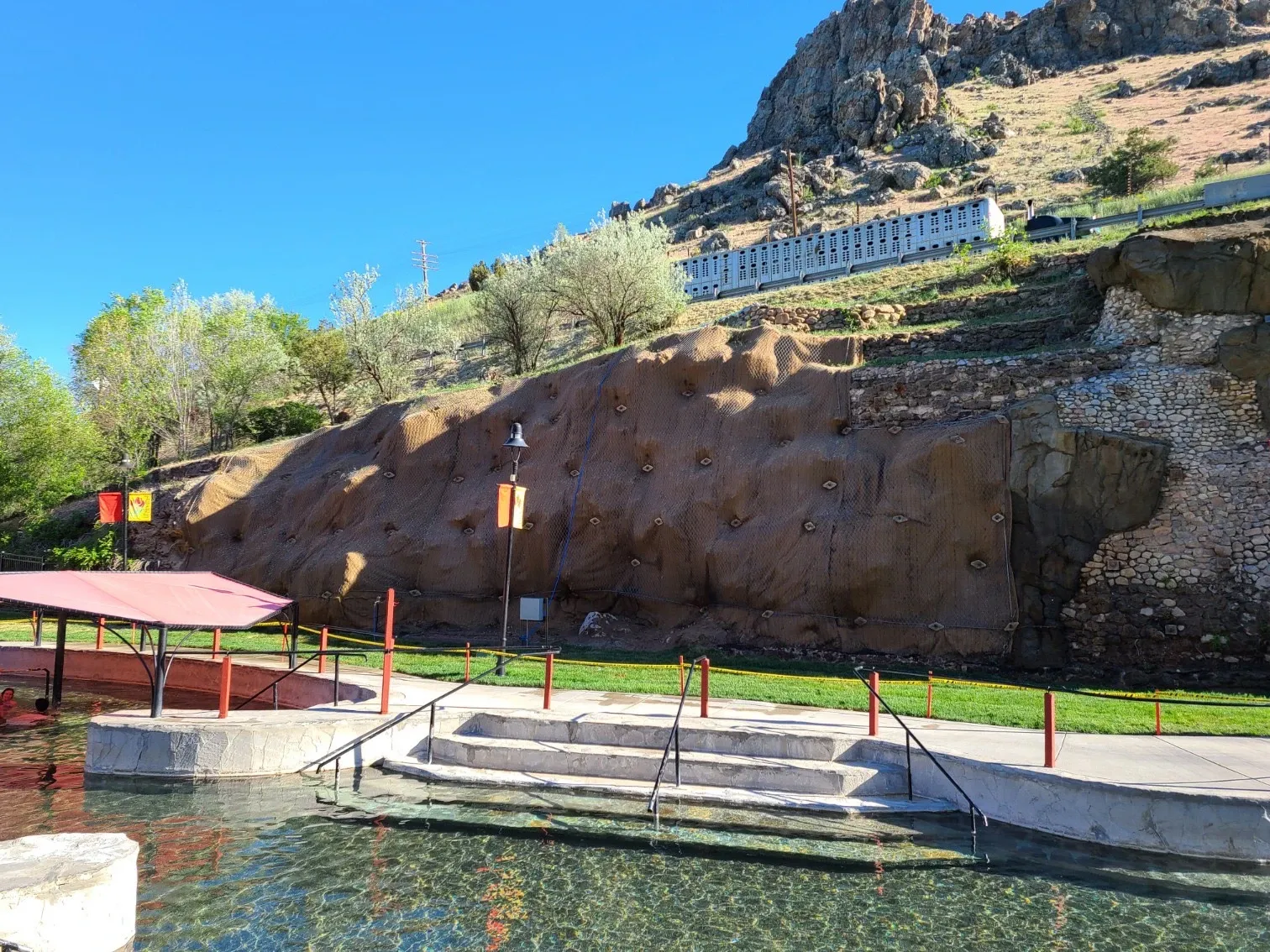
Multi-phase slope stabilization project protecting the historic hot springs resort and Highway 30 from an active landslide.
Cable Anchors FAQ
Client Testimonials
Trusted by DOTs, engineering firms, and property owners nationwide.
Deploy Us
Ready to discuss your project? Our team is standing by to assess your site conditions and develop a custom solution using Cable Anchors and other proven techniques.
Emergency (24/7)
(541) 383-7625Bidding & Estimates
Info@RockSupremacy.comHeadquarters
Licensed in CO, UT, WY, ID, MT, CA, WA, OR, TN, VA
Request Consultation
Related Techniques
Explore other engineering methods we use to deliver comprehensive geotechnical solutions.
H-Pile Walls
H-pile walls use driven or drilled steel H-beams with lagging between flanges to create robust earth retention systems for deep excavations, bridge abutments, and permanent retaining structures.
Rock Bolting
Rock bolting stabilizes fractured, jointed, or unstable rock masses by anchoring steel bars deep into competent rock. By tying loose blocks back to stable substrate, rock bolts improve the overall strength and cohesion of slopes, cuts, tunnels, and vertical faces.
Soldier Pile Walls
Soldier pile walls are proven earth retention systems for stabilizing deep excavations and steep slopes. Steel beams installed at intervals with lagging placed between them provide flexible, economical support that adapts to site constraints.
Tieback Anchors
Tieback anchors provide active lateral reinforcement for retaining walls, excavation support systems, and slope stabilization by transferring loads deep into stable ground or rock. These post-tensioned elements are essential for deep excavations and high-load applications.