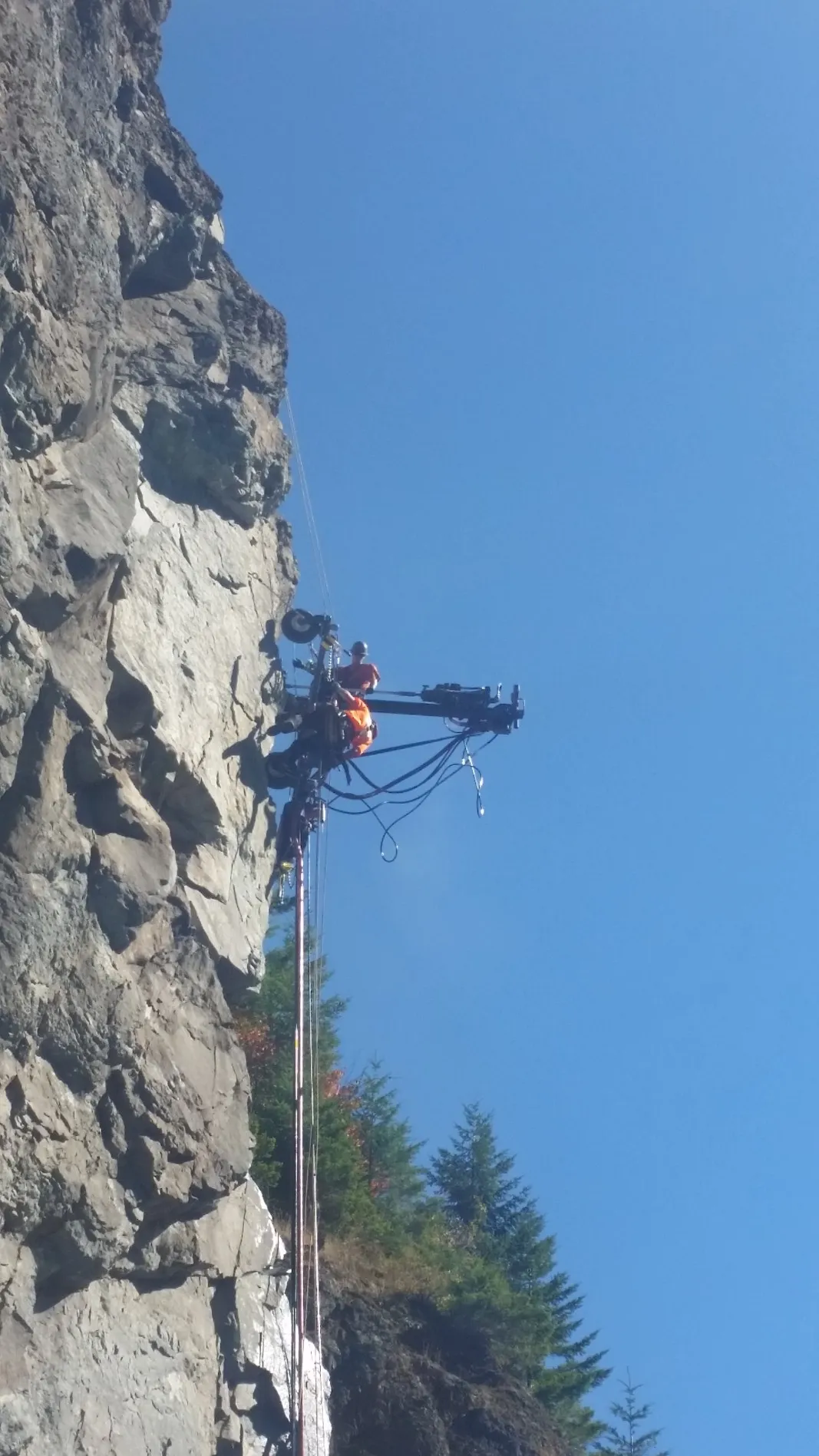
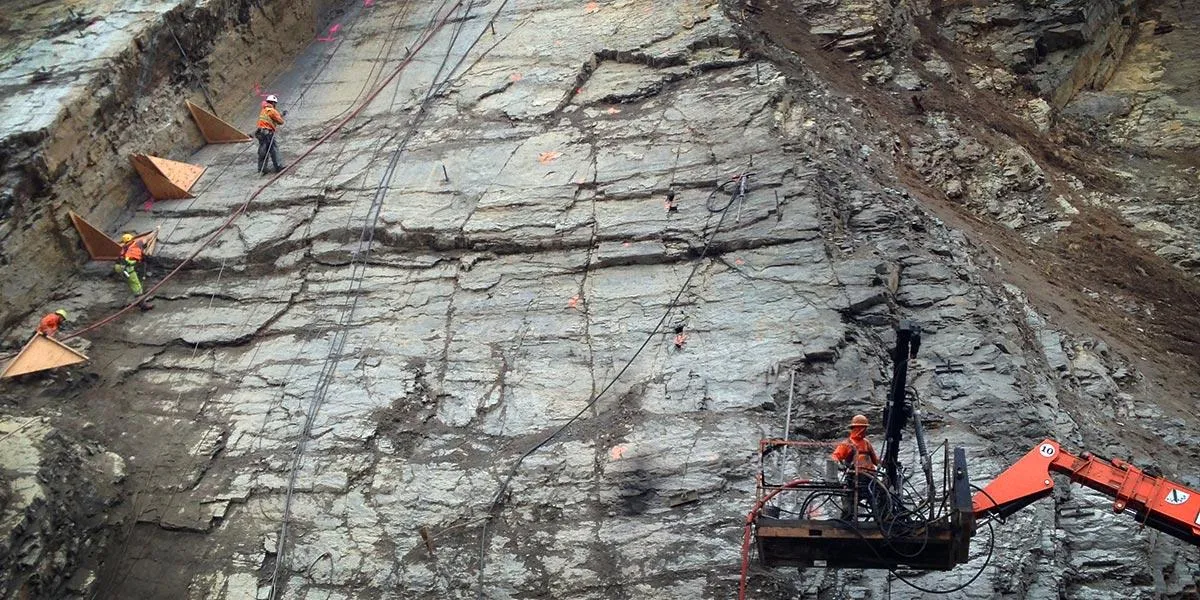
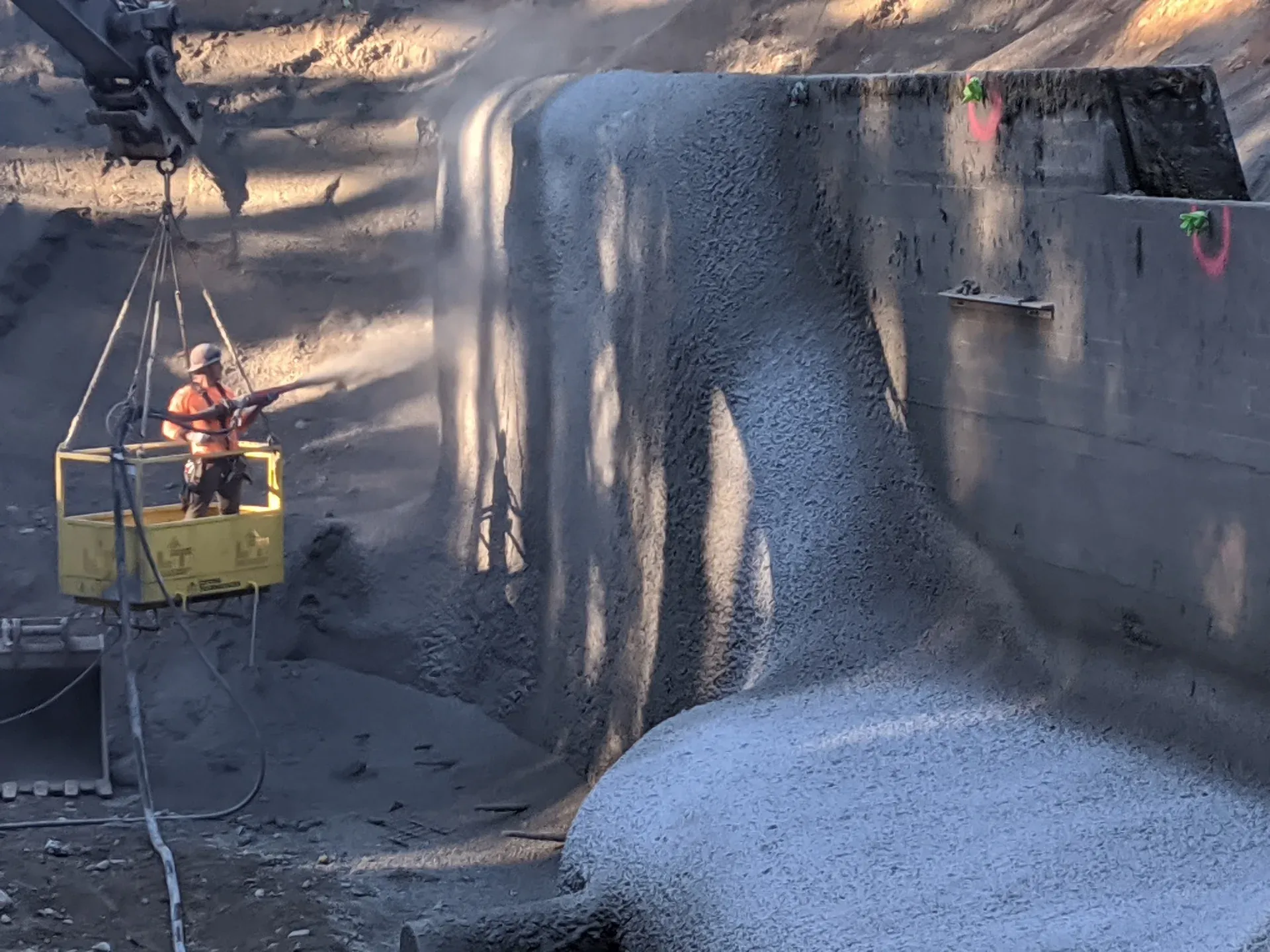
Construction begins with a borehole drilled to the design depth and diameter using rotary or rotary-percussion equipment, sized to provide the annular gap specified by the resin manufacturer (typically 1/8 to 1/4 inch larger than the bar diameter). Hole cleanliness is far more critical than for cement-grouted systems because adhesive bond is mechanical-chemical rather than hydraulic, and any residual drill cuttings, dust, or moisture on the borehole wall reduces the bond directly. ICC-ES AC308 testing protocols and most epoxy manufacturer specifications require a defined cleaning sequence: brush, blow with oil-free compressed air, brush again, blow again, repeated until the wall is visibly clean. Wet holes require either a moisture-tolerant epoxy formulation or proactive water displacement with the resin placed bottom-up by tube.
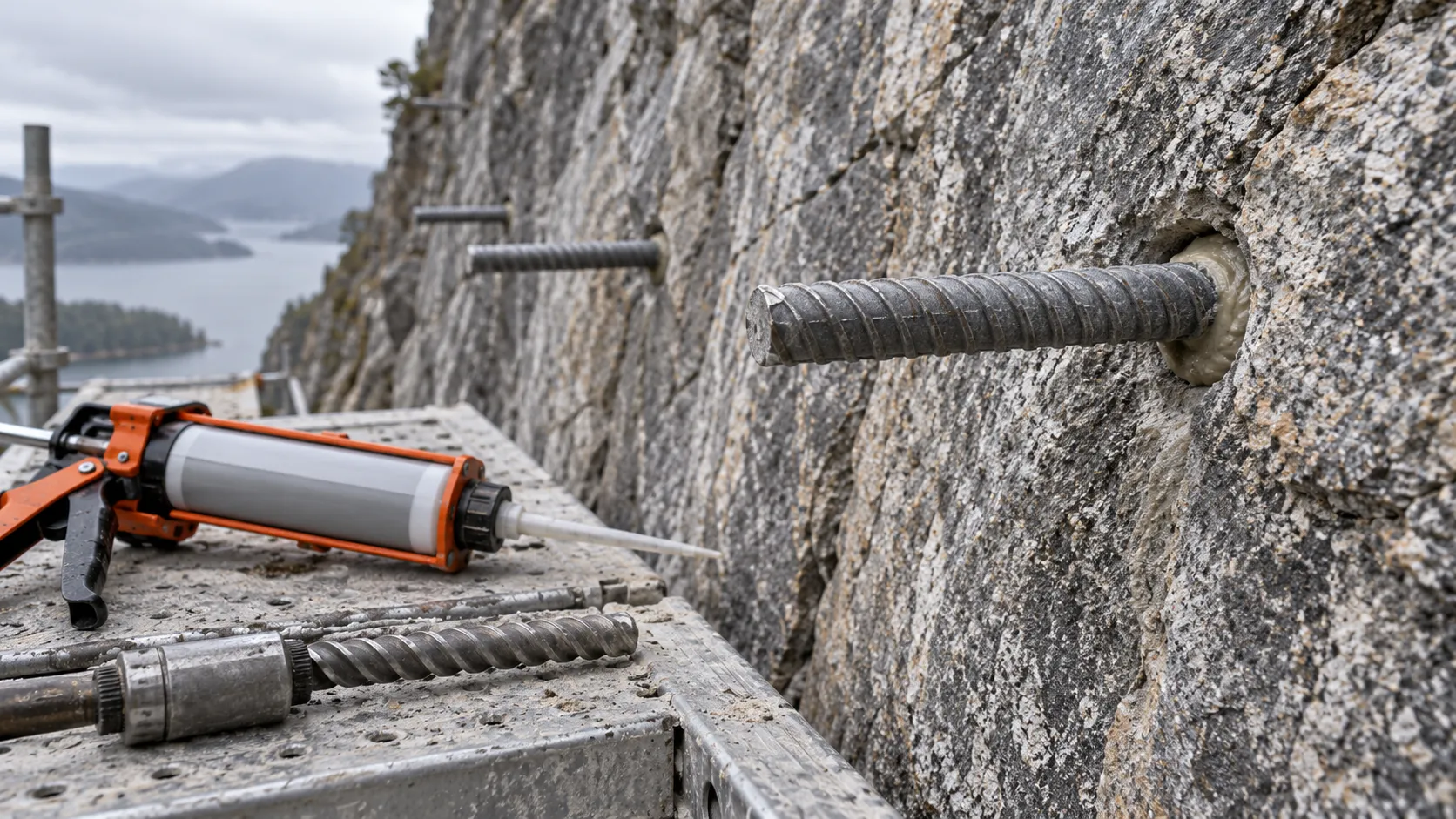
Resin placement uses one of two methods. In cartridge spin-set, the most common method in mining and rapid-cycle work, pre-loaded plastic cartridges containing the resin and hardener are pushed to the toe of the hole, and the bar is rotated through them as it is driven home. The rotating bar ruptures the cartridges, mixes the components, and forces the resulting resin up the annular space around the bar, leaving the hole completely filled in seconds. In bulk injection, used for larger diameters, longer embedments, and structural concrete anchors, the two-part epoxy is metered through a static-mix dispensing nozzle from the toe of the hole upward, displacing air and ensuring complete encapsulation before the bar is set.
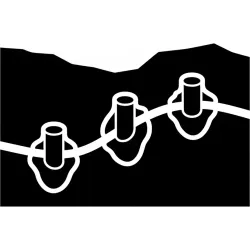
Once the resin has reached gel time, the bar is held in position until full cure, after which a bearing plate and nut may be installed at the collar where the dowel pins surface elements such as mesh or a shotcrete liner. The bar is now a passive bonded element: load develops only as the rock or concrete substrate attempts to deform, with the resin column transferring shear into the bar and the bar transferring tension into the competent material behind the discontinuity. Because epoxy and polyester resins develop higher bond stress per unit length than cement grout, embedment lengths can often be shorter than equivalent cement-grouted dowels for the same design load, which is the underlying reason resin systems dominate post-installed adhesive anchors in concrete where embedment depth is constrained by the parent structure.
 Grouting
  Rock Scaling
  Rock Anchoring