Sculpted Shotcrete Finishes

Sculpted Shotcrete Finishes

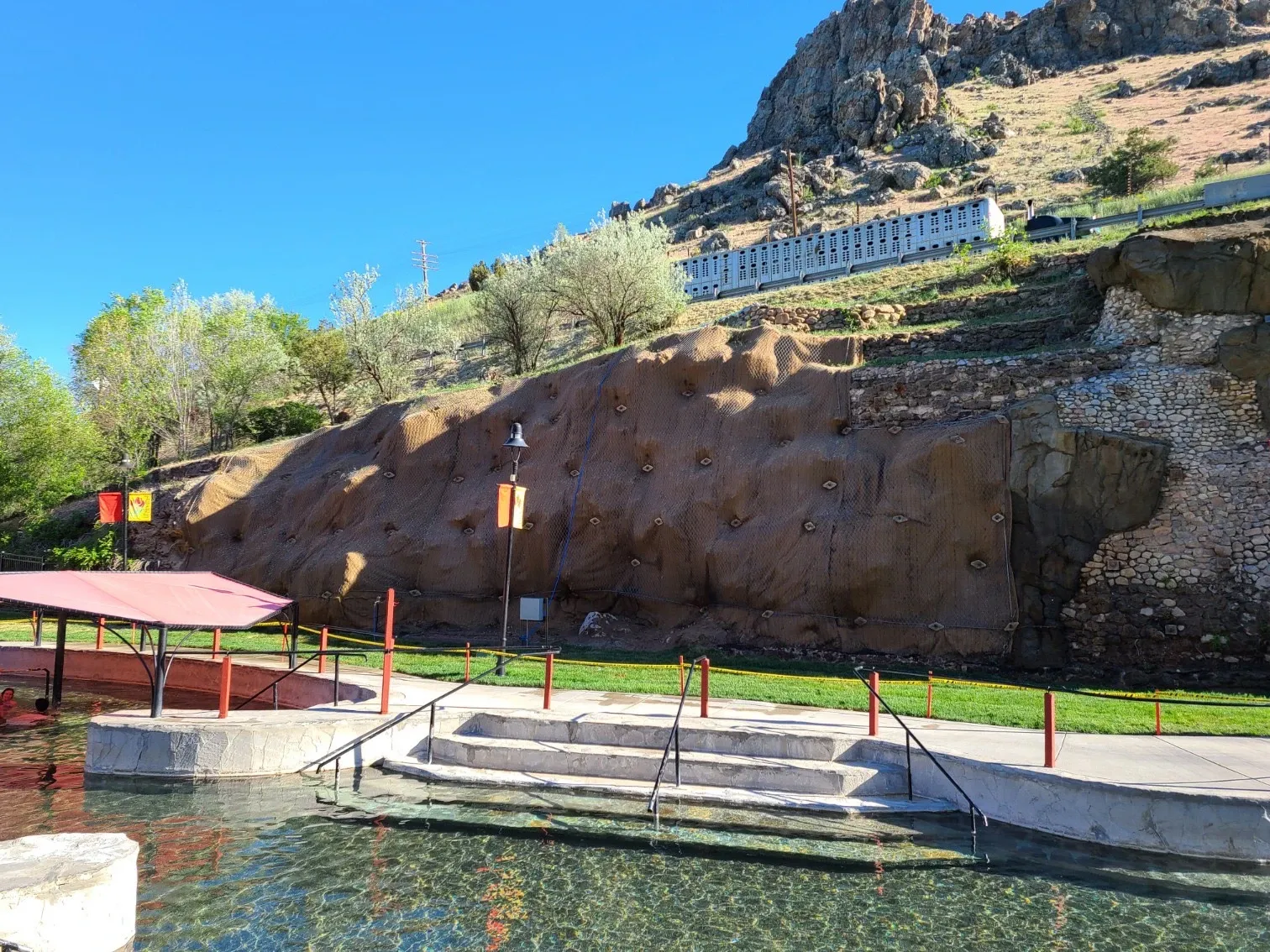
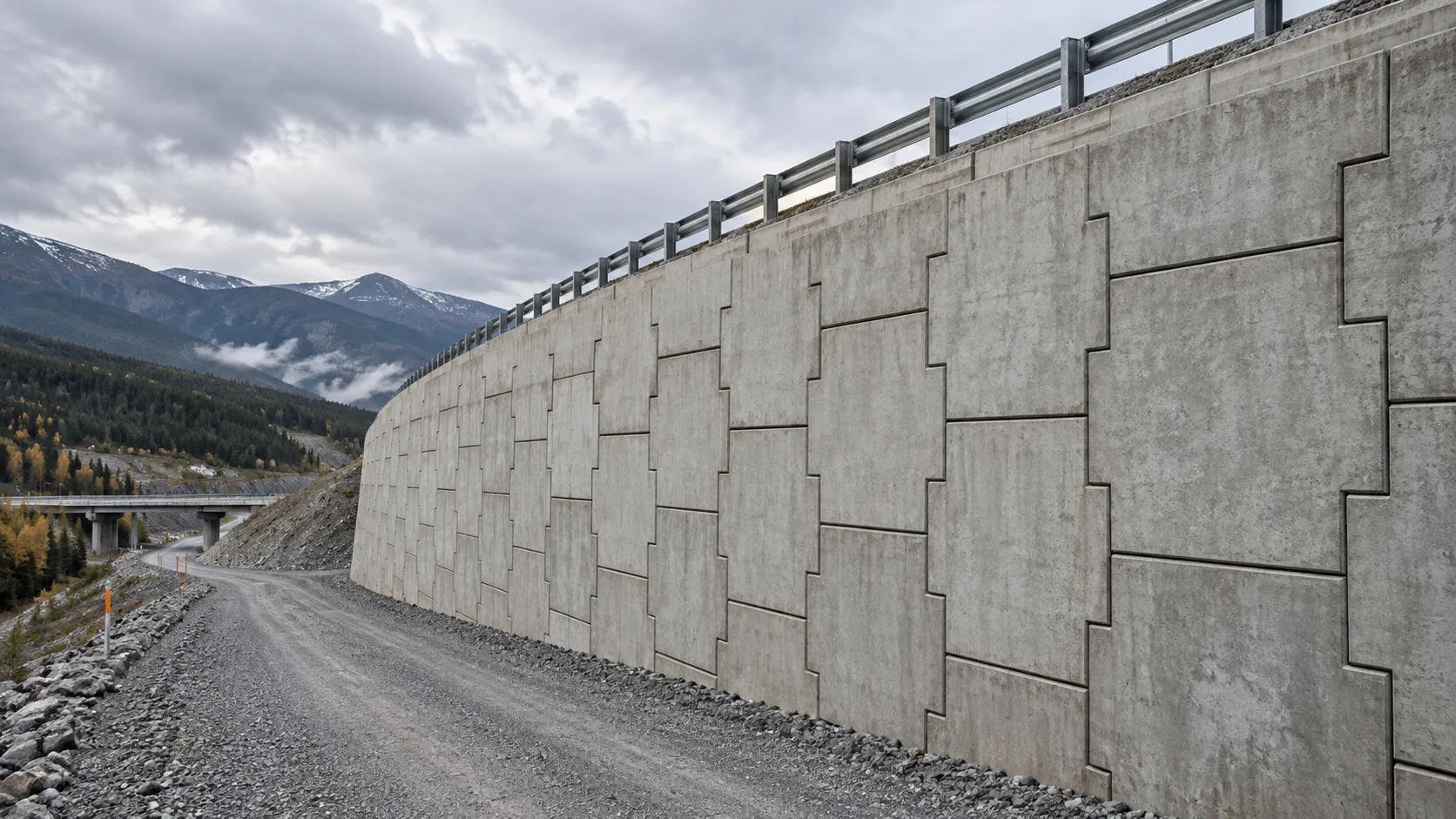
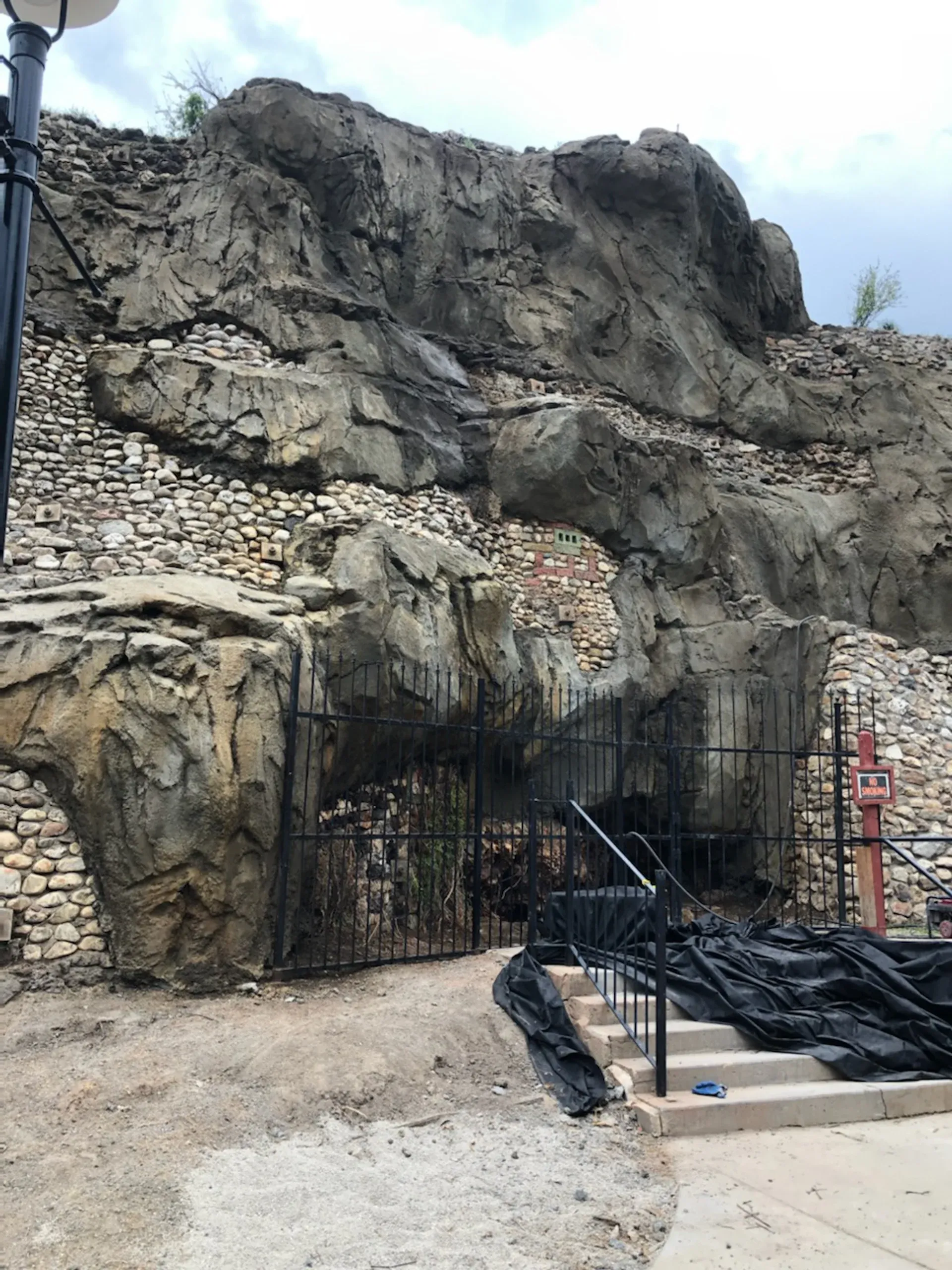
Sculpted shotcrete is structural shotcrete carved in the plastic state to replicate natural rock, dry-stacked stone, or custom architectural textures, then stained with iron oxide pigments and sealed for UV-stable, weather-resistant aesthetics. The system pairs full ACI 506 structural capacity with engineered finish work for highway slope facings, retaining walls, theme park rockwork, and architectural civil features.

4,000-6,000
psi Substrate Strength
4-6 hr
Plastic Carving Window
ASTM C979
Pigment Specification
5-10 yr
Sealer Recoat Cycle
Overview

Understanding Sculpted Shotcrete

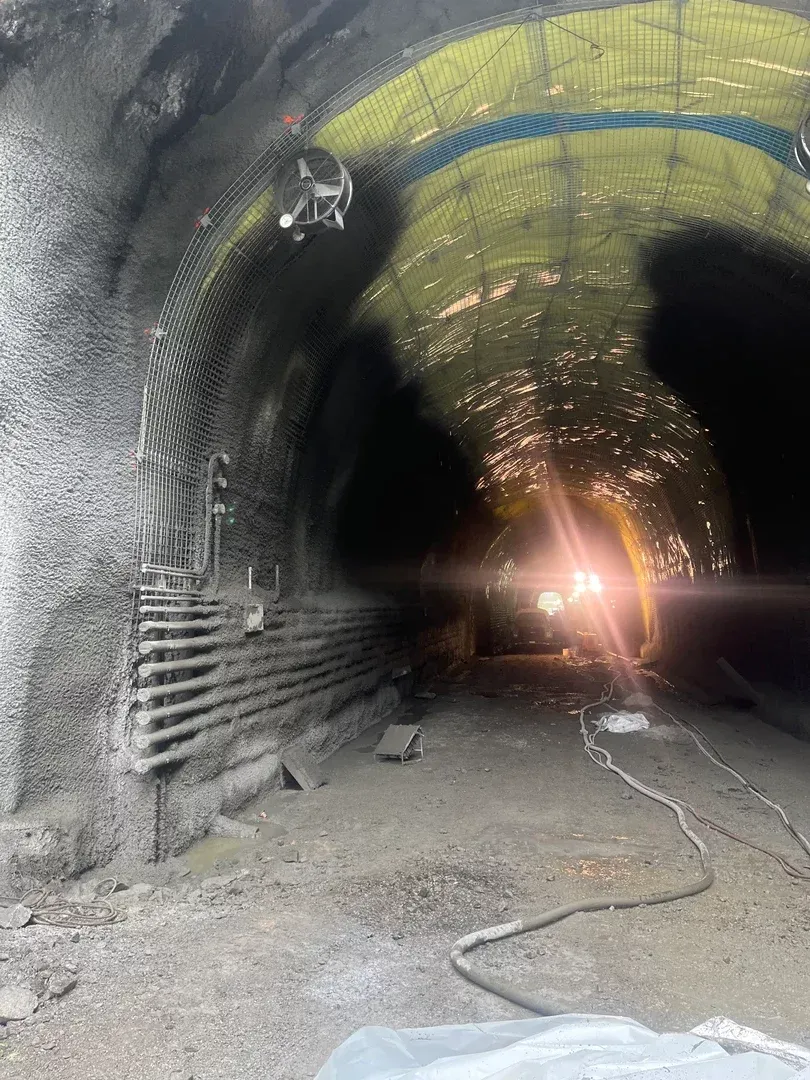
Sculpted shotcrete is structural shotcrete carved in the plastic state to replicate natural rock formations, dry-stacked stone masonry, or custom architectural textures, then stained with iron oxide pigments and sealed for UV durability. The structural substrate follows the same ACI 506R and ACI 506.2 specifications that govern load-carrying structural shotcrete on soil nail walls and tunnel linings, so the system delivers full engineered structural capacity plus engineered aesthetics in a single continuous element.

Decorative shotcrete carving emerged from theme park rockwork practice in the mid-20th century and was scaled into civil context-sensitive design through DOT aesthetic guidelines for highway slope cuts in scenic corridors, national parks, and tribal lands. The discipline pairs codified structural placement (ACI 506.2 acceptance, ACI CP-60 nozzleman certification, ASTM C979 pigment specification) with craft-driven artisan carving, and the work is delivered by experienced shotcrete contractors as engineered retaining wall facings, sound walls, and architectural site walls.

What Is Sculpted Shotcrete?

Sculpted shotcrete is a two-layer system: a structural shotcrete substrate placed and accepted under ACI 506R and ACI 506.2, plus a 1 to 3 inch carving stock applied while the substrate is still plastic and hand-sculpted into a target texture before the shotcrete sets. After initial cure, the carved face is finished with topical iron oxide stains layered over integral pigments batched into the structural mix per ASTM C979, then sealed with a breathable silane or siloxane to lock in color, water repellency, and UV resistance. The result is a single continuous element that carries computed structural loads while reading as natural rock, stacked stone, or a custom architectural texture from normal viewing distances.

The structural designation is identical to any other application of structural shotcrete: design strength typically 4,000 to 6,000 psi, engineered reinforcement (welded wire mesh on a soil nail wall facing or rebar grid on a free-standing retaining wall), and acceptance testing on cores per ASTM C1604. The sculpted finish is an applied craft layer placed on top of that engineered substrate, not a substitute for it. The carving discipline itself is craft-driven rather than codified, with no AASHTO or FHWA standard prescribing texture pattern, joint spacing, or staining technique; quality control therefore rests on the structural base meeting ACI 506.2, the pigments complying with ASTM C979, and the carving artisan demonstrating prior work that meets the project aesthetic intent through portfolio review and on-site mockups.

Key Benefits

  • Aesthetic integration with natural surroundings
  • Combines function with visual appeal
  • Erosion protection with design flexibility
  • Durable, low-maintenance finish
  • Custom colors to match local rock

Used In Our Services

The Engineering

How Sculpted Shotcrete Is Placed and Carved

How the system carries load in service, and how we build it on site.

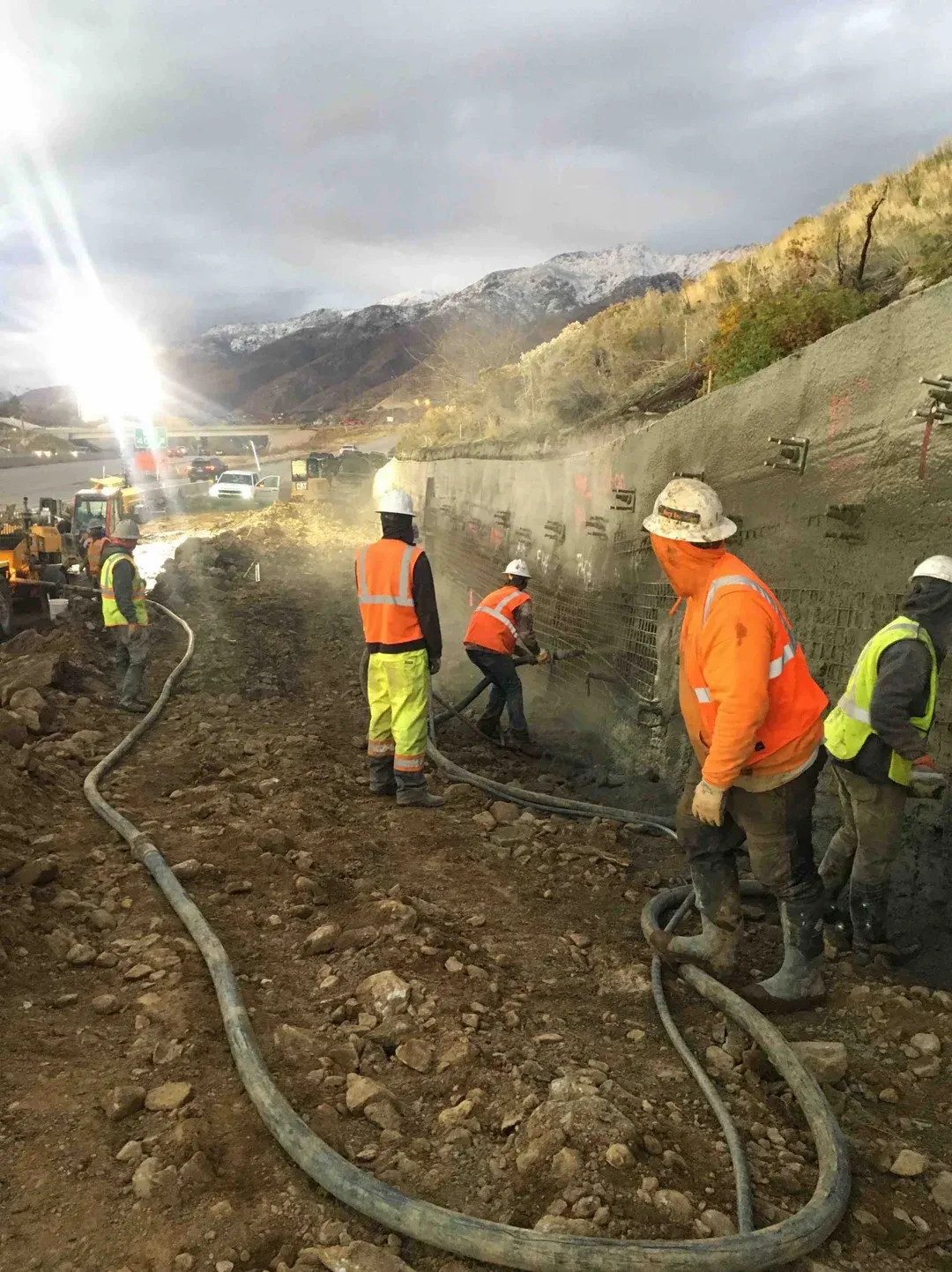
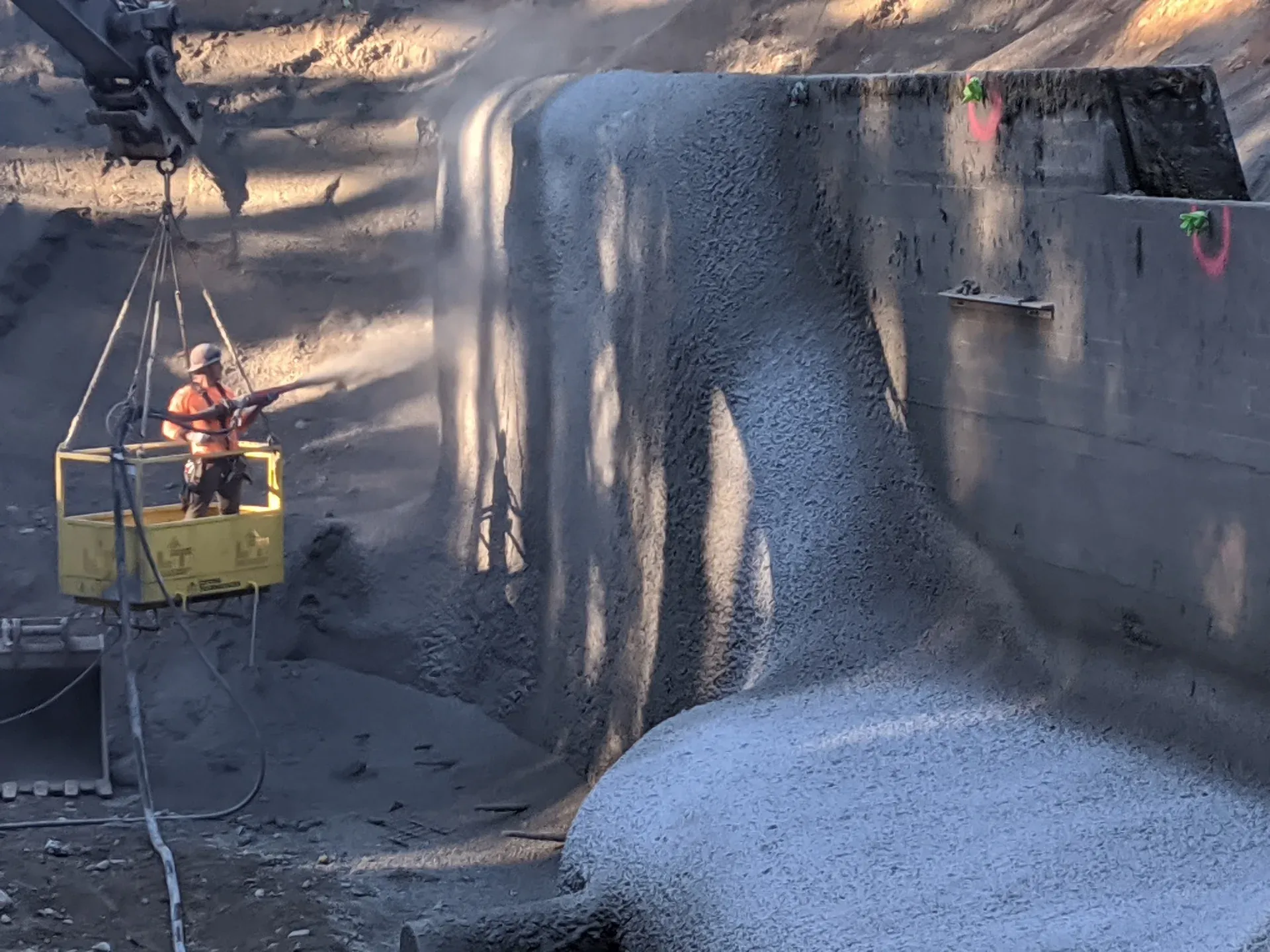
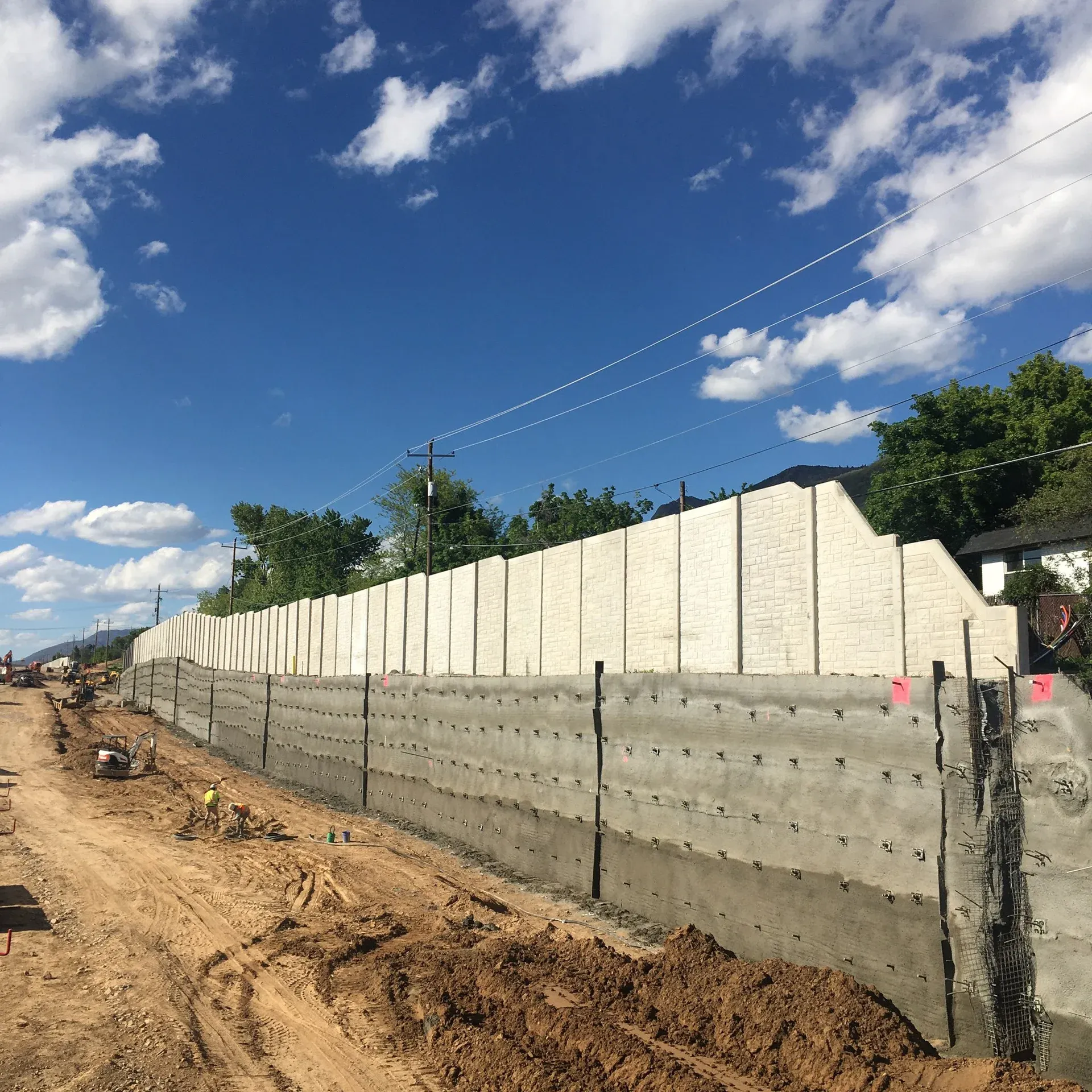
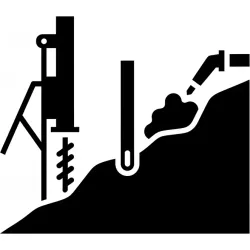
Construction proceeds in three coordinated stages: structural shotcrete placement, plastic-state carving, and color-and-seal finishing. The first stage follows standard structural shotcrete practice. Substrate is prepared and reinforcement is installed (welded wire mesh tied to bearing plates on a soil nail wall, or a rebar grid on a free-standing wall), then a wet-mix base is sprayed in lifts of 2 to 4 inches per pass to design thickness, typically 6 to 10 inches for a load-carrying facing. Drainage is integrated at this stage, with weep drains and the geocomposite drainage mat behind the wall placed before the structural shotcrete is sprayed.

The sculpt layer is applied immediately after, while the underlying shotcrete is still plastic. A second pass adds 1 to 3 inches of carving stock to the face, and the artisan sculpts that stock into the target texture using trowels, knives, brushes, and stamps. The plastic working window is typically 4 to 6 hours in moderate temperatures of 60 to 80 deg F, shorter in heat or low humidity and longer in cool, humid conditions. Reference photographs of local geology drive the carve, with joint patterns, weathering striations, and bedding planes mimicked from actual rock outcrops near the project site to produce a context-appropriate finish that reads as native rather than imported geology.

Color is applied after the shotcrete reaches initial cure. Two color systems are layered. Integral iron oxide pigments are batched into the structural mix at 5 to 10 percent of cement weight per ASTM C979, providing UV-stable base color that is part of the cement matrix rather than a surface coating. Topical iron oxide stains are then washed across the carved surface to develop shadow, contrast, and weathering depth that distinguishes a high-quality sculpt from a flat single-color finish. A breathable silane or siloxane sealer is applied last to lock in the stain, slow surface efflorescence, and protect against chloride and freeze-thaw damage. The sealer is reapplied on a 5 to 10 year cycle to maintain UV resistance and color depth across the design life of the wall.

1

Surface Preparation

Install drainage mat and reinforcement; prepare substrate for shotcrete application.

2

Shotcrete Application

Apply structural shotcrete layer to design thickness with proper technique.

3

Artistic Carving

Sculpt wet shotcrete to create realistic rock textures, joints, and features.

4

Staining & Sealing

Apply oxide stains to match local geology; seal for UV and weather protection.

System Variants

Sculpted Shotcrete Pattern Variants

Type 01

Natural Rock Face Replication (Granite, Sandstone, Basalt, Limestone)

Realistic rock face carving is the dominant variant on context-sensitive highway slope facings, theme park rockwork, zoo habitats, and high-end residential and commercial walls. The carve mimics specific local geology, with bedding planes, weathering pockets, joint sets, and color variation matched from reference photographs of nearby outcrops. Skill demand is highest for this variant: the sculptor must read rock-formation logic (how joints propagate, how weathering removes softer beds faster than harder beds, how coloration varies between fresh and weathered surfaces) and reproduce that logic across hundreds of square feet of wall. Scale ranges from small accent features at ten feet of wall height up to multi-story dramatic cliff features at theme park entry monuments and resort approaches. Pricing premium over plain structural shotcrete is typically the highest of the three variants because of the carving labor and the multi-pass topical stain work required to reproduce natural color depth.
Type 02

Coursed-Stone or Stacked-Stone Masonry Replication

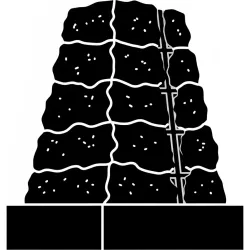
Stacked-stone carving replicates dry-stacked fieldstone, ashlar coursing, or formal cut-stone masonry. The pattern is geometric and repeatable, executed with templated tools and reference courses, so the labor curve is faster than free-form rock face replication once the pattern is established on the first panel. Common applications are residential retaining walls, commercial entry monuments, parkway and HOA aesthetic walls, and architectural site walls where the design intent is recognizable masonry rather than naturalistic geology. Color staining is typically more uniform than rock-face replication, with subtle stone-to-stone variation rather than the dramatic contrast of natural geology. Pricing premium sits between plain structural shotcrete and full natural-rock replication, making this the workhorse pattern for production residential and commercial work.

Type 03

Non-Representational Textured and Stamped Finishes

Non-representational textures are geometric or organic patterns applied without mimicking a specific natural model. Examples include broom-textured sound walls, stamped architectural patterns, randomly grooved organic textures, and contemporary patterns specified in landscape-architect drawings. The carving is executed with stamps, rollers, brooms, and templated tools rather than hand-sculpted, which keeps labor costs low and production rates high. The variant is the natural choice for sound walls along urban freeways, industrial screening walls, and contemporary commercial design where mimicking natural rock would feel out of place. Pricing premium over plain structural shotcrete is the smallest of the three variants and scales linearly with the number of stamping or texturing passes.

Side By Side

Sculpted Shotcrete vs Alternatives

VS

Sculpted Shotcrete vs Plain Structural Shotcrete

The defining difference is the finish layer, not the structure. Both systems use the same mix design, the same reinforcement, and the same ACI 506.2 acceptance criteria on the structural base. Plain structural shotcrete finishes flat or to a steel-trowel face and exposes natural concrete gray. Sculpted shotcrete adds 1 to 3 inches of carving stock applied while the substrate is still plastic, hand-sculpted into the target texture, then stained and sealed. Structural capacity is identical between the two; sculpted shotcrete carries an additional 30 to 50 percent cost premium for the carving labor, integral and topical pigments, and sealer. Specify sculpted on visible features in scenic corridors, theme parks, or high-end private projects where aesthetic value justifies the premium; specify plain on hidden or industrial work where appearance is not a project driver.

VS

Sculpted Shotcrete vs Precast Architectural Concrete Panels

The defining difference is cast-in-place organic versus panelized catalog. Sculpted shotcrete is one continuous surface conformed directly to the structural facing, with no joints other than carved expression joints and no need for a backing wall behind a separate panel cladding. Precast architectural panels are catalog-pattern facings cast in a plant and shipped to site, attached to a structural backing wall with anchors. Panels are faster on tall, regular, vertical walls with clean geometry. Sculpted shotcrete dominates on irregular cuts, curved alignments, soil nail walls where the wall facing and the structural facing are the same element, and bespoke projects where the client wants a one-off design rather than a catalog selection. Panels show seams; sculpt does not.

VS

Sculpted Shotcrete vs Stone Veneer or Manufactured Stone

The defining difference is integrated full-thickness relief versus adhered thin veneer. Sculpted shotcrete is carved into the structural facing as a single continuous element, with relief depths up to 3 inches and no debonding interface. Stone veneer (natural cut stone or manufactured stone) is a thin facing adhered to a structural backing wall with mortar or thin-set, introducing a debonding plane that can fail under freeze-thaw cycling, differential settlement, or curved-substrate stress. Veneer requires a flat, stable backing; sculpted shotcrete conforms directly to irregular cuts, soil nail wall facings, and curved geometries. Veneer is faster and cheaper on small flat walls in protected exposures; sculpted shotcrete dominates on tall, curved, or freeze-thaw-exposed structural facings where long-term integrity matters more than first cost.

Not sure which system fits? We'll walk through the tradeoffs for your site conditions.

Talk Through Your Options
Where It Fits

Where Sculpted Shotcrete Is Used

Departments of transportation use sculpted shotcrete on highway cut-slope facings under context-sensitive design and visual-impact mitigation requirements, particularly in scenic corridors, national parks, and tribal lands where FHWA Visual Impact Assessment protocols require engineered facings that read as natural geology. Private theme park, zoo, and resort construction is the second major market, with multi-story sculpted cliff features, animal habitats, and entry monuments built on shotcrete substrates carved and stained to replicate species-appropriate or thematic environments. Residential and commercial luxury retaining walls fill out the high-end private market, particularly on hillside lots in California, Colorado, and the Pacific Northwest where natural-stone aesthetics are a buyer expectation but the structural demand requires engineered retention.

Civil sound walls, architectural site walls, and parks-and-trails features round out the application set. Sound walls along urban freeways frequently combine sculpted texture (visual interest at pedestrian distance) with absorbent acoustic backing, with shotcrete forming both the structural barrier and the textured face. Bridge-abutment aesthetics, channel-armoring veneers on flood-control walls, and dam-rehabilitation visual treatments are smaller but persistent application categories. The common thread is that the structural function (load-carrying retaining walls, soil nail wall facings, MSE wall face-up details, sound-wall barriers) cannot be compromised, so the aesthetic is engineered onto a structural shotcrete substrate rather than applied as a separate non-structural cladding that introduces a debonding interface.

Highway cut slope facing
Residential retaining walls
Park and trail features
Zoo and theme park rockwork
Commercial landscape walls
Bridge abutment aesthetics
Benefits

Key Advantages

Visual Integration

Sculpted finishes blend engineered walls into natural landscapes, meeting aesthetic requirements for sensitive areas.

Structural + Aesthetic

Full structural capacity of reinforced shotcrete combined with natural rock appearance.

Custom Design

Each project receives custom texture and color design to match local geology and project requirements.

Permanent Color

Integral oxide stains and UV-stable sealers maintain appearance for decades without repainting.

Design Flexibility

Any rock type can be replicated, granite, sandstone, limestone, basalt, in any configuration.

Engineering

Technical Considerations

Soil/Rock Conditions

Substrate must be stable and properly drained. Drainage mat behind shotcrete prevents moisture migration and staining.

Groundwater

Comprehensive drainage system essential to prevent efflorescence and staining on finished surfaces.

Load Capacity

Structural shotcrete layer provides design capacity. Sculpted finish layer adds minimal additional thickness.

Spacing

Carved joints create realistic rock patterns while serving as controlled crack locations.

Installation Method

Two-layer application: structural shotcrete base, then sculpt layer carved while plastic. Stains applied after initial cure.

Equipment Used

  • Shotcrete pump and delivery
  • Sculpting and carving tools
  • Oxide stains and applicators
  • Sealers and sprayers
  • Reference photos of target geology

Limitations

  • Weather-sensitive carving window
  • Skilled artisans required
  • Higher cost than plain shotcrete
  • Color matching requires samples and approval

Technical Specifications

Compressive Strength
4,000 to 6,000 psi
Application
Wet Mix / Dry Mix
Finish
Carved / Stained / Textured
Reinforcement
Fiber / Welded Wire Mesh
Codes And References

Engineering Standards and References

ACI

ACI 506R

Guide to Shotcrete

Canonical technical reference governing the structural shotcrete substrate beneath any sculpted finish. Covers mix design, reinforcement detailing, nozzling technique, and quality-control protocols for both wet-mix and dry-mix processes.

ACI

ACI 506.2

Specification for Shotcrete

Project specification template defining acceptance criteria, mockup requirements, test panel frequency, and qualification of nozzlemen and equipment for the structural base. Sculpted projects typically reference 506.2 verbatim for the substrate and add a project-specific aesthetic acceptance section for the carving and staining.

ASTM

ASTM C979

Standard Specification for Pigments for Integrally Colored Concrete

Governs the iron oxide and other inorganic pigments used for integral coloring of the structural mix and for topical stains on the carved face. Specifies UV stability, alkali resistance, and color-fastness performance. Sculpted shotcrete relies on C979-compliant pigments to deliver the 20+ year color durability that distinguishes the system from painted or surface-tinted finishes.

ACI

ACI CP-60

Shotcrete Nozzleman Certification

Hands-on field certification program for shotcrete operators, differentiated by orientation (vertical, overhead, horizontal) and by process (wet-mix, dry-mix). Sculpted projects require certified nozzlemen on the structural base to ensure the encapsulation discipline that makes the aesthetic facing structurally credible.

Expertise

Why Choose Rock Supremacy for Sculpted Shotcrete

Skilled Artisans

Experienced sculptors create realistic rock textures that read as natural geology from normal viewing distances.

Geology Matching

We study local rock formations and create custom texture and color palettes for each project.

Structural Foundation

Our structural shotcrete expertise ensures sculpted walls have proper reinforcement and drainage placed under ACI 506.2 acceptance.

Color Durability

ASTM C979 iron oxide pigments and UV-stable silane or siloxane sealers maintain appearance for decades in all climates.

Portfolio of Work

Years of sculpted shotcrete projects demonstrate our capability to meet any aesthetic requirement.

Questions

Sculpted Shotcrete Finishes FAQ

Sculpted shotcrete is structural shotcrete carved in the plastic state to replicate natural rock, dry-stacked stone, or custom architectural textures, then stained with iron oxide pigments and sealed for UV durability. The structural substrate is placed under ACI 506R and ACI 506.2, identical to the load-carrying shotcrete used on soil nail wall facings and tunnel linings, so the system delivers full engineered structural capacity plus engineered aesthetics. Typical buildup is a 6 to 10 inch structural base plus a 1 to 3 inch carved sculpt layer, finished with topical iron oxide stains and a silane or siloxane sealer.
Plain structural shotcrete is sprayed and finished flat or to a steel-trowel face with no aesthetic treatment beyond natural concrete gray. Sculpted shotcrete adds a 1 to 3 inch carving stock layer applied while the substrate is still plastic, hand-sculpted into rock, stone, or textured patterns, and finished with integral pigments per ASTM C979 plus topical iron oxide stains and a sealer. The structural base is identical (same mix, same reinforcement, same ACI 506.2 acceptance criteria); the difference is entirely in the finish layer and the carving labor, which adds 30 to 50 percent to plain shotcrete cost depending on pattern complexity.
High-quality sculpted shotcrete is virtually indistinguishable from natural rock at normal viewing distances of ten feet or more. Skilled artisans replicate site-specific geology, mimicking joint patterns, bedding planes, weathering pockets, and color variation from reference photographs of nearby outcrops. Visual depth comes from the carved relief plus layered staining: integral oxide pigments establish base color, and topical stains wash shadow and contrast across the surface to reproduce the depth of weathered natural rock. Mockup panels are typically required on civil DOT projects to confirm aesthetic acceptance before production work begins.
Iron oxide pigments per ASTM C979 are UV-stable inorganic colorants that retain hue for 20+ years without significant fade. The integral pigment is part of the cement matrix rather than a surface coating, so weathering exposes more of the same color rather than wearing through to a different substrate beneath. Topical stains can be renewed if desired, and the silane or siloxane sealer is reapplied on a 5 to 10 year cycle to maintain UV resistance and water repellency. With that maintenance cycle, properly sealed sculpted shotcrete maintains appearance across the design life of the wall.
Yes. Sculptors can replicate granite, sandstone, limestone, basalt, river rock, fieldstone, dry-stacked masonry, ashlar coursing, or custom designs from photographs and physical samples of the target geology. The constraint is artisan skill and reference quality rather than material capability, the same shotcrete substrate and stain system supports any pattern. Pricing varies by complexity: highly detailed natural rock face costs more per square foot than simpler stacked-stone or templated textures, with full natural-rock replication sitting at the upper end of the 30 to 50 percent premium range over plain structural shotcrete.
Yes. The sculpted finish is applied over a fully engineered structural shotcrete substrate placed under ACI 506R and ACI 506.2, with full reinforcement detailing and acceptance testing on cores per ASTM C1604. The aesthetic carving adds 1 to 3 inches of finish stock to the face but does not reduce the structural capacity of the base, which is designed independently to meet the project loading. Sculpted shotcrete is used routinely as the facing on permanent soil nail walls, MSE wall faces, and free-standing retaining walls carrying real engineered loads.
Sculpted finishes typically add 30 to 50 percent to plain structural shotcrete cost depending on pattern complexity. Templated textures and stacked-stone patterns sit at the lower end of that range; full natural-rock-face replication with multi-pass staining sits at the upper end. The premium covers additional carving stock, artisan labor, integral and topical pigment systems, and sealer. On visible features in scenic corridors, theme parks, or high-end residential walls, the aesthetic value typically justifies the cost, particularly compared to natural stone veneer or precast architectural panels which are often more expensive per square foot and introduce additional debonding interfaces.
The structural substrate is governed by ACI 506R (Guide to Shotcrete), ACI 506.2 (Specification for Shotcrete), and ACI CP-60 (Shotcrete Nozzleman Certification), the same standards that govern any structural shotcrete element. Integral pigments comply with ASTM C979 (Standard Specification for Pigments for Integrally Colored Concrete). The carving and finish work itself is craft-driven rather than codified: no AASHTO or FHWA standard prescribes texture pattern, joint spacing, or staining technique. Aesthetic quality is established through mockups, artisan portfolio review, and project-specific acceptance criteria written into the specification.
Stone veneer (natural cut stone or manufactured stone) is a thin facing adhered to a structural backing wall with mortar or thin-set, while sculpted shotcrete is a full-thickness sculpted relief carved into the structural facing as a single continuous element. The veneer interface introduces a debonding plane that can fail under freeze-thaw cycling or differential movement, particularly on tall walls or curved substrates; sculpted shotcrete has no such interface. Veneer also requires a flat, stable backing, while sculpted shotcrete conforms directly to irregular cuts, soil nail walls, and curved geometries. Veneer is faster on small flat walls in protected exposures; sculpted shotcrete dominates on tall, curved, or freeze-thaw-exposed structural facings.
The plastic working window for carving is typically 4 to 6 hours in moderate temperatures of 60 to 80 deg F, with shorter windows in heat above 90 deg F or low humidity, and longer windows in cool, humid conditions. Within that window the artisan sculpts the carving stock with trowels, knives, brushes, and stamps to develop the target texture. Once the shotcrete passes initial set, hand-sculpting stops; further texture changes require an additional applied layer or surface tooling. The window drives crew sequencing on production work, with sculpting crews typically following the spraying crew on a defined offset to maintain workable shotcrete throughout the shift.
Testimonials

Client Testimonials

Trusted by DOTs, engineering firms, and property owners nationwide.

Contact

Deploy Us

Ready to discuss your project? Our team is standing by to assess your site conditions and develop a custom solution using Sculpted Shotcrete Finishes and other proven techniques.

Emergency (24/7)

(541) 383-7625

Bidding & Estimates

Info@RockSupremacy.com

Headquarters

Western Division (HQ)
65147 N Hwy 97
Bend, OR 97701
Eastern Division
915 Millennium Ct
Blountville, TN 37617

Licensed in CO, UT, WY, ID, MT, CA, WA, OR, TN, VA

Request Consultation