Tunnel Support Systems
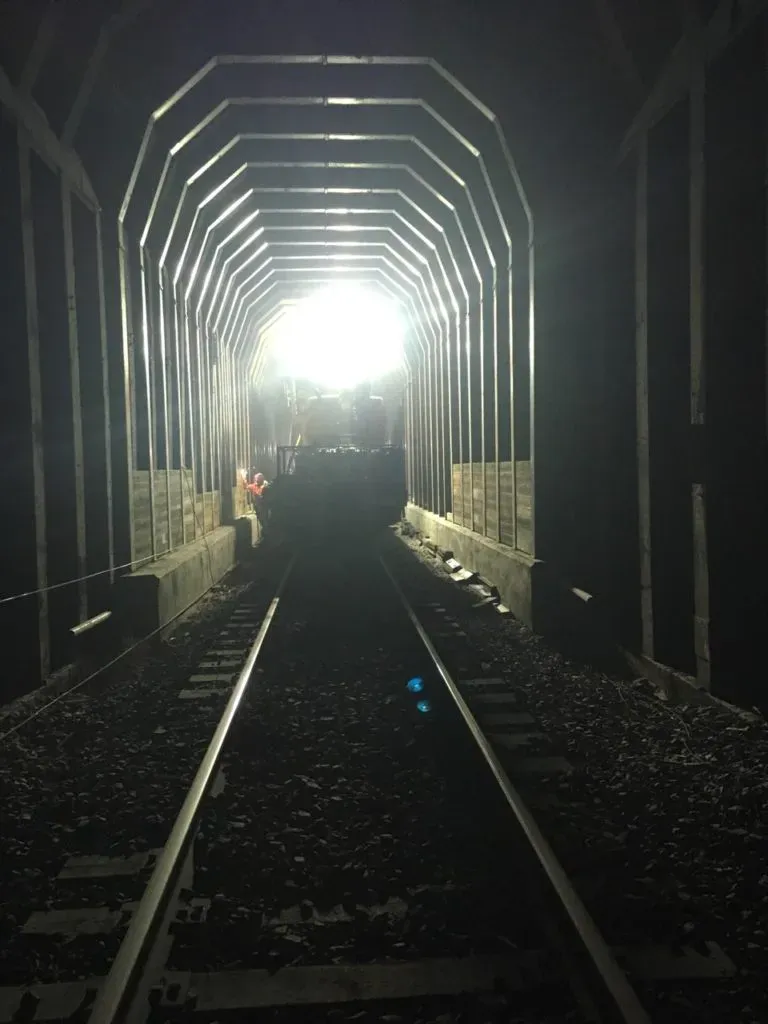
Tunnel support systems provide immediate ground control during excavation and long-term structural stability for underground openings. Our comprehensive capabilities include steel sets, lattice girders, rock bolts, shotcrete, and integrated support designs.
Understanding Tunnel Support Systems
Tunnel support systems provide immediate ground control during excavation and long-term structural stability for underground openings. Our comprehensive capabilities include steel sets, lattice girders, rock bolts, shotcrete, and integrated support designs.
From emergency stabilization of deteriorating rail tunnels to new construction support, we deliver complete tunnel ground control solutions.
Typical Applications
How It Works
Our proven methodology ensures consistent, high-quality results for every installation.
Ground Assessment
Evaluate ground conditions to select appropriate support type and spacing.
Set Erection
Position and connect steel arch sections to form complete support ring.
Blocking & Lagging
Install crown blocking and lagging to transfer ground loads to steel sets.
Final Support
Apply shotcrete or additional reinforcement as required for long-term stability.
Key Advantages
Immediate Support
Steel sets provide instant load-carrying capacity as soon as installed and blocked, critical in deteriorating ground.
High Capacity
Heavy steel sections carry significant ground loads, suitable for squeezing ground and fault zones.
Adaptable Design
Set spacing and section size adjusted in real-time based on encountered ground conditions.
Proven Performance
Steel set support has over 150 years of successful application in tunnels worldwide.
Emergency Capability
Rapid mobilization and installation capability for emergency stabilization of failing tunnels.
Technical Considerations
Soil/Rock Conditions
Support type and spacing selected based on rock mass quality. Poor ground requires closer spacing and heavier sections. Rock bolts may supplement or replace sets in good rock.
Groundwater
Drainage provisions integrated with support system. Weep holes through shotcrete prevent hydrostatic buildup.
Load Capacity
Steel section size determined by expected ground loads. Lattice girders with shotcrete provide equivalent capacity with lighter handling.
Spacing
Set spacing typically 3-6 ft depending on ground quality. Closer spacing in fault zones or squeezing ground.
Installation Method
Sets erected immediately following excavation. Crown blocked tight, then lagging installed between sets. Shotcrete often applied as final lining.
Equipment Used
- Set erector or boom truck
- Rock drills for bolt installation
- Shotcrete equipment
- Blocking and lagging materials
- Survey equipment for alignment
Limitations
- Heavy sections require mechanical handling
- Clearance reduced by set profile
- Corrosion protection needed for long-term service
- Installation slows advance rate
Technical Specifications
System Variations
Steel Rib Sets
Traditional W-section or H-section steel ribs for maximum load capacity.
Best For:
- Poor ground
- Squeezing conditions
- High cover tunnels
Lattice Girders
Lightweight steel lattice frames embedded in shotcrete for combined support.
Best For:
- NATM tunneling
- Moderate ground
- Reduced handling weight
Rock Bolt Systems
Pattern bolting with mesh and shotcrete for competent rock conditions.
Best For:
- Good rock
- Hard rock tunnels
- Mining applications
Spiling & Forepoling
Advance support installed ahead of the face to pre-support weak ground.
Best For:
- Portal excavations
- Fault crossings
- Shallow cover
Integration With Other Systems
Shotcrete
Shotcrete encases steel sets for corrosion protection and fills voids behind lagging.
Learn More
Rock Bolting
Rock bolts reinforce the rock arch between sets and secure loose blocks.
Learn More
Pressure Grouting
Contact grouting fills voids behind support and consolidates fractured ground.
Learn More
Horizontal Drains
Drainage controls groundwater that can load support systems and cause deterioration.
Learn MoreExample Project Types
- Railroad tunnel rehabilitation
- Highway tunnel construction
- Water conveyance tunnels
- Mining development
- Utility tunnels
- Portal and shaft support
- Emergency tunnel stabilization
Our Work in Action
Why Choose Rock Supremacy for Tunnel Support
Railroad Experience
Extensive experience with Class I railroad tunnel rehabilitation under traffic with strict safety protocols.
Emergency Response
24/7 mobilization capability for emergency tunnel stabilization when ground conditions deteriorate.
Integrated Capabilities
In-house drilling, shotcrete, and grouting crews provide complete tunnel support solutions.
Confined Space Expertise
Trained crews and specialized equipment for safe work in active tunnels and confined spaces.
Quality Workmanship
Experienced ironworkers ensure proper set installation, alignment, and blocking for reliable performance.
Our Work
See how we've applied this technique and others to solve real-world geotechnical challenges.

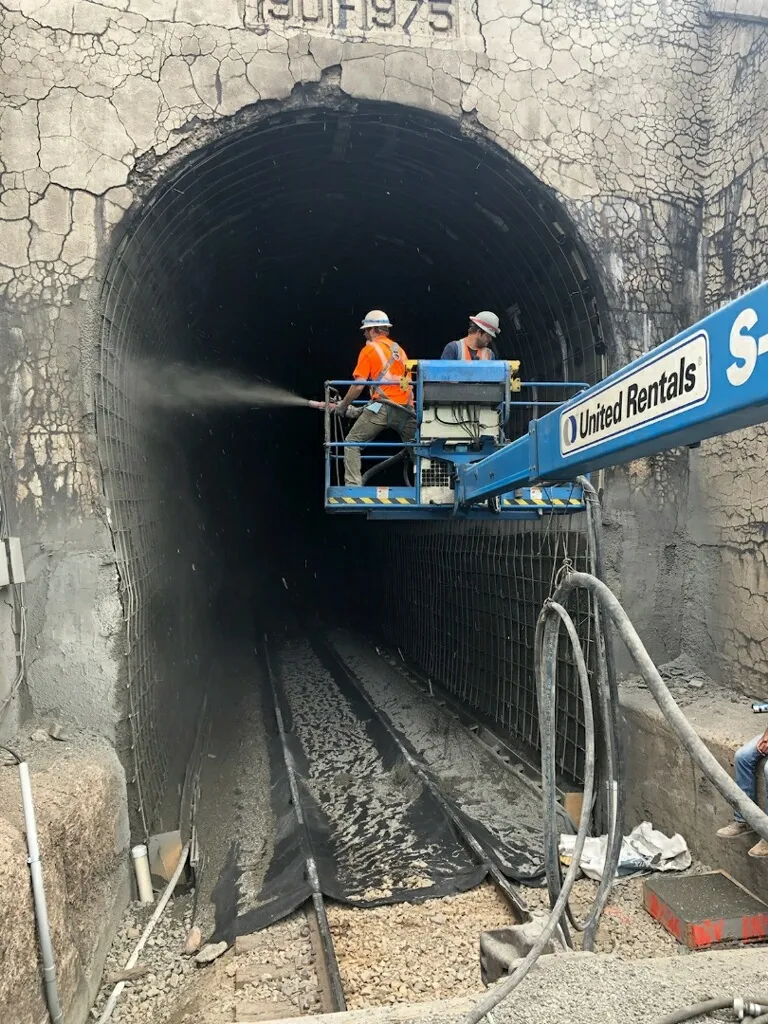
Moffat Tunnel Portal Rehabilitation
Structural rehabilitation of the historic Moffat Tunnel portal including rock bolting, shotcrete, and drainage improvements.

Roseville Rail Yard Tunnel Repair
Emergency structural repair of a failing rail tunnel crown in one of the West Coast's busiest rail yards.

Bingham Canyon Mine Support
Highwall stabilization in one of the world's largest open-pit mines to ensure safe ongoing extraction.
Tunnel Support Systems FAQ
Client Testimonials
Trusted by DOTs, engineering firms, and property owners nationwide.
Deploy Us
Ready to discuss your project? Our team is standing by to assess your site conditions and develop a custom solution using Tunnel Support Systems and other proven techniques.
Emergency (24/7)
(541) 383-7625Bidding & Estimates
Info@RockSupremacy.comHeadquarters
Licensed in CO, UT, WY, ID, MT, CA, WA, OR, TN, VA
Request Consultation
Related Techniques
Explore other engineering methods we use to deliver comprehensive geotechnical solutions.
Horizontal Drains
Horizontal drains are drilled drainage systems designed to lower groundwater pressure and improve the stability of slopes, embankments, and rock faces. By relieving pore pressure, these drains significantly reduce the risk of landslides, sloughing, and long-term slope movement.
Pressure Grouting
Pressure grouting strengthens ground, fills voids, and reduces water infiltration by injecting grout into soil, fractured rock, or void spaces. This technique supports slope stabilization, foundation improvement, landslide remediation, and structural repairs.
Rock Bolting
Rock bolting stabilizes fractured, jointed, or unstable rock masses by anchoring steel bars deep into competent rock. By tying loose blocks back to stable substrate, rock bolts improve the overall strength and cohesion of slopes, cuts, tunnels, and vertical faces.
Structural Shotcrete
Structural shotcrete is high-strength, reinforced concrete applied pneumatically to create durable retaining walls, tunnel linings, and slope support systems. Engineered to carry significant loads, it provides monolithic construction that conforms to irregular surfaces.