TECCO Mesh System

TECCO Mesh System

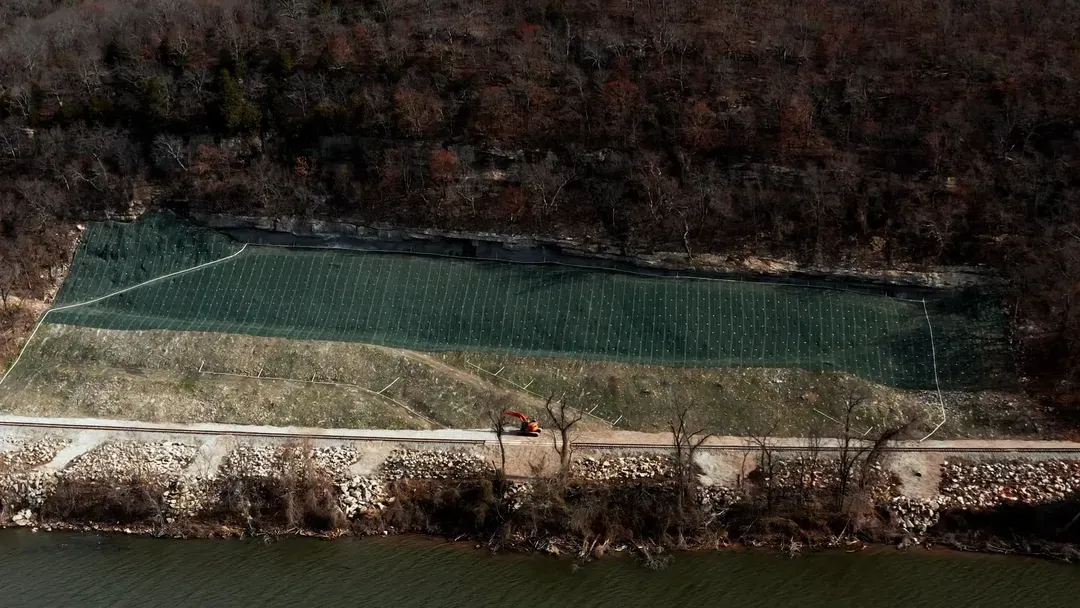
TECCO is Geobrugg's high-tensile diamond steel wire mesh for active slope stabilization. The 1,770 N/mm² wire and pressed spike plates transfer nail load into the mesh body, actively restraining loose rock and weathered material in place rather than catching it after release.

1,770
N/mm² Wire Grade
150 kN/m
System Strength
Active
Spike Plate Anchorage
50+
Year Service Life
Overview

Understanding TECCO Mesh

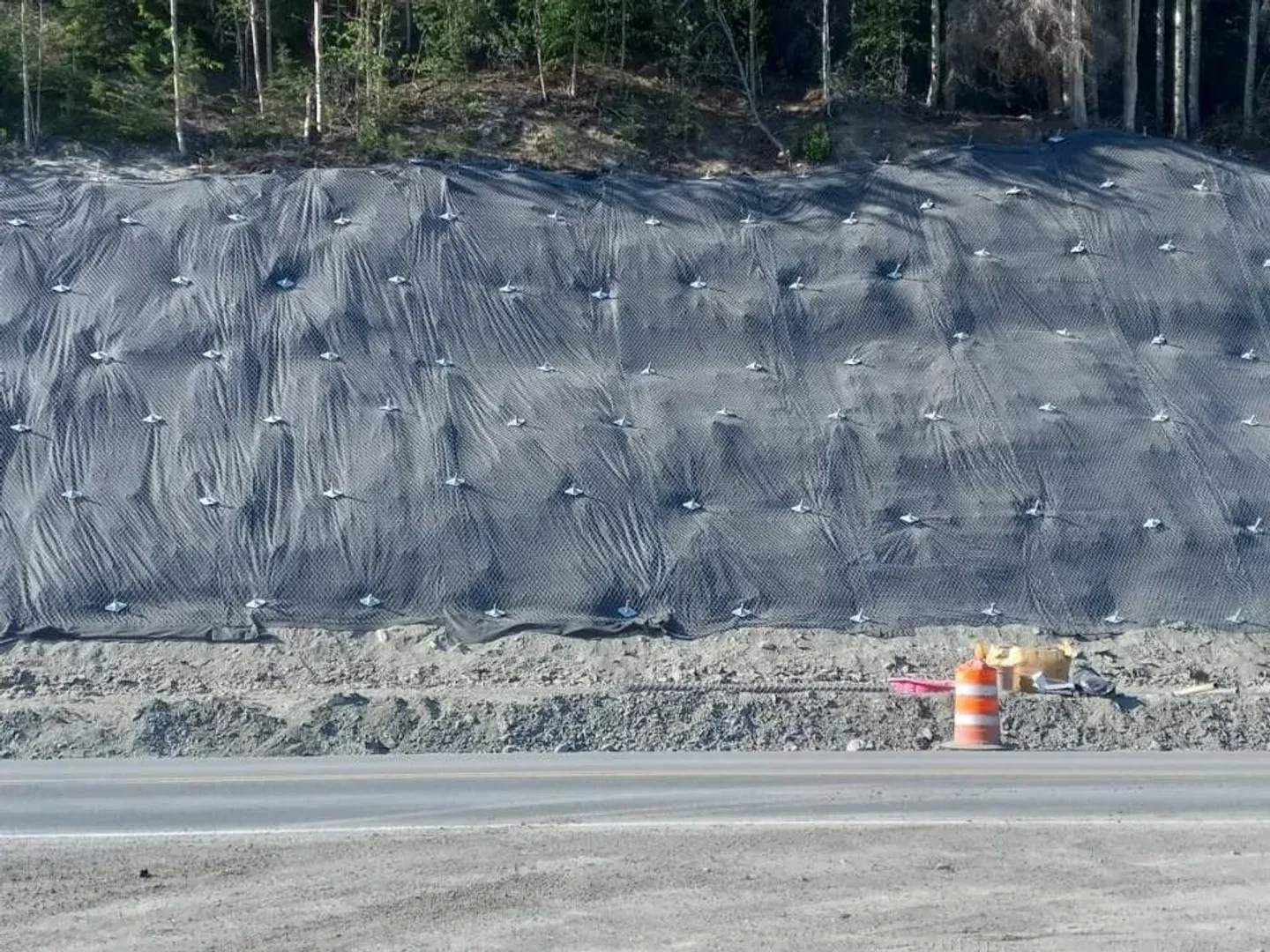
TECCO is a high-tensile steel wire mesh product manufactured by Geobrugg for active slope stabilization. The mesh is woven from 1,770 N/mm² wire in a flat diamond pattern and locked to the slope at every nail or bolt intersection with a pressed spike plate that grips multiple wire crossings, transferring nail load into the mesh body rather than only into the four wires it bolts through.

The system runs in two configurations. In the dominant pinned arrangement, TECCO is laid against the slope and secured to a 6 to 13 ft grid of rock bolts or soil nails, with spike plates torqued to pre-load the mesh before any block release. In a draped configuration, the same mesh hangs from crest anchors only and gravity-tensions against the rock face. Mesh selection, nail spacing, and pre-tensioning are sized through Geobrugg's RUVOLUM analysis, which bounds shallow-failure kinematics between the nails and verifies spike plate punching capacity.

What Is TECCO Mesh?

TECCO is a high-tensile steel wire mesh product manufactured by Geobrugg for active slope stabilization. The mesh is woven from 3 mm or 4 mm wire of 1,770 N/mm² grade in a flat diamond pattern (typical aperture 83 × 143 mm), supplied in rolls 11 to 13 ft wide. System tensile capacity reaches 150 kN/m for the standard G65/3 product and higher for heavier wire grades, roughly three to four times the working range of double-twisted hexagonal mesh specified under ASTM A975.

The product line and its companion design method, RUVOLUM, are the basis of US specifications for high-strength flexible mesh systems. RUVOLUM is the manufacturer-published dimensioning procedure that sizes mesh capacity, nail length and spacing, and pre-tensioning load against the controlling shallow-failure mechanism. On soil slopes, the supporting nails are designed under AASHTO LRFD §11.12 and FHWA NHI-14-007. On rock slopes, treatment selection is governed by the FHWA Rockfall Hazard Rating System (FHWA-OR-EG-90-01). DOT, mining, and Class I rail owners specify TECCO directly by product designation alongside RUVOLUM as the design tool.

Key Benefits

  • Active source-control restraint, not passive containment
  • Spike plate distributes nail load into multiple wire intersections
  • Pre-tensioning converts the system to active before any block release
  • Compatible with shotcrete facing for weathering protection
  • 50+ year service life with galvanized or polymer-coated wire
The Engineering

How TECCO Mesh Works

How the system carries load in service, and how we build it on site.

The differentiator is the spike plate. A standard wire-mesh installation transfers nail load only into the four wires the bolt passes through, which is the failure mode that limits hexagonal mesh capacity. The TECCO spike plate is a pressed steel plate with teeth that engage multiple diamond intersections around the bolt, distributing the nail load into a larger patch of mesh and unlocking the higher capacity of the 1,770 N/mm² wire. The plates can be torqued to pre-load the mesh before any block release, converting the system from passive containment into active restraint.

Construction sequence on a pinned installation is scaling first, then drilling and grouting a pattern of rock bolts or soil nails on a 6 to 13 ft grid sized by RUVOLUM. Mesh panels are unrolled from the crest down, overlapped at the seams and laced together with high-strength clips, then locked to each nail head with a spike plate and torqued to design pre-tension. Load path in service runs detached block or sliding mass into the mesh, mesh into spike plate, plate into the nail, and nail into competent ground. RUVOLUM checks three governing modes, the kinematics of a shallow wedge sliding between nails, the bulging capacity of the mesh as the wedge presses outward, and the punching capacity of the spike plate against the nail head.

1

Scaling & Surface Prep

Remove loose blocks and overhangs, trim vegetation, and prepare the slope face for full mesh contact.

2

Nail Pattern Drilling

Drill and grout rock bolts or soil nails on the RUVOLUM-sized grid, typically 6 to 13 ft on-center.

3

Mesh Deployment

Unroll TECCO panels from the crest down, overlap seams, and lace adjacent panels with high-strength clips.

4

Spike Plate Installation

Set a pressed spike plate at every nail head, engaging multiple diamond intersections around the bolt.

5

Pre-Tensioning & Verification

Torque spike plates to design pre-tension and verify nail loads against RUVOLUM and AASHTO requirements.

System Variants

TECCO System Variants

Type 01

TECCO G65/3 Standard

The baseline product, 3 mm high-tensile wire on the standard 83 × 143 mm diamond pattern, system capacity around 150 kN/m. G65/3 is specified across the bulk of US TECCO installations on highway rock cuts, weathered soil-rock slopes, and tunnel portal faces where the design block and shallow-failure wedge fall within its working range. RUVOLUM sizes nail length and grid spacing against the project loads, with spike plate pre-tension calibrated to convert the system from passive into active restraint.

Type 02

TECCO G65/4 Heavy-Duty

When the design block, slope length, or nail load exceeds the G65/3 working range, the heavier 4 mm wire variant is specified. Tensile capacity rises proportionally with wire cross-section, allowing wider nail spacing for the same allowable bulge or, at constant spacing, a higher factor of safety against punching at the spike plate. Heavy-duty TECCO is the default for high-rate mining highwalls, multi-ton block exposures on rail corridors, and any slope where freeze-thaw release pushes the system into repeated peak load.

Type 03

TECCO with Shotcrete Facing

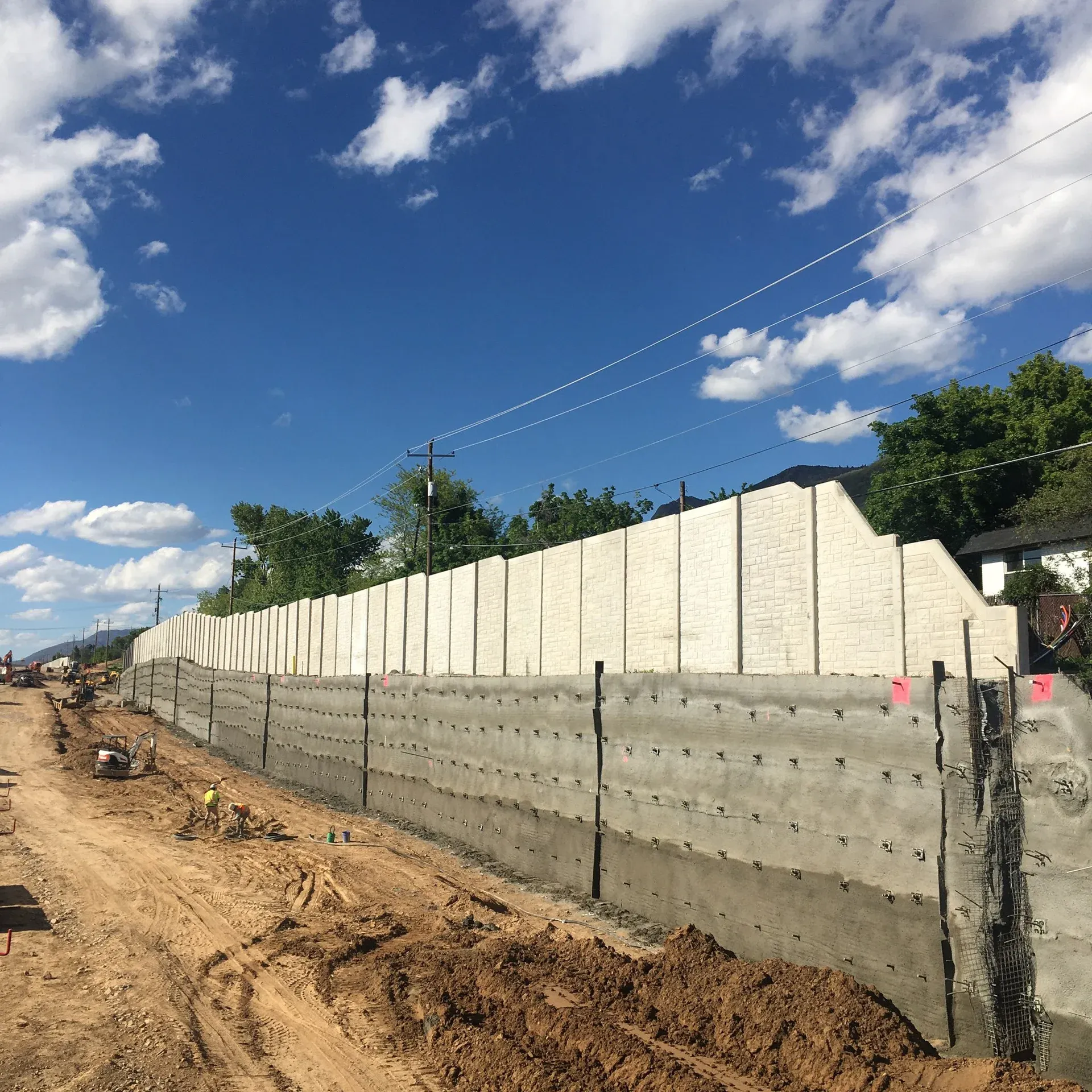
For weathering protection on top of containment, TECCO is installed first as a flexible reinforcement layer and then covered with structural shotcrete. The mesh distributes shrinkage and impact stresses in the shotcrete shell while continuing to carry block-release load through the spike plates into the underlying nails. The hybrid is common on tunnel portal slopes, urban cut walls, and any face where surface protection from rainfall, sloughing, or salt-spray is needed alongside structural restraint.

Side By Side

TECCO vs Other Slope Mesh Systems

VS

TECCO vs ASTM A975 Hexagonal Mesh

The selection axis is wire grade and connection mechanism. ASTM A975 double-twisted hexagonal mesh runs at roughly 500 N/mm² wire grade with system capacities of 30 to 50 kN/m, sufficient for sub-ton block release in drapery applications with a sized catchment at the toe. TECCO runs at 1,770 N/mm² wire grade with system capacities to 150 kN/m or higher, and the spike plate distributes nail load into multiple diamond crossings rather than four wires. TECCO is preferred when the system has to actively restrain the slope, when block sizes or freeze-thaw release rates exceed the hex working range, or when nail spacing on a punching-controlled design forces a higher-capacity mesh.

VS

TECCO Pinned vs TECCO Draped

Same product, two configurations. In the pinned arrangement, TECCO is locked to a 6 to 13 ft grid of nails with spike plates and pre-tensioned, holding loose material in place at the source. In the drape arrangement, the same mesh hangs from a single row of crest anchors and gravity-tensions against the face, intercepting blocks after release and channeling them down to a catchment ditch. Pinned is preferred where rocks must not move at all, near roadways, beneath buildings, or at portal mouths. Drape is preferred on tall slopes with continuous source release and an available toe-of-slope catchment, where face-anchoring the entire slope is uneconomic.

VS

TECCO vs Wire Rope Netting

The selection axis is design block size. TECCO's 83 × 143 mm diamond aperture and 1,770 N/mm² wire define the upper end of woven mesh capacity, suitable for blocks up to several tons depending on configuration. Wire rope netting is fabricated from helically wound steel cables on a 200 to 300 mm pattern, with system capacities measured in tens of tons per panel, and it is the correct tool when the design block exceeds woven mesh range. The two systems are sometimes layered, wire rope net over TECCO, on critical infrastructure slopes where multi-ton block release coincides with ongoing weathered surface release.

Not sure which system fits? We'll walk through the tradeoffs for your site conditions.

Talk Through Your Options
Where It Fits

Where TECCO Fits

State DOT highway rock cuts are the dominant US application. Where catchment ditch width is constrained by alignment or right-of-way, drapery is not feasible and active restraint at the source is the only way to keep blocks off the travel lane. Pinned TECCO with soil nails or rock bolts on a RUVOLUM-sized grid is the standard treatment for these constrained-toe corridors.

Mining highwalls are TECCO's heavy market. Active production beneath a working face requires that surface release be restrained at the source rather than caught at the toe, so high-tensile mesh with pre-tensioned spike plates is the routine specification on Class I metals and aggregates pits where the highwall is in long-term service.

Tunnel portals and bridge abutments use TECCO when the slope above critical structure cannot tolerate blocks of any size releasing onto the asset. The system pairs with structural shotcrete when surface weathering protection is also required.

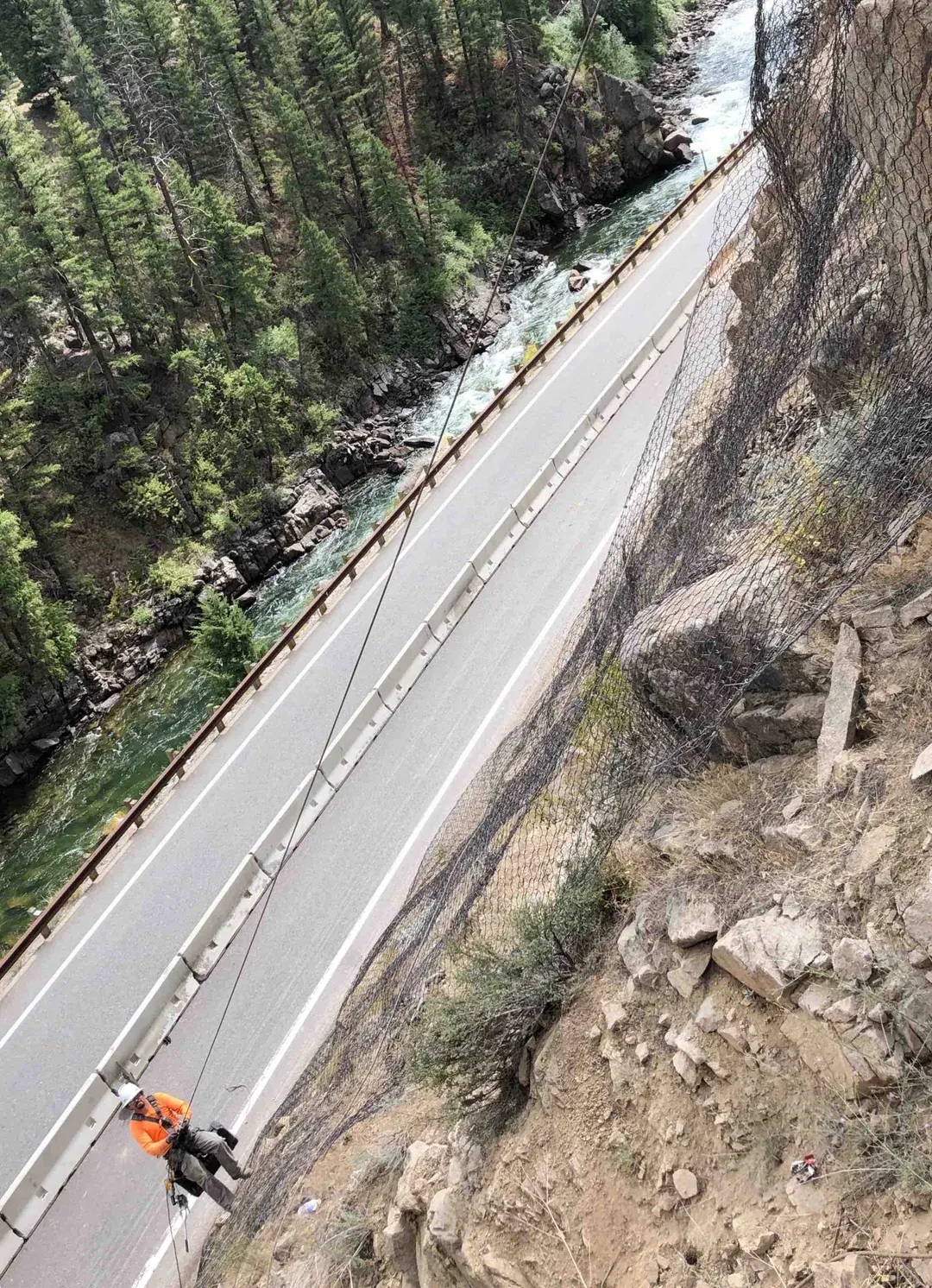
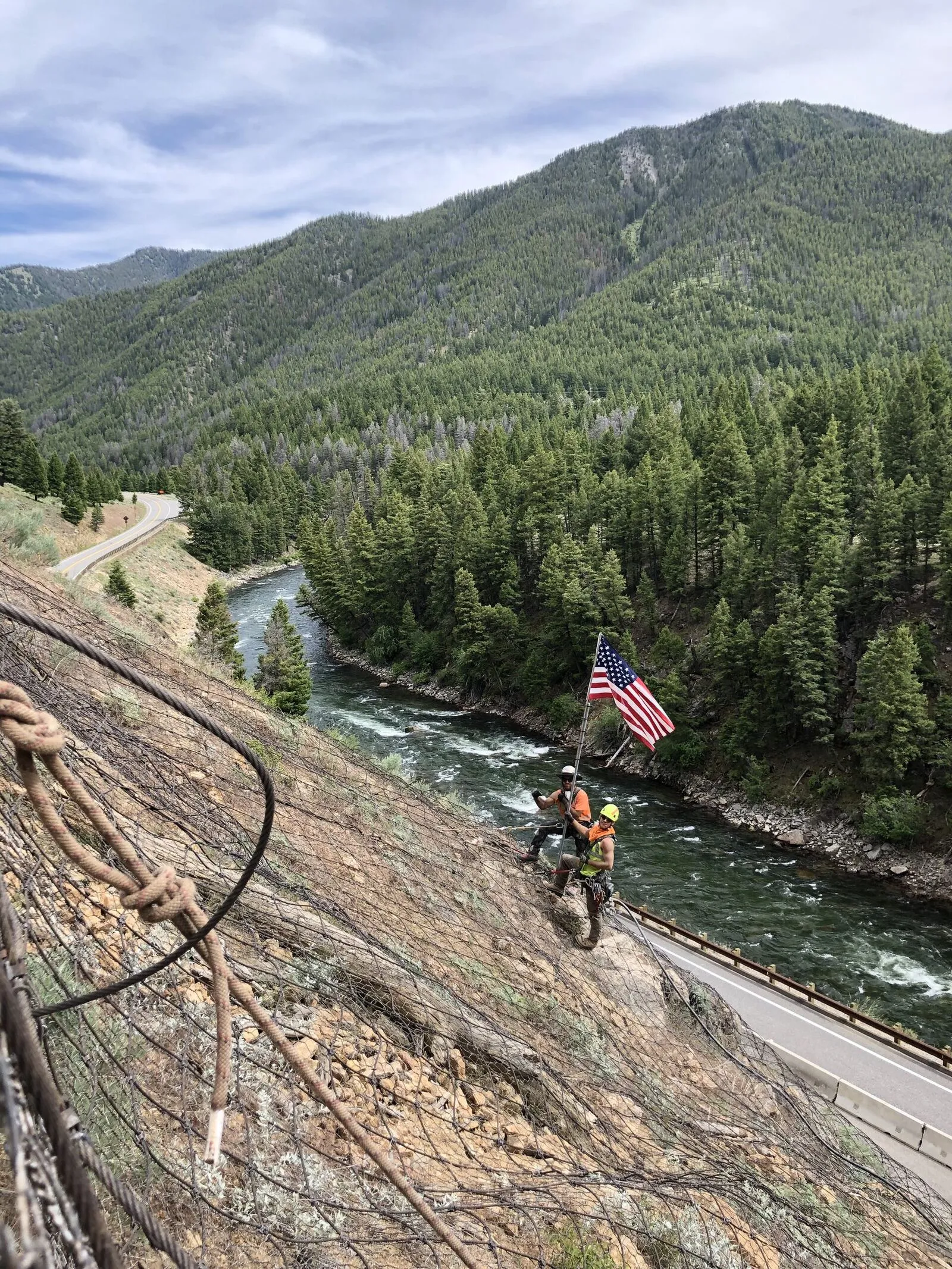
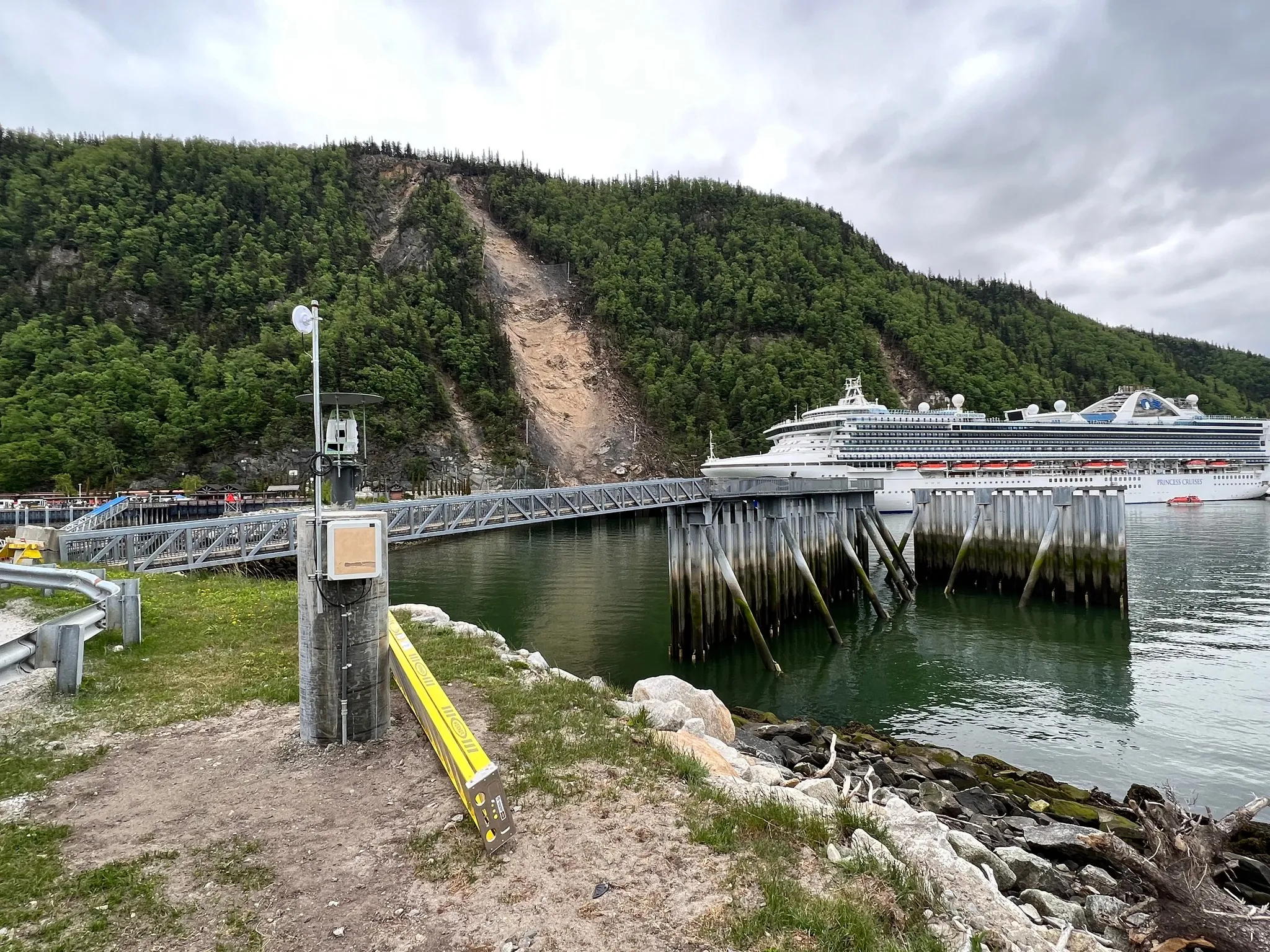
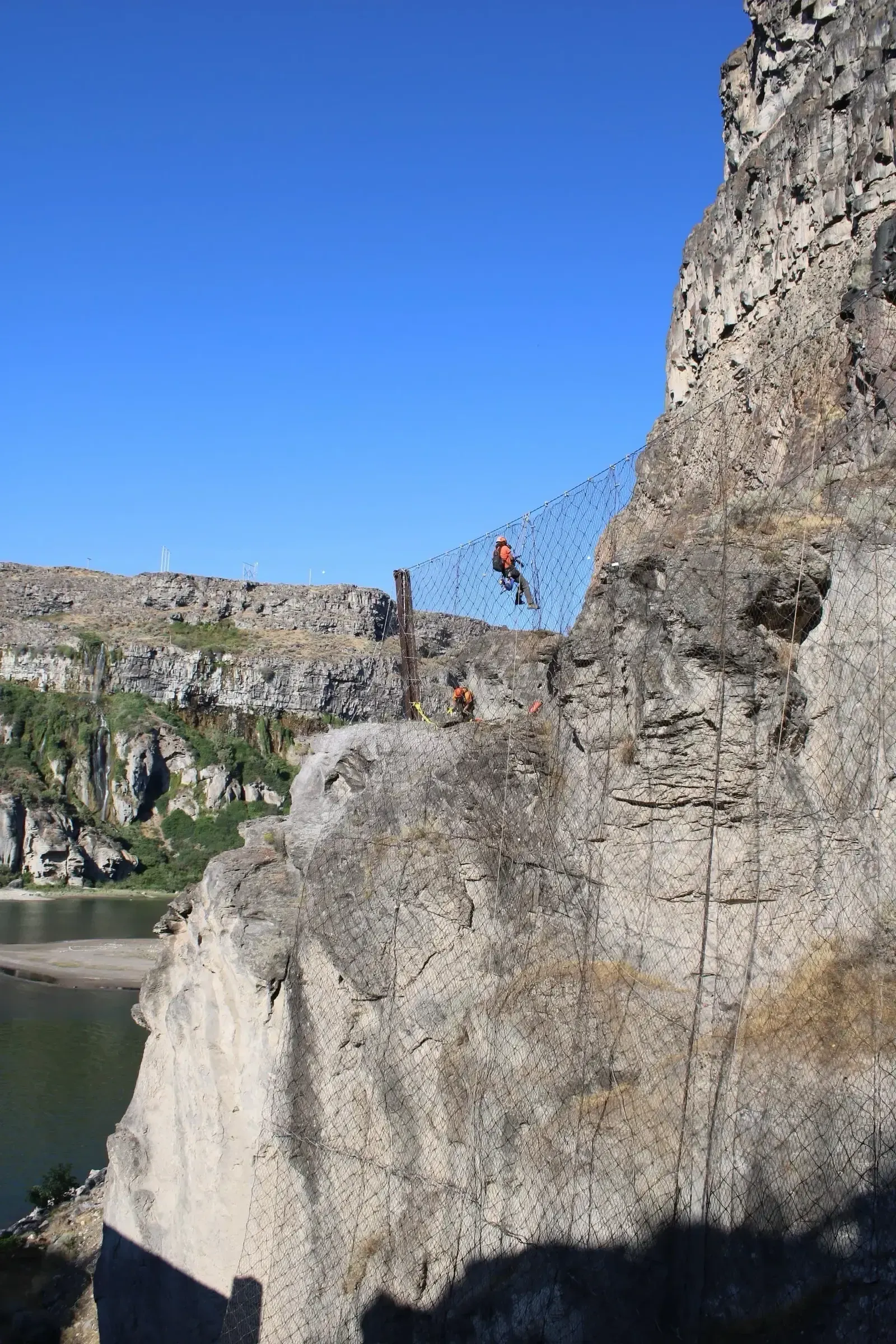
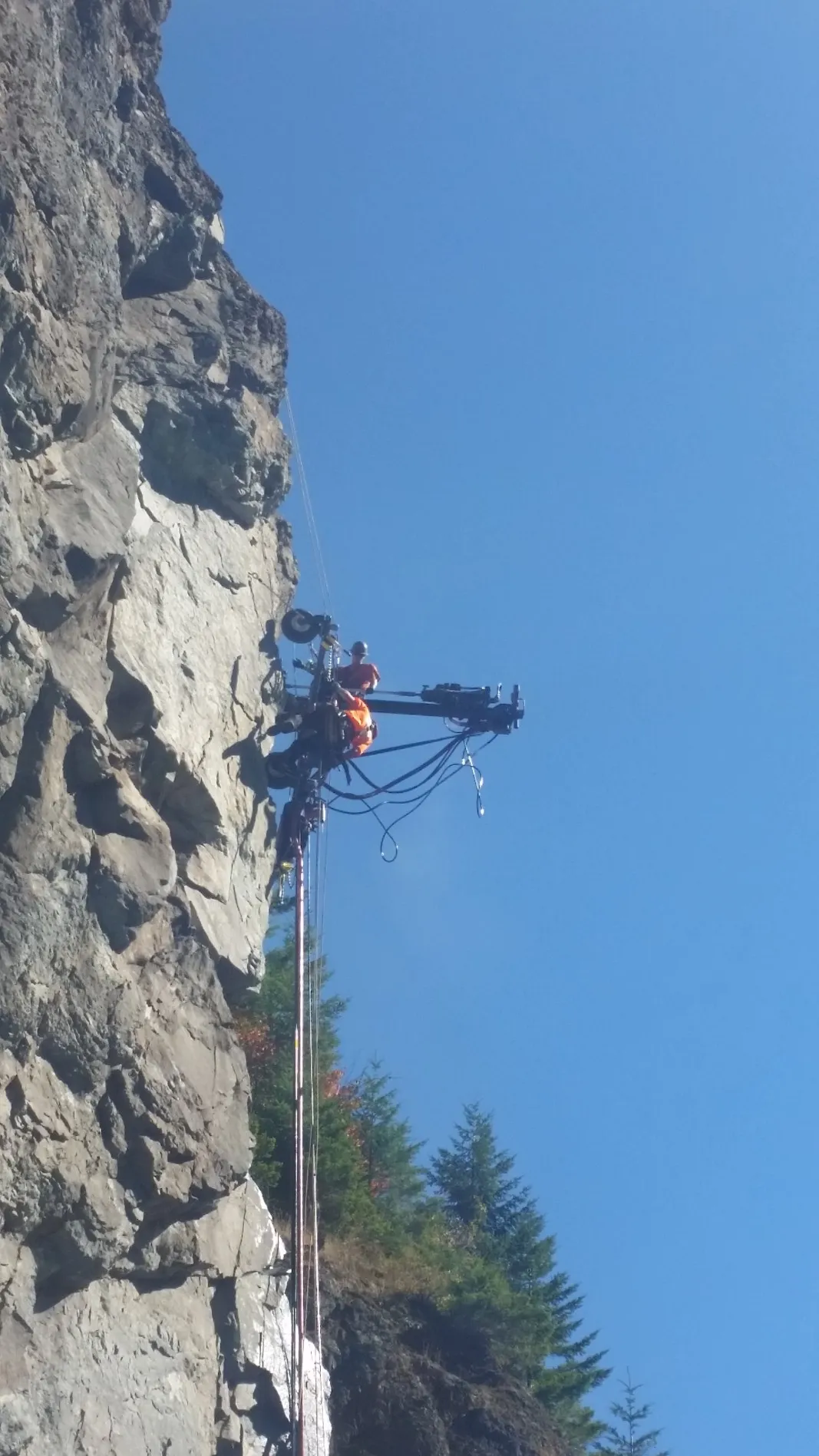
Steep, rope-access-only terrain is the fourth common case. SPRAT and IRATA crews can drill nails, hang mesh, and torque spike plates on vertical and overhanging faces where vehicle-mounted drilling is impossible, including canyon rail corridors, port rockfall sites, and remote mountain highways.
Highway rock cuts with constrained catchment-ditch geometry
Mining highwalls under active production
Tunnel portal and bridge abutment slopes
Critical infrastructure where blocks cannot be allowed to release
Rope-access slopes on canyon rail and port rockfall corridors
Long-term active stabilization paired with structural shotcrete
Benefits

Key Advantages

High Wire Grade

1,770 N/mm² wire delivers system capacities to 150 kN/m, three to four times the working range of standard double-twisted hexagonal mesh.

Spike Plate Connection

Pressed plate teeth engage multiple diamond crossings around each nail, transferring load into the mesh body rather than into four wires only.

Active Pre-Tensioning

Spike plates can be torqued to pre-load the mesh against the slope before any block release, converting the system from passive to active restraint.

Shotcrete Compatibility

TECCO doubles as flexible reinforcement under structural shotcrete on slopes that need both restraint and a weathering-resistant facing.

Long Service Life

Galvanized and polymer-coated TECCO products achieve 50+ years in service with periodic anchor inspection and spike plate retorque.

Engineering

Technical Considerations

Soil/Rock Conditions

TECCO is installed on fractured rock, weathered rock, and soil slopes. Nail type, length, and spacing are sized by RUVOLUM against the controlling shallow-failure wedge for the site geology.

Groundwater

The diamond mesh is fully permeable and does not trap water against the slope. Where seepage is concentrated, weep drains or horizontal drains are integrated to relieve pore pressure behind the mesh.

Load Capacity

System capacity is the lesser of mesh tensile capacity, spike plate punching capacity at the nail head, and nail pull-out capacity. RUVOLUM verifies each mode for the project loads.

Spacing

Nail grid runs 6 to 13 ft on-center depending on rock quality, expected block size, and pre-tension load. Tighter spacing is used where punching at the spike plate governs.

Installation Method

Mesh unrolled from crest, overlapped and laced at the seams, locked at each nail head with a pressed spike plate, and pre-tensioned to design torque.

Equipment Used

  • Track-mounted or rope-access drill rigs
  • Mesh handling rigging and panel deployment gear
  • Pressed spike plates and lacing clips
  • Torque wrenches calibrated to design pre-tension
  • Pull-test rigs for nail load verification

Limitations

  • Requires competent ground for nail anchorage
  • Higher material cost than ASTM A975 hexagonal mesh
  • Vertical and overhanging faces require rope-access installation
  • Pre-tension verification adds to installation time vs passive systems

Technical Specifications

Wire Grade
1,770 N/mm² high-tensile
Mesh Aperture
83 mm × 143 mm diamond
System Capacity
Up to 150 kN/m (G65/3)
Nail Grid
6 ft to 13 ft on-center
Codes And References

Standards & References

Geobrugg

RUVOLUM

Manufacturer Dimensioning Method for Flexible Slope Stabilization

The published design procedure for high-tensile mesh slope-stabilization systems. Sizes mesh capacity, nail length and spacing, and pre-tension against three governing modes: shallow-wedge kinematics between nails, mesh bulging at the wedge, and spike plate punching at the nail head. Referenced directly in DOT and mining specifications for TECCO.

AASHTO

LRFD §11.12

Soil Nail Wall Design

Governs the soil nail anchoring component of pinned TECCO installations on soil and weathered rock slopes. Provides load and resistance factors, pull-out checks, and global stability requirements that pair with RUVOLUM's mesh-and-spike-plate verification on the same slope.

FHWA

FHWA-OR-EG-90-01

Rockfall Hazard Rating System (Pierson, Davis, Van Vickle 1990)

The state-DOT framework that drives treatment selection on rock slopes. RHRS scoring of slope geometry, block size, climate, ditch effectiveness, and historic rockfall produces the prioritization that puts active mesh systems like TECCO on slopes where drapery plus catchment is insufficient.

Gallery

Our Work in Action

Expertise

Why Choose Rock Supremacy for TECCO Mesh

Spike Plate Tensioning Crews

Crews trained on the spike plate connection and pre-tension verification that distinguishes TECCO from passive containment systems.

Rope-Access Capability

SPRAT/IRATA-trained technicians install TECCO on vertical and overhanging faces where vehicle-mounted equipment cannot work.

Integrated Anchoring

We self-perform scaling, soil nail and rock bolt drilling, mesh deployment, and spike plate tensioning with our own crews, no subcontractor handoffs.

RUVOLUM Coordination

Field installation coordinated with the manufacturer-published RUVOLUM design output, including nail load verification and pre-tension QA.

Multi-Sector Capability

TECCO installation experience across multiple project types and sectors.

Questions

TECCO Mesh System FAQ

TECCO is Geobrugg's high-tensile diamond steel wire mesh for active slope stabilization. The mesh is woven from 1,770 N/mm² wire on an 83 × 143 mm diamond pattern and locked to the slope with pressed spike plates at each rock bolt or soil nail. System tensile capacity reaches 150 kN/m for the standard G65/3 product, roughly three to four times the working range of double-twisted hexagonal mesh under ASTM A975.
Two differences. First, the wire grade: TECCO uses 1,770 N/mm² high-tensile wire versus roughly 500 N/mm² for ASTM A975 hexagonal mesh, which is what unlocks the 150 kN/m system capacity. Second, the connection: standard mesh transfers nail load into the four wires the bolt passes through, while a TECCO spike plate engages multiple diamond intersections around the nail and distributes load into a larger patch of mesh. The combination is what makes TECCO an active source-control system rather than passive containment.
Pinned TECCO is anchored to a grid of rock bolts or soil nails, typically 6 to 13 ft on-center, sized by the RUVOLUM design method against the project loads. At each nail head, a pressed spike plate is placed over the wires and torqued to design pre-tension. The teeth of the plate engage multiple diamond intersections, so the nail load is transferred into the mesh body rather than only into four wires. In a draped configuration, the same mesh hangs from a single row of crest anchors with no face nails.
RUVOLUM is the manufacturer-published dimensioning procedure for high-tensile flexible mesh systems. It sizes mesh capacity, nail length and spacing, and spike plate pre-tension against three governing failure modes: the kinematics of a shallow wedge sliding between nails, the bulging capacity of the mesh as the wedge presses outward, and punching capacity at the spike plate. State DOT and mining specifications routinely reference RUVOLUM directly alongside AASHTO LRFD §11.12 for the soil nail design.
Yes. The same TECCO mesh can be hung from a single row of crest anchors and gravity-tensioned against the rock face, like double-twisted hexagonal mesh in a drapery system. The trade-off is that the high-tensile wire grade and spike plate are largely unused on a passive drape, so the standard drapery product is hexagonal mesh under ASTM A975 unless the design block exceeds the hex working range. See our draped mesh systems page for the passive containment use case.
Nail grid spacing on a pinned TECCO installation runs 6 to 13 ft on-center, sized by RUVOLUM against rock quality, design block size, and pre-tension load. Tighter spacing is used where punching capacity at the spike plate governs the design or where shallow-failure kinematics produce a small allowable wedge between nails. Spacings outside this range are uncommon on standard installations.
The selection axis is design block size. TECCO's 83 × 143 mm diamond aperture and 1,770 N/mm² wire bound the upper end of woven mesh capacity, suitable for blocks up to several tons depending on configuration. Wire rope netting is fabricated from helically wound steel cables on a 200 to 300 mm pattern with capacities measured in tens of tons per panel, and it is the correct tool when the design block exceeds the woven mesh range. The two systems are sometimes layered on critical infrastructure slopes.
Yes. TECCO is installed first as a flexible reinforcement layer, then covered with structural shotcrete. The mesh distributes shrinkage and impact stresses in the shotcrete shell while continuing to carry block-release load through the spike plates and nails. The hybrid is common on tunnel portal slopes and urban cut walls where surface weathering protection is required alongside active restraint.
Three references. The Geobrugg-published RUVOLUM dimensioning method sizes the mesh, nail grid, and pre-tension. AASHTO LRFD §11.12 governs the soil nail design on soil and weathered-rock slopes, with FHWA NHI-14-007 as the supporting reference manual. On rock slopes, treatment selection follows the FHWA Rockfall Hazard Rating System (FHWA-OR-EG-90-01) framework. State DOT and mining specifications cite these documents directly.
Testimonials

Client Testimonials

Trusted by DOTs, engineering firms, and property owners nationwide.

Contact

Deploy Us

Ready to discuss your project? Our team is standing by to assess your site conditions and develop a custom solution using TECCO Mesh System and other proven techniques.

Emergency (24/7)

(541) 383-7625

Bidding & Estimates

Info@RockSupremacy.com

Headquarters

Western Division (HQ)
65147 N Hwy 97
Bend, OR 97701
Eastern Division
915 Millennium Ct
Blountville, TN 37617

Licensed in CO, UT, WY, ID, MT, CA, WA, OR, TN, VA

Request Consultation