Rock Bolting

Rock Bolting

Rock bolting stabilizes fractured, jointed, or unstable rock masses by anchoring steel bars deep into competent rock. By tying loose blocks back to stable substrate, rock bolts improve the overall strength and cohesion of slopes, cuts, tunnels, and vertical faces.

75+
Year Design Life
200+
Ft Embedment Depth
150
Ksi Yield Strength
100%
Load Tested
Overview

Understanding Rock Bolting

Rock bolting stabilizes fractured, jointed, or unstable rock masses by anchoring steel bars deep into competent rock. By tying loose blocks back to stable substrate, rock bolts improve the overall strength and cohesion of slopes, cuts, tunnels, and vertical faces.

This technique is essential for long-term rockfall prevention and structural stability in civil, mining, and transportation environments.

Provides deep, structural reinforcement
Controls tension cracks, wedges, blocks, and planar failures
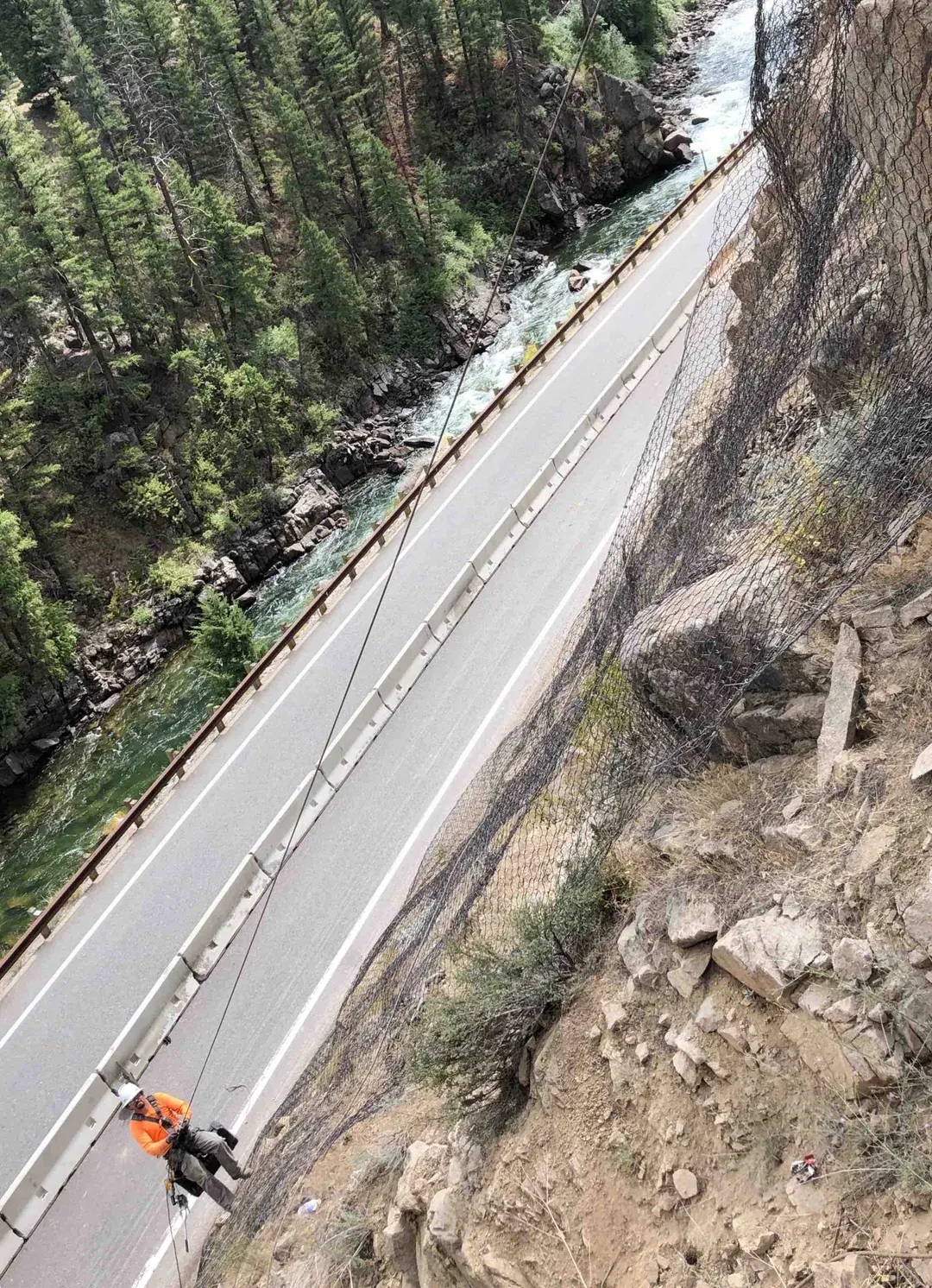
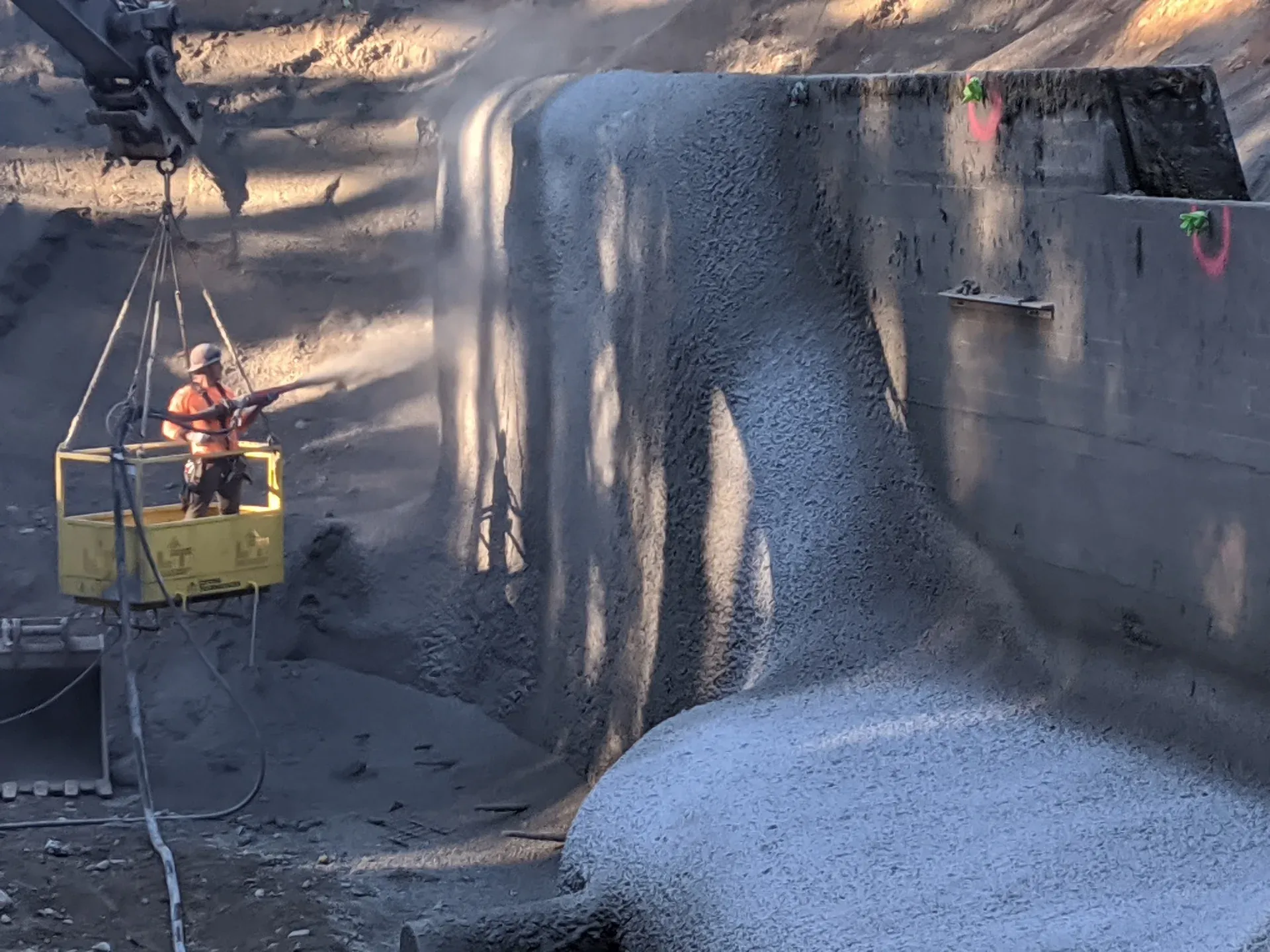
Integrates easily with shotcrete or mesh
Works in steep, limited-access environments
Long service life with proper corrosion protection

This technique is used in our services for:

Rock Bolting
Use Cases

Typical Applications

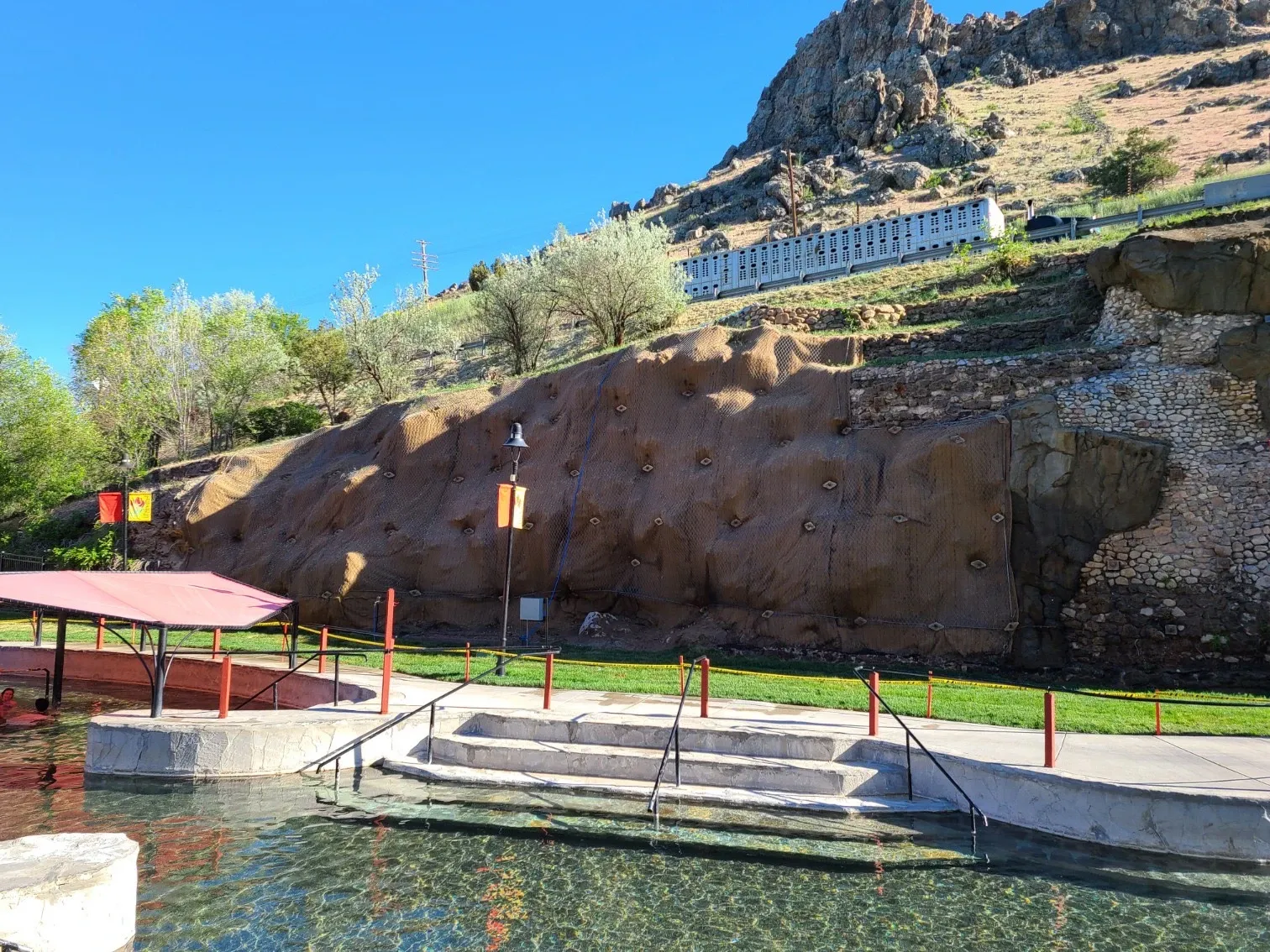
Highway and railway cut slopes
Tunnel portals and underground excavations
Mining highwalls and access roads
Rockfall remediation in steep terrain
Stabilization of overhangs and blocky geology
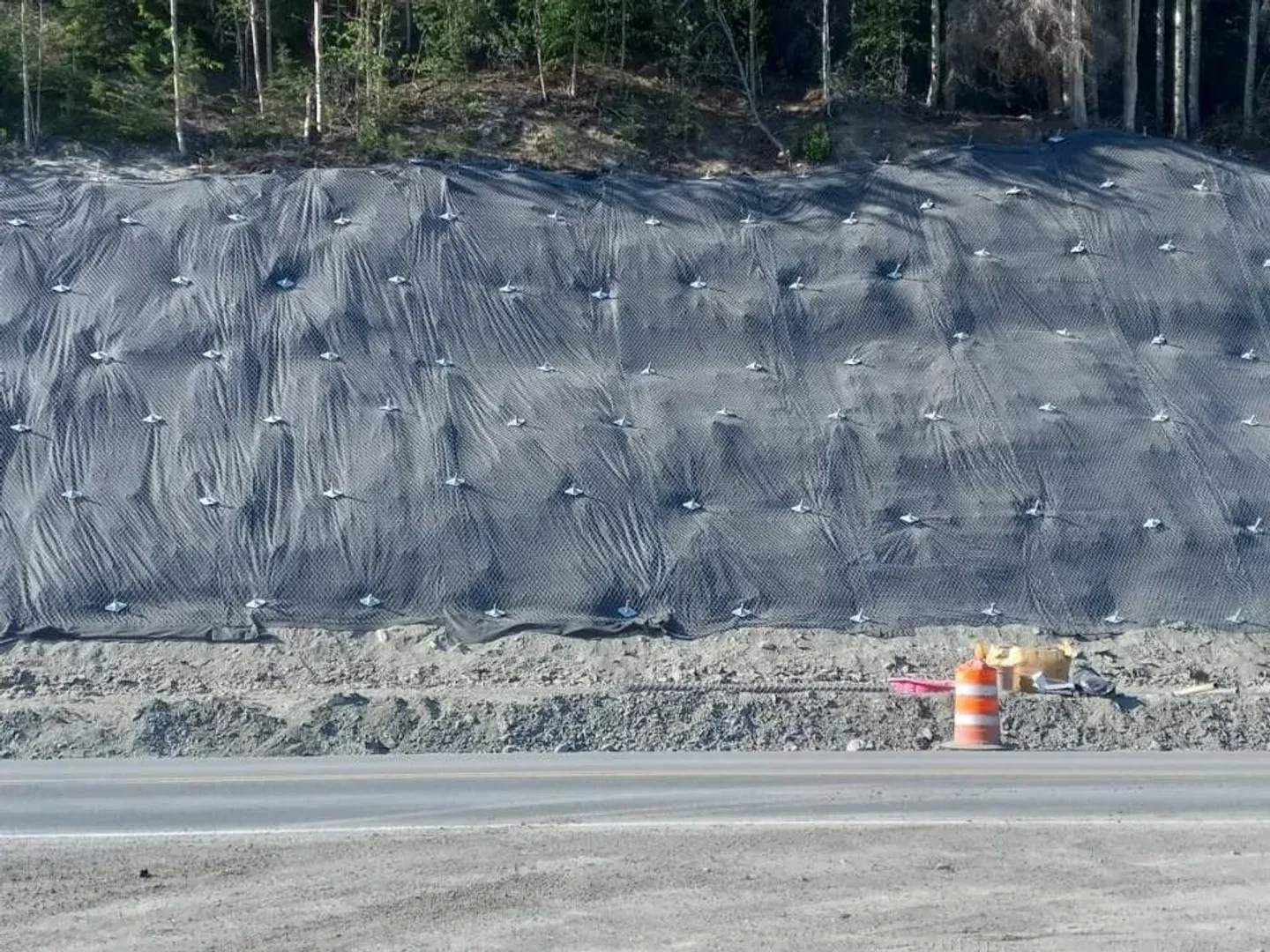
Support for shotcrete, mesh, and other facing systems
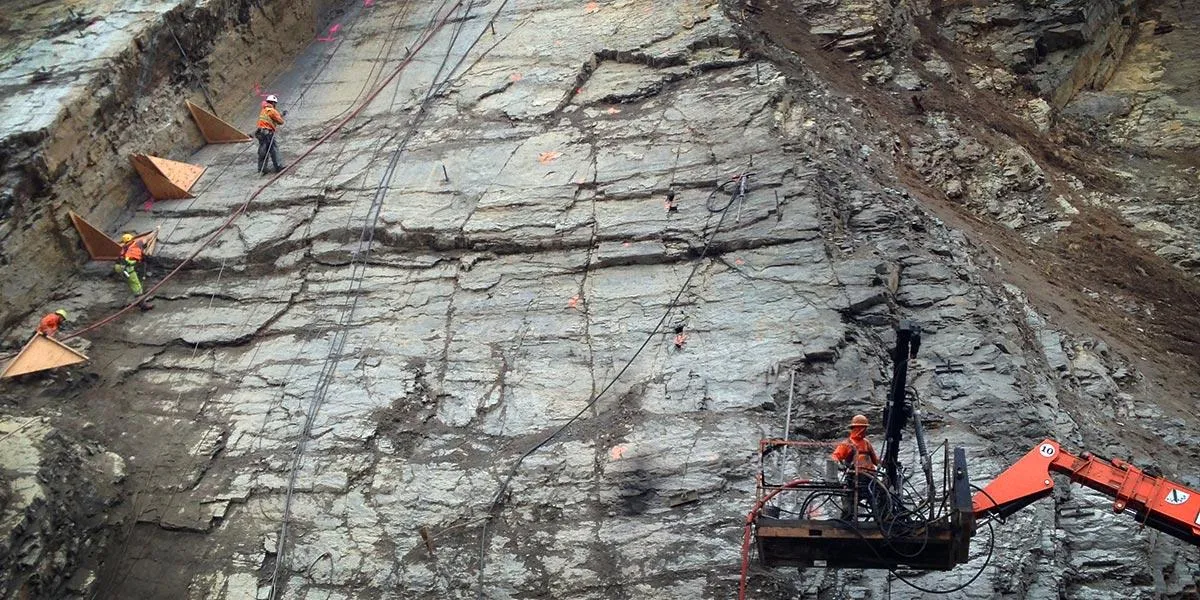
Rock Bolting - Image 1
Process

How It Works

Our proven methodology ensures consistent, high-quality results for every installation.

1

Geological Mapping

Drill holes into targeted rock zones based on geological mapping and engineering design.

2

Bolt Insertion

Insert steel rock bolts (mechanical, resin-grouted, cement-grouted, or tensioned bolts).

3

Grouting & Tensioning

Grout or tension the bolt, creating anchorage within competent rock.

4

Plate Installation

Install plates and nuts to clamp the rock face and reinforce surface stability.

5

System Integration

Integrate with mesh or shotcrete where containment or additional surface control is required.
Benefits

Key Advantages

Deep Structural Reinforcement

Rock bolts anchor unstable surface material to competent rock at depth, providing structural integrity that surface treatments alone cannot achieve.

Versatile Application

Effective across all rock types and geological conditions, from massive granite to highly fractured sedimentary formations.

Long Service Life

With proper corrosion protection (galvanizing, epoxy coating, or encapsulation), rock bolts are designed for 75-100 year service life.

System Integration

Rock bolts form the foundation for comprehensive stabilization systems, working seamlessly with mesh, shotcrete, and barrier installations.

Steep Terrain Capability

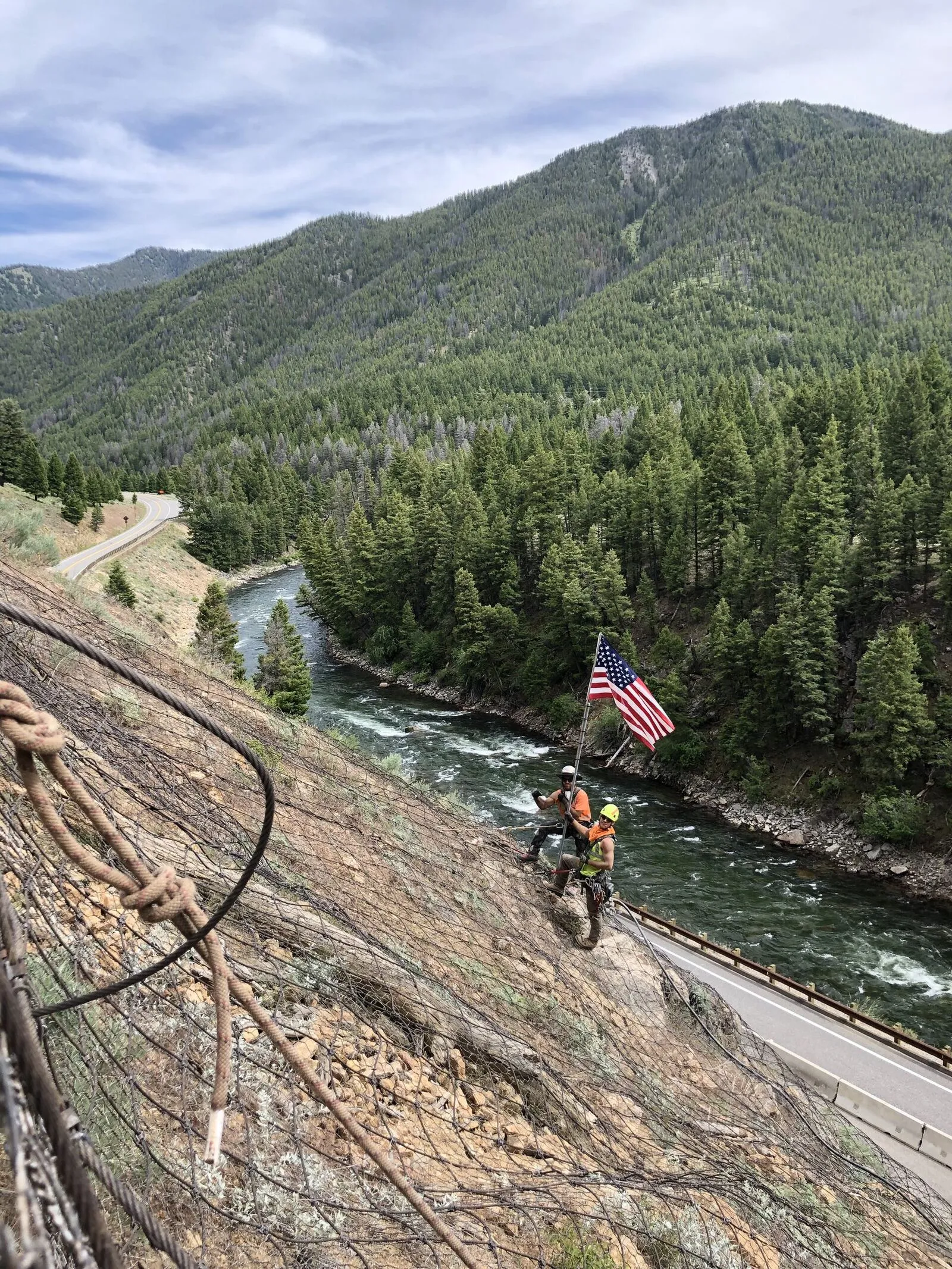
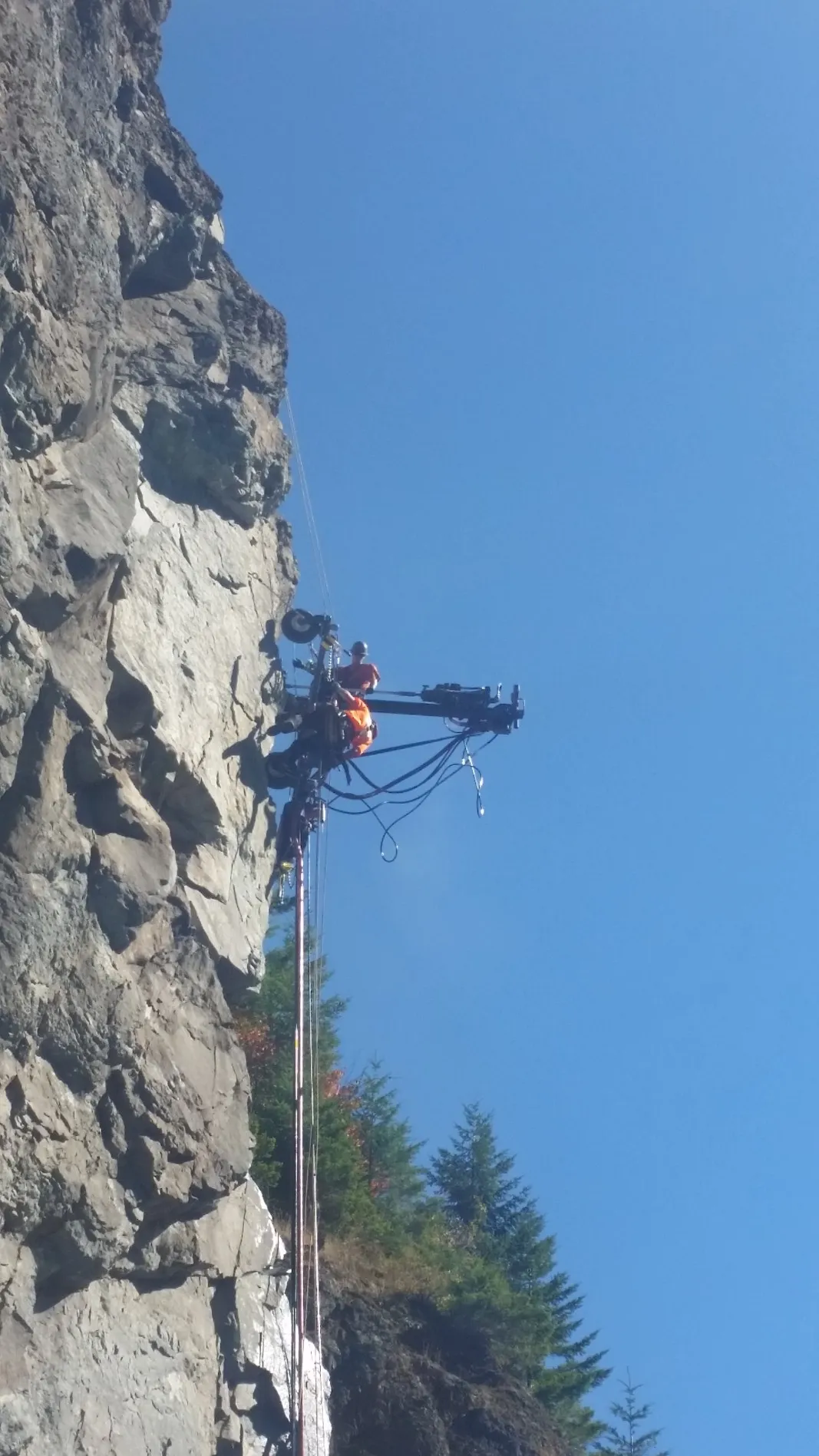
Our rope-access crews install rock bolts on vertical and overhanging faces where conventional equipment cannot operate.

Engineering

Technical Considerations

Soil/Rock Conditions

Requires competent rock for anchorage zone. Rock mass rating (RMR) and joint patterns determine bolt spacing and length. Works in all rock types from granite to shale.

Groundwater

Groundwater can affect grout cure time and long-term durability. Encapsulated or epoxy-coated bolts recommended in aggressive groundwater environments.

Load Capacity

Design loads typically range from 20-100 kips depending on bar diameter and embedment. All installations load-tested to 120% of design capacity.

Spacing

Typical spacing of 4-8 ft in both directions, adjusted based on rock quality designation (RQD) and discontinuity orientation.

Installation Method

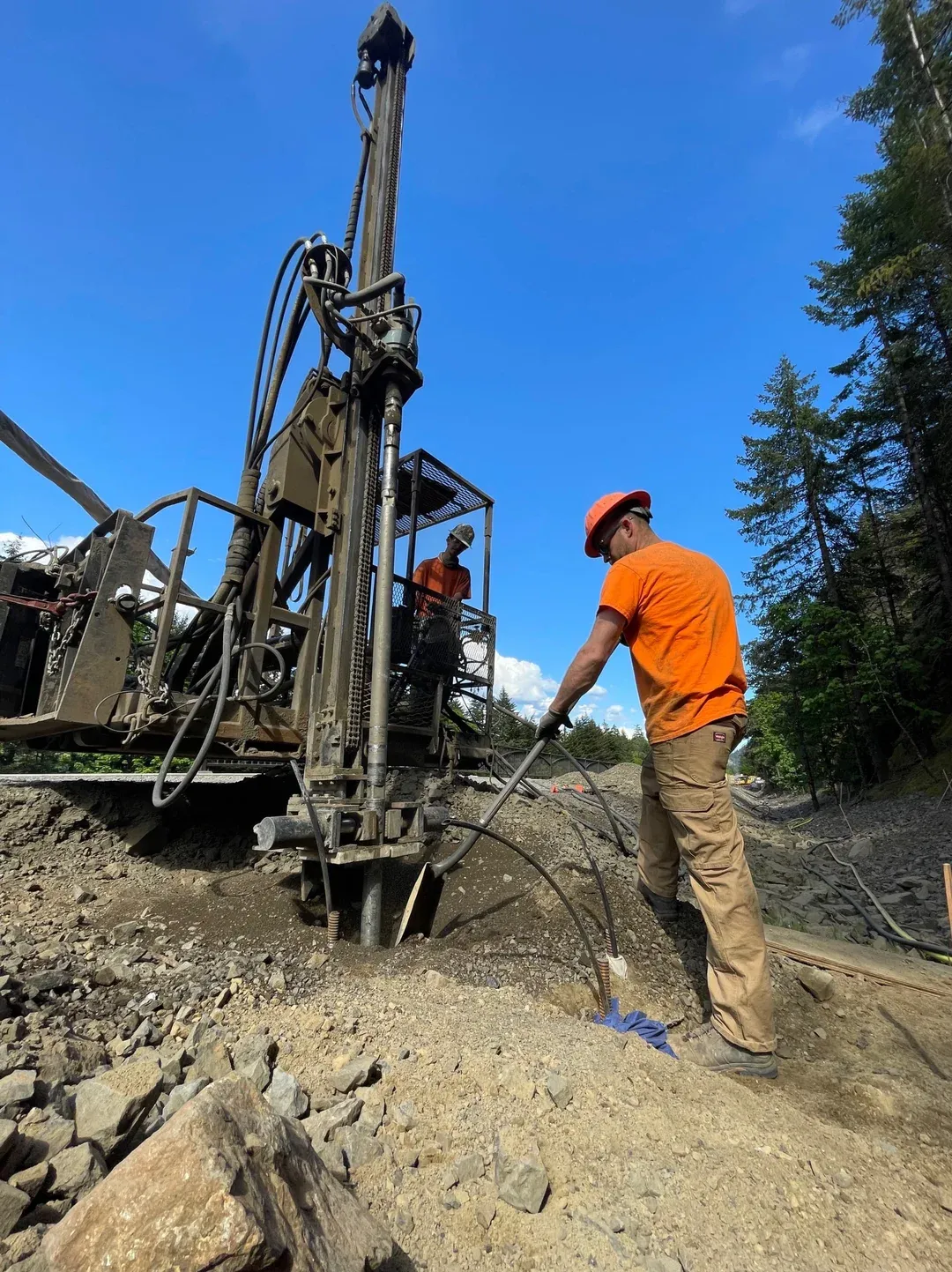
Rotary percussion drilling to required embedment depth, followed by bar insertion with centralizers and tremie grouting from bottom-up.

Equipment Used

  • Track-mounted drill rigs
  • Rope-access drilling platforms
  • Pneumatic percussion drills
  • Grout mixing and pumping systems
  • Torque wrenches for tensioning
  • Load testing equipment

Limitations

  • Requires competent rock in anchorage zone
  • Not suitable for pure soil conditions
  • Tensioned bolts require periodic inspection
  • Hole tolerances critical for design performance

Technical Specifications

Bar Diameter
1" to 3" (#8 to #24)
Yield Strength
75 ksi to 150 ksi
Grout Type
Type II Cement / Polyester Resin
Corrosion Protection
Hot-Dip Galv / Epoxy / MCP
Options

System Variations

Tensioned Rock Bolts

Active reinforcement that applies immediate clamping force to the rock mass. Used where preventing block movement is critical.

Best For:

  • Tunnel crowns
  • Overhead stabilization
  • Critical infrastructure protection

Resin-Grouted Bolts

Fast-setting polyester resin provides rapid load capacity, often within minutes of installation.

Best For:

  • Mining production areas
  • Rapid turnaround projects
  • Time-critical stabilization

Fully Grouted Passive Bolts

Cement-grouted full-length bonding provides long-term durability and corrosion protection.

Best For:

  • Permanent slope stabilization
  • Highway cuts
  • Long-design-life structures

Hollow-Bar Self-Drilling Anchors

Combines drilling and installation in one operation, ideal for fractured or caving ground conditions.

Best For:

  • Highly fractured rock
  • Collapsing boreholes
  • Difficult drilling conditions
Experience

Example Project Types

  • Highway cut slope stabilization
  • Railroad right-of-way protection
  • Mining highwall reinforcement
  • Tunnel portal support
  • Dam abutment anchoring
  • Bridge foundation rock support
  • Ski resort terrain stabilization
  • Quarry face reinforcement
Gallery

Our Work in Action

Expertise

Why Choose Rock Supremacy for Rock Bolting

Rope-Access Specialists

Our trained crews install rock bolts on vertical and overhanging faces where conventional equipment cannot reach.

48-Hour Emergency Mobilization

When slopes fail, we respond immediately with crews and equipment ready to stabilize critical infrastructure.

In-House Equipment & Fabrication

We own and maintain our drill rigs, platforms, and support equipment—no waiting on rentals or subcontractors.

Decades of Geohazard Experience

Our team has installed hundreds of thousands of rock bolts across the most challenging terrain in North America.

Full Load Testing

Every installation is tested to 120% of design load per ASTM D4435, with complete documentation for owner records.

Questions

Rock Bolting FAQ

Rock bolts are typically shorter (5-30 ft), grouted full-length, and work through shear and tension. Anchors are longer (30-200+ ft), have a defined bond zone, and are post-tensioned to apply active load to the rock mass.
With proper corrosion protection (galvanizing, epoxy coating, or encapsulation), rock bolts are designed for 75-100 year service life. Unprotected bolts in aggressive environments may have shorter life spans.
Yes, we install bolts at any angle using rope access techniques. Our crews regularly install bolts on overhanging faces and in confined spaces where conventional equipment can't reach.
Bolt patterns are engineered based on rock mass classification (RMR, Q-system), joint orientation, block geometry, and required factors of safety. We work with your engineer or provide design-build solutions.
Yes, we load-test bolts to 120% of design capacity per ASTM D4435. Test results are documented and provided to the owner as part of our quality assurance program.
Testimonials

Client Testimonials

Trusted by DOTs, engineering firms, and property owners nationwide.

Contact

Deploy Us

Ready to discuss your project? Our team is standing by to assess your site conditions and develop a custom solution using Rock Bolting and other proven techniques.

Emergency (24/7)

(541) 383-7625

Bidding & Estimates

Info@RockSupremacy.com

Headquarters

Western Division (HQ)
65147 N Hwy 97
Bend, OR 97701
Eastern Division
915 Millennium Ct
Blountville, TN 37617

Licensed in CO, UT, WY, ID, MT, CA, WA, OR, TN, VA

Request Consultation