Rock Scaling
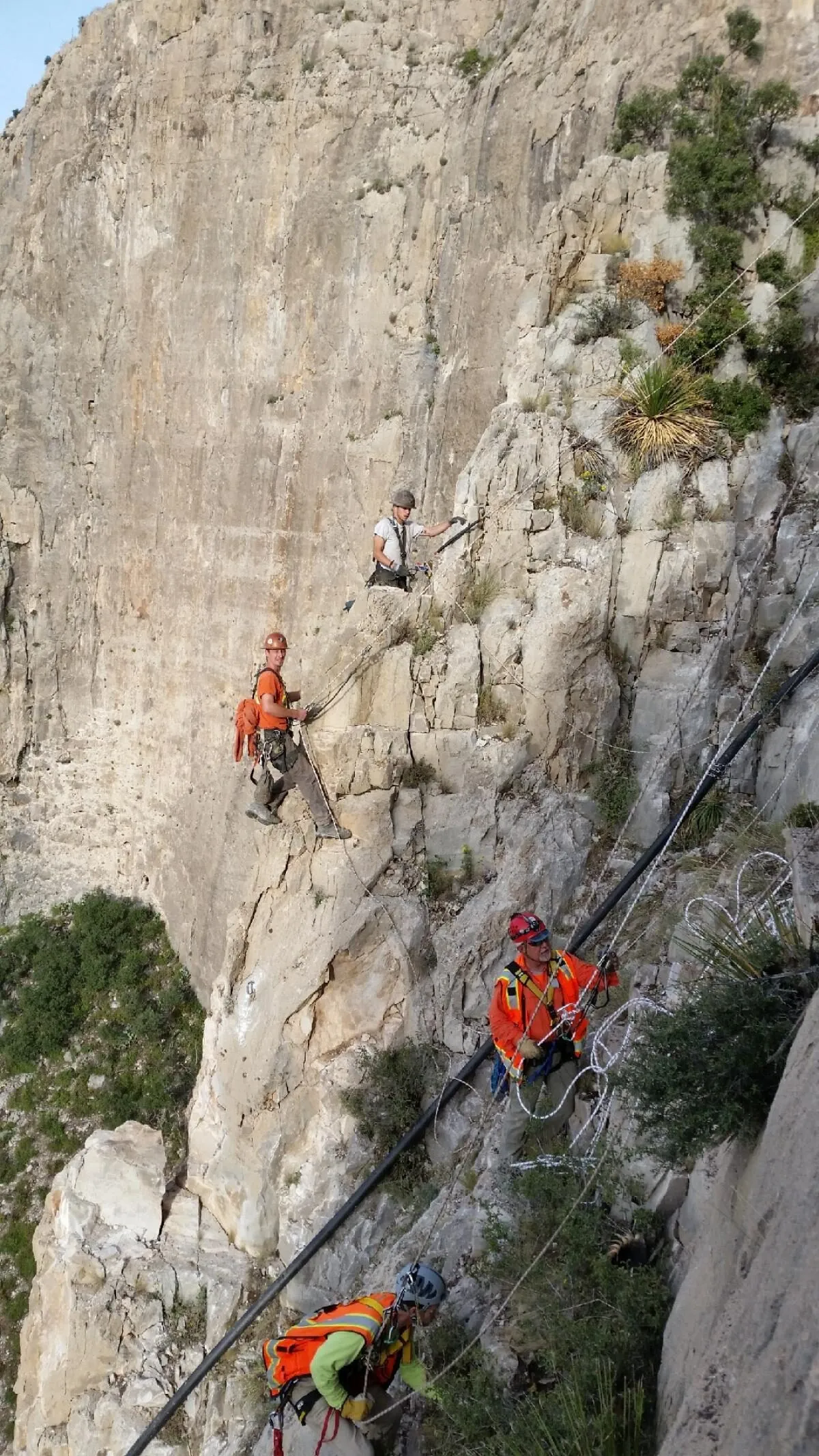
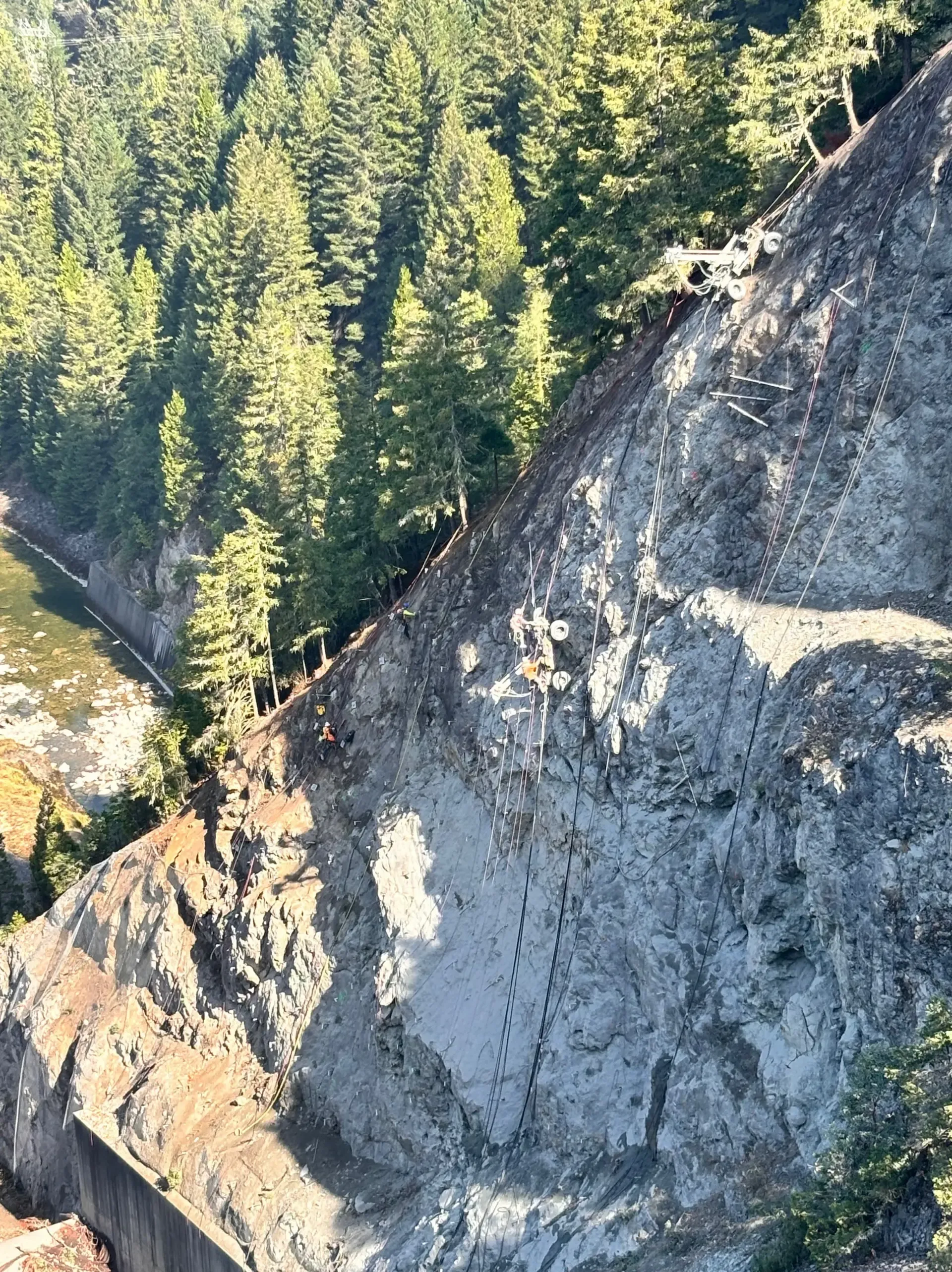
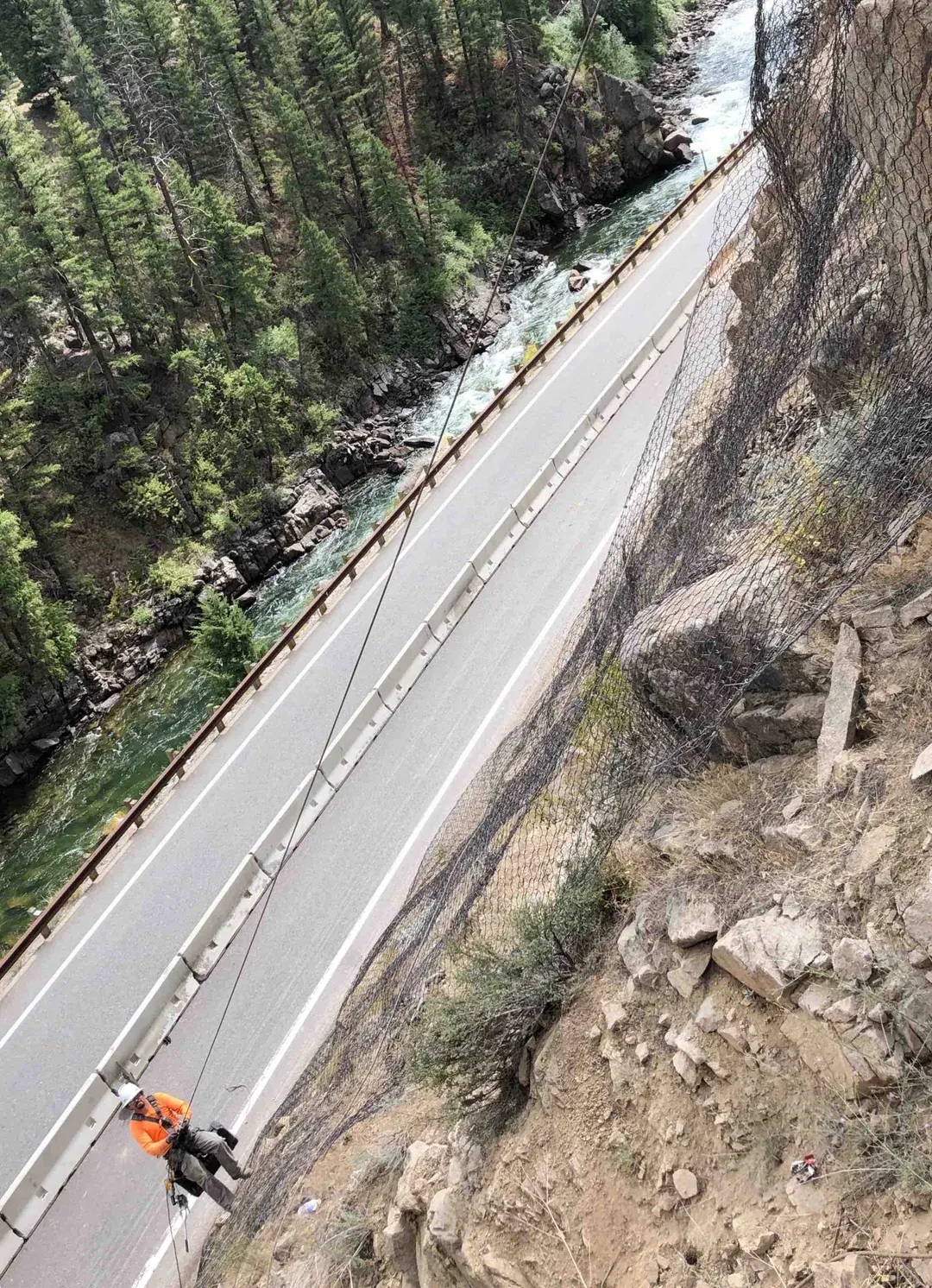
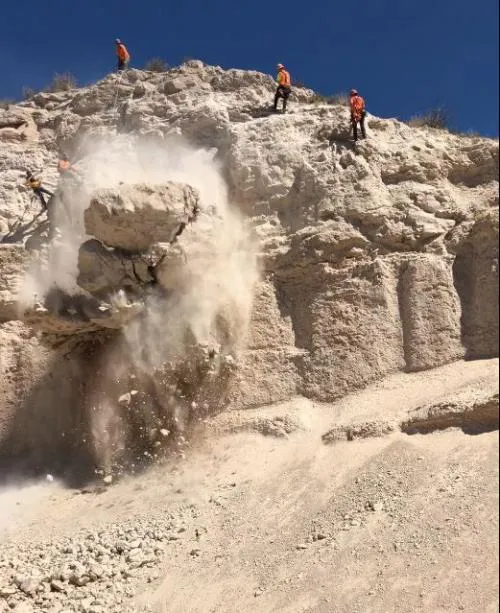
Rock scaling removes loose, hazardous material from rock slopes to prevent rockfall before it occurs. Using rope-access crews, excavators, and specialized tools, scaling is often the first and most essential step in any rockfall mitigation program.
Understanding Rock Scaling
Rock scaling removes loose, hazardous material from rock slopes to prevent rockfall before it occurs. Using rope-access crews, excavators, and specialized tools, scaling is often the first and most essential step in any rockfall mitigation program.
Our experienced crews identify and remove unstable blocks, wedges, and overhangs before they become hazards—protecting infrastructure and preparing slopes for additional stabilization.
This technique is used in our services for:
Typical Applications
How It Works
Our proven methodology ensures consistent, high-quality results for every installation.
Slope Assessment
Identify loose blocks, wedges, and overhangs through visual inspection and sounding.
Access Setup
Establish rope systems, crane baskets, or mechanical access to work areas.
Material Removal
Remove unstable material using pry bars, pneumatic tools, airbags, or hydraulic methods.
Cleanup & Verification
Clear debris from catchment areas and verify slope stability before demobilization.
Key Advantages
Immediate Hazard Reduction
Scaling removes the source of rockfall hazards rather than just containing debris—the most direct form of mitigation.
Rope-Access Capability
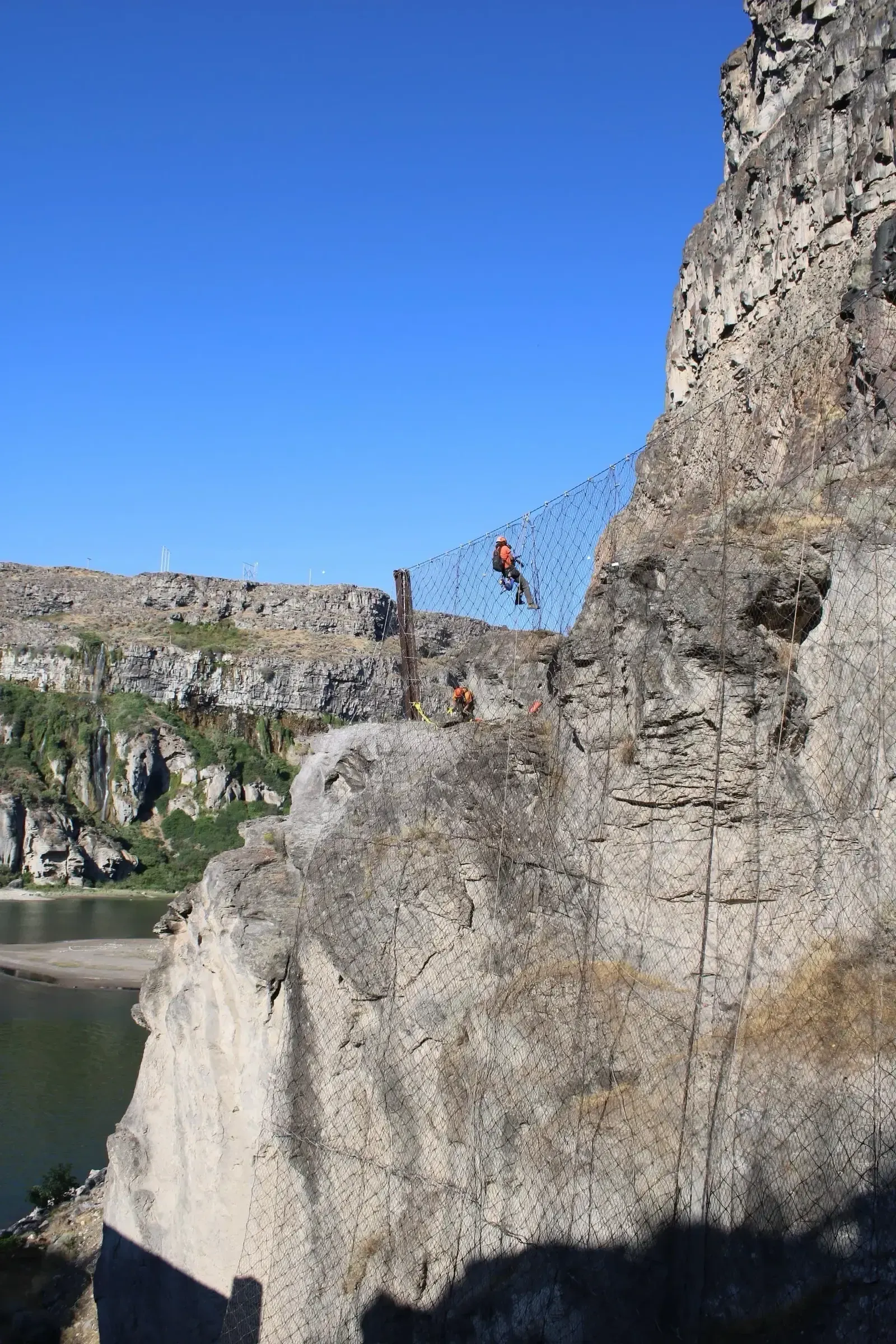
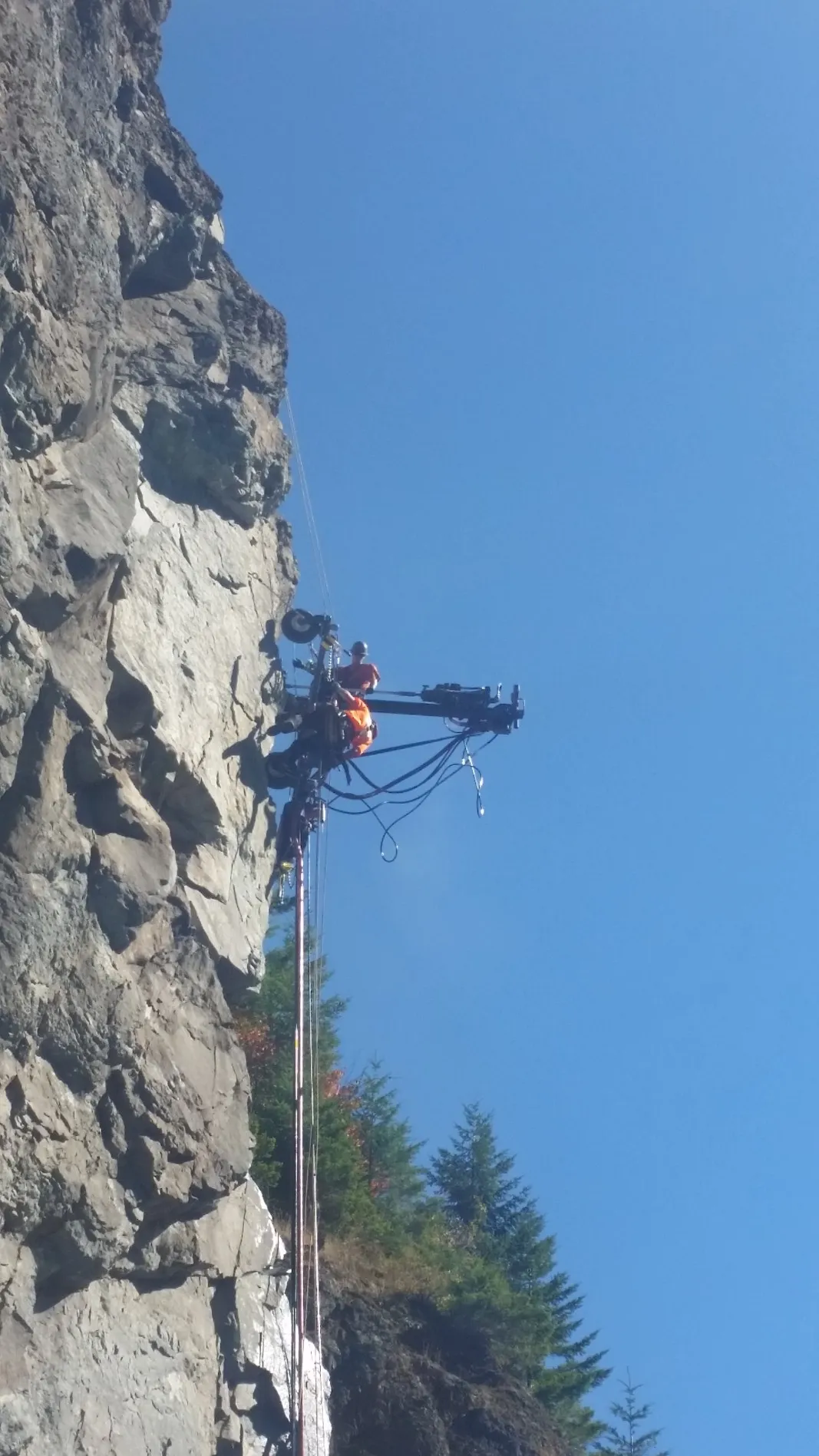
Trained crews access vertical and overhanging faces where equipment cannot reach.
Prepares for Other Treatments
Scaling clears loose material before mesh, bolting, or shotcrete installation for optimal system performance.
Rapid Deployment
Scaling crews can mobilize quickly for emergency response after rockfall events.
Cost-Effective
Often the most economical first step in a comprehensive rockfall mitigation program.
Technical Considerations
Soil/Rock Conditions
Rock type and fracture patterns determine scaling methods. Highly fractured rock may require extensive scaling; massive rock may have isolated loose blocks.
Groundwater
Seepage can indicate loose zones. Freeze-thaw cycles loosen rock seasonally, often requiring periodic re-scaling.
Load Capacity
Not applicable—scaling removes material rather than supporting it.
Spacing
Not applicable—coverage determined by hazard assessment.
Installation Method
Crews work systematically across the face, sounding rock and removing loose material. Large blocks may require rigging for controlled lowering.
Equipment Used
- Rope-access rigging systems
- Pry bars and scaling tools
- Pneumatic hammers and splitters
- Airbags for block dislodgement
- Crane baskets for high-reach access
Limitations
- Does not address deep-seated instability
- May need periodic re-scaling
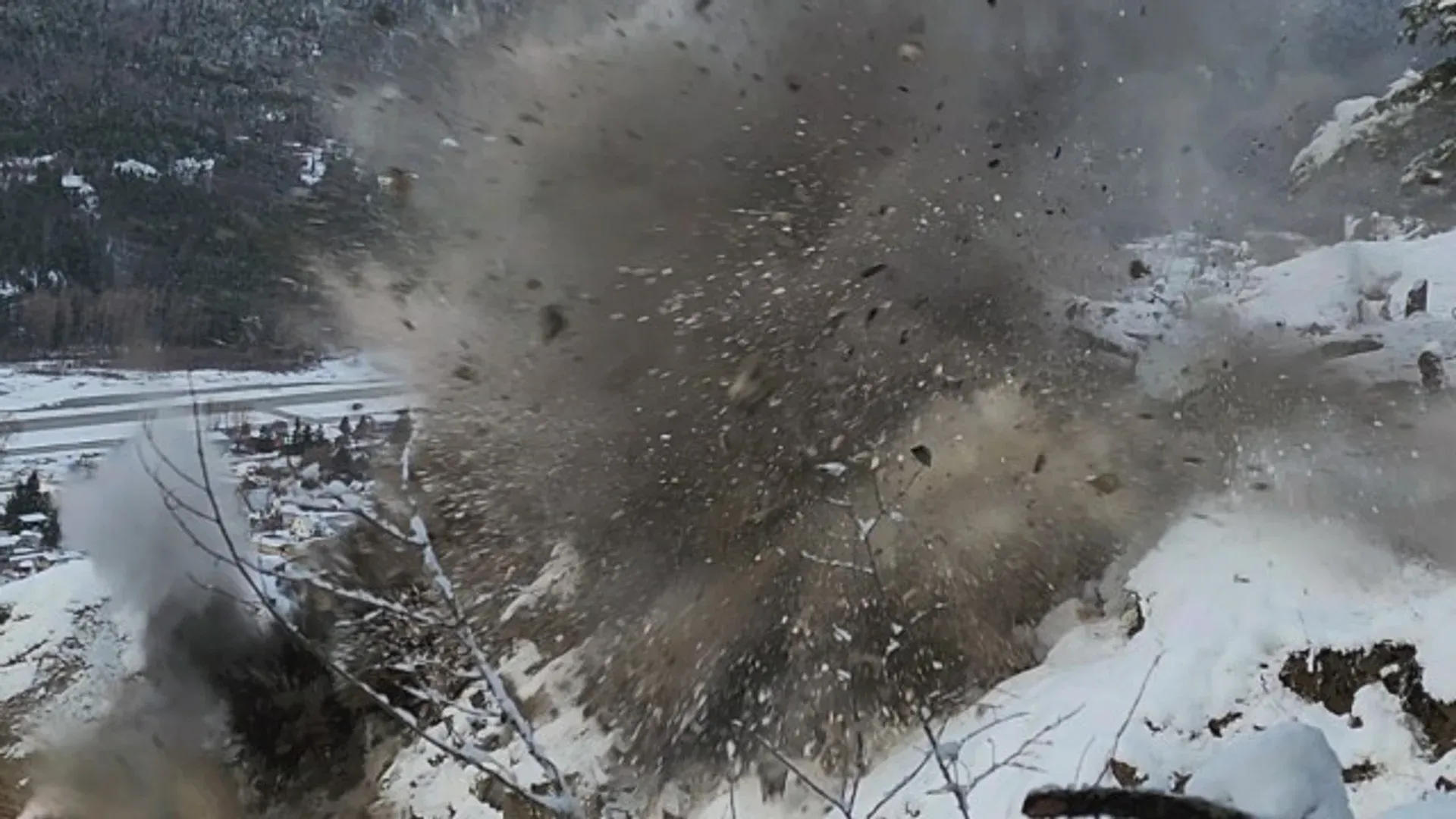
- Large blocks may require blasting or splitting
- Weather-dependent for rope access
Technical Specifications
System Variations
Manual Hand Scaling
Rope-access crews using hand tools for selective removal of loose material.
Best For:
- Steep slopes
- Selective removal
- Access-limited areas
Mechanical Scaling
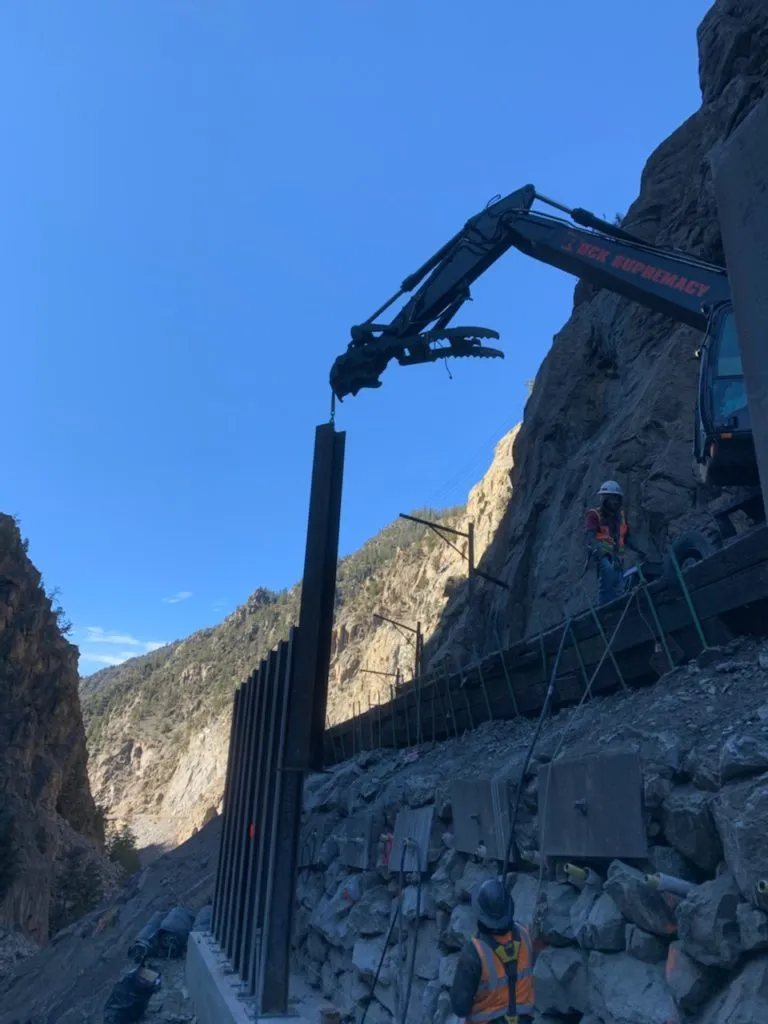
Excavators with hydraulic thumbs or rakes for high-volume removal.
Best For:
- Accessible slopes
- High-volume work
- Production scaling
High-Reach Scaling
Long-reach excavators for tall slopes accessible from the base.
Best For:
- Quarry faces
- Highway cuts
- Equipment-accessible sites
Airbag Scaling
Inflatable airbags to dislodge large blocks without explosives.
Best For:
- Large block removal
- Controlled dislodgement
- Sensitive areas
Integration With Other Systems
Rock Bolting
Bolts stabilize key blocks and areas identified during scaling operations.
Learn More
Mesh Systems
Mesh installation follows scaling to contain future rockfall from weathering and seismic events.
Learn More
Shotcrete
Shotcrete seals scaled faces against weathering and provides surface stabilization.
Learn More
Rockfall Barriers
Barriers provide redundant protection below scaled slopes.
Learn MoreExample Project Types
- Highway corridor maintenance
- Emergency rockfall cleanup
- Railroad slope stabilization
- Mining highwall maintenance
- Tunnel portal preparation
- Dam spillway maintenance
- Quarry face safety
Our Work in Action
Why Choose Rock Supremacy for Rock Scaling
Expert Rope-Access Crews
Trained technicians safely access vertical and overhanging faces.
Emergency Response
24/7 mobilization capability for urgent rockfall events threatening infrastructure.
Mechanical Capability
Excavators and high-reach equipment for production scaling on accessible slopes.
Integrated Solutions
Scaling combined with bolting, mesh, and barriers for comprehensive rockfall mitigation.
Safety Culture
Rigorous safety protocols on DOT, railroad, and mining projects across the western US.
Our Work
See how we've applied this technique and others to solve real-world geotechnical challenges.

Bingham Canyon Mine Support
Highwall stabilization in one of the world's largest open-pit mines to ensure safe ongoing extraction.

I-70 Corridor Stabilization
Installed 50,000 sq ft of high-tensile mesh and performed extensive scaling after a major weather event.

Ketchum-Challis Highway Scaling
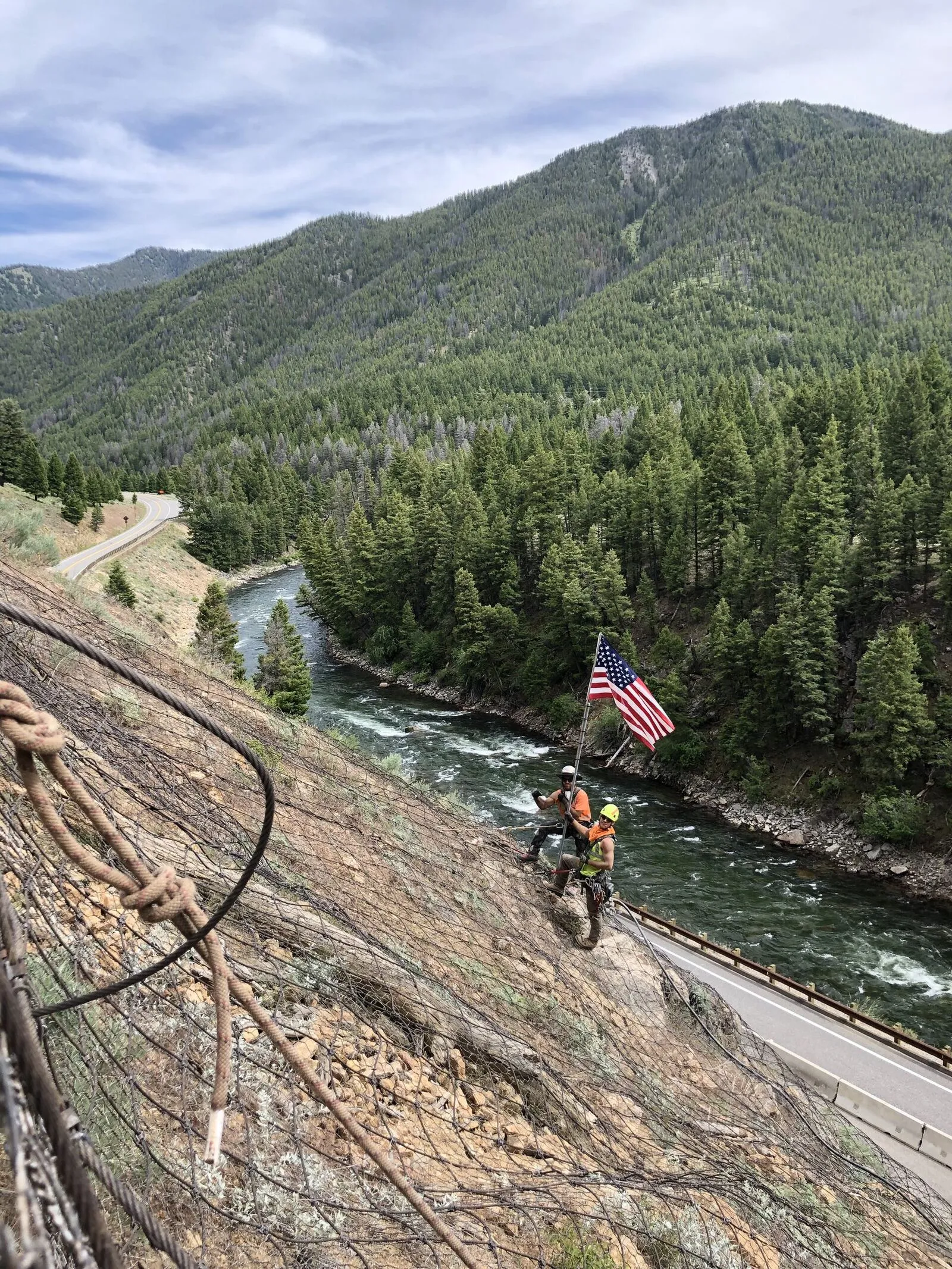
Large-scale rock scaling and mesh installation along 3 miles of Highway 75 through the Sawtooth Mountains.
Rock Scaling FAQ
Client Testimonials
Trusted by DOTs, engineering firms, and property owners nationwide.
Deploy Us
Ready to discuss your project? Our team is standing by to assess your site conditions and develop a custom solution using Rock Scaling and other proven techniques.
Emergency (24/7)
(541) 383-7625Bidding & Estimates
Info@RockSupremacy.comHeadquarters
Licensed in CO, UT, WY, ID, MT, CA, WA, OR, TN, VA
Request Consultation
Related Techniques
Explore other engineering methods we use to deliver comprehensive geotechnical solutions.
Blasting & Boulder Busting
Controlled blasting breaks rock in a precise, predictable manner for excavation, scaling, access road construction, and geotechnical stabilization. When performed by trained specialists, blasting creates clean rock faces, removes hazardous overhangs, and improves slope geometry for long-term stability.
Draped Mesh Systems
Draped mesh systems control loose rockfall by capturing debris and guiding it downslope to a safe catchment area. Unlike pinned mesh, draped systems are not rigidly attached to the entire slope—allowing them to manage high volumes of material efficiently.
Rock Bolting
Rock bolting stabilizes fractured, jointed, or unstable rock masses by anchoring steel bars deep into competent rock. By tying loose blocks back to stable substrate, rock bolts improve the overall strength and cohesion of slopes, cuts, tunnels, and vertical faces.
Rockfall Barriers & Fences
Engineered catch systems that intercept falling rock or debris before it reaches roadways, railways, or infrastructure. These high-energy systems absorb and dissipate impact energy safely through deformable components.