Rockfall Mitigation Contractor
Rockfall mitigation for highways, rail corridors, mines, and steep-site projects. Our crews combine scaling, rock anchoring, mesh, and barriers to address your site conditions and access constraints.
Rockfall Mitigation for Infrastructure Projects
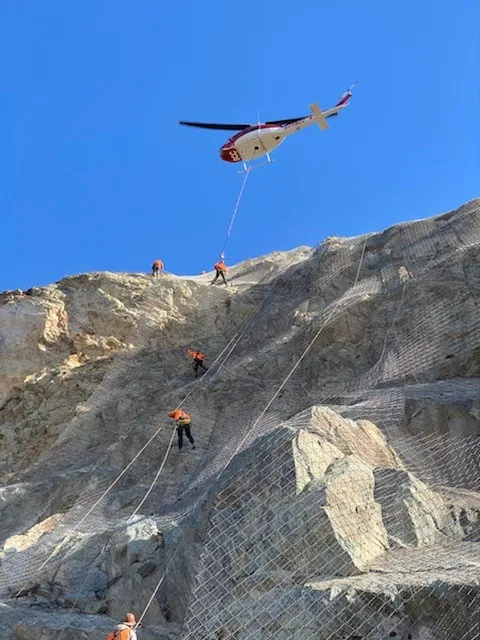
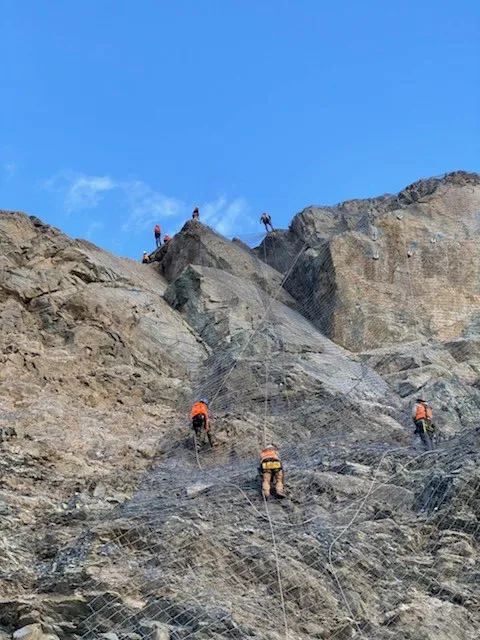
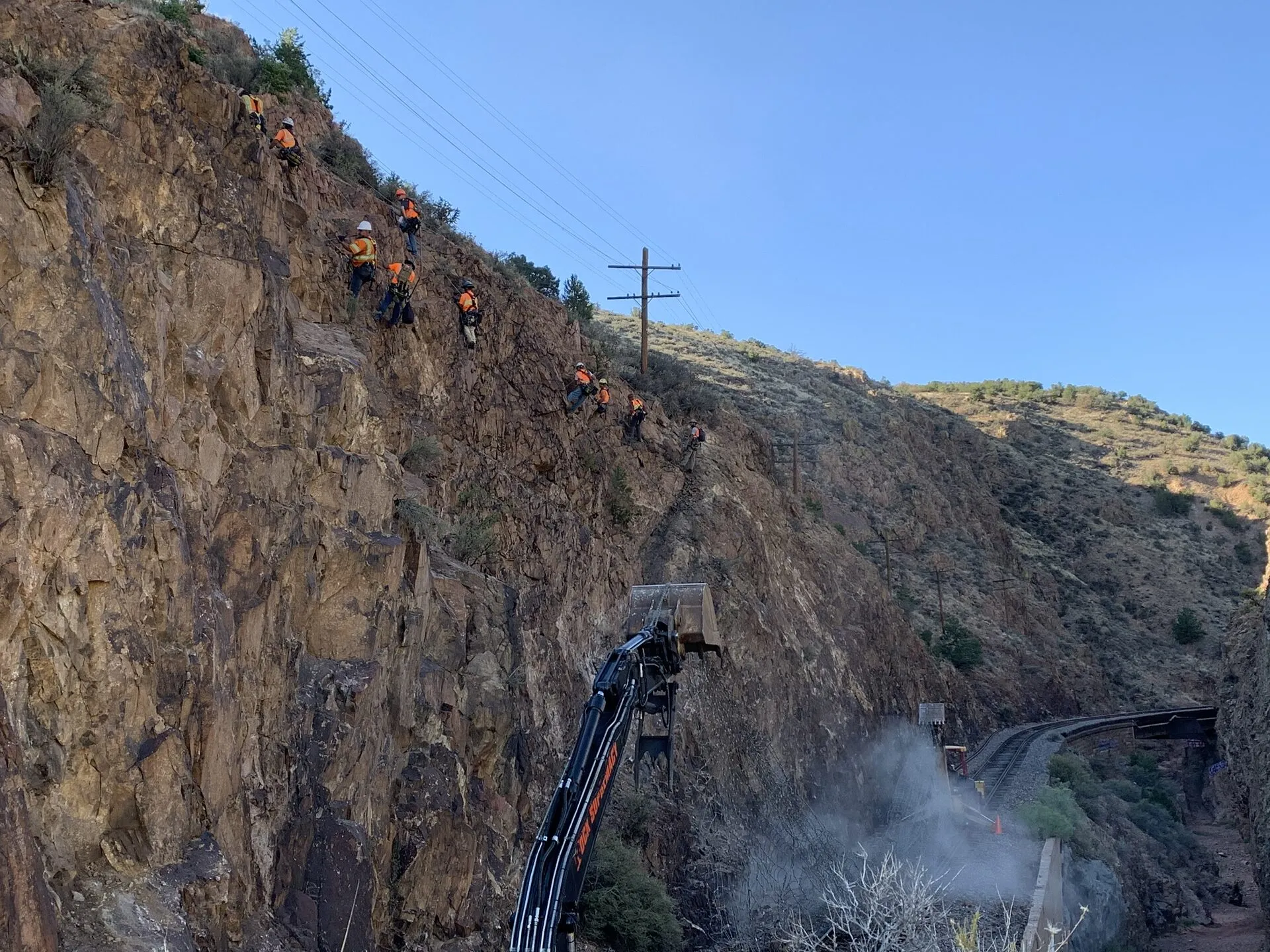
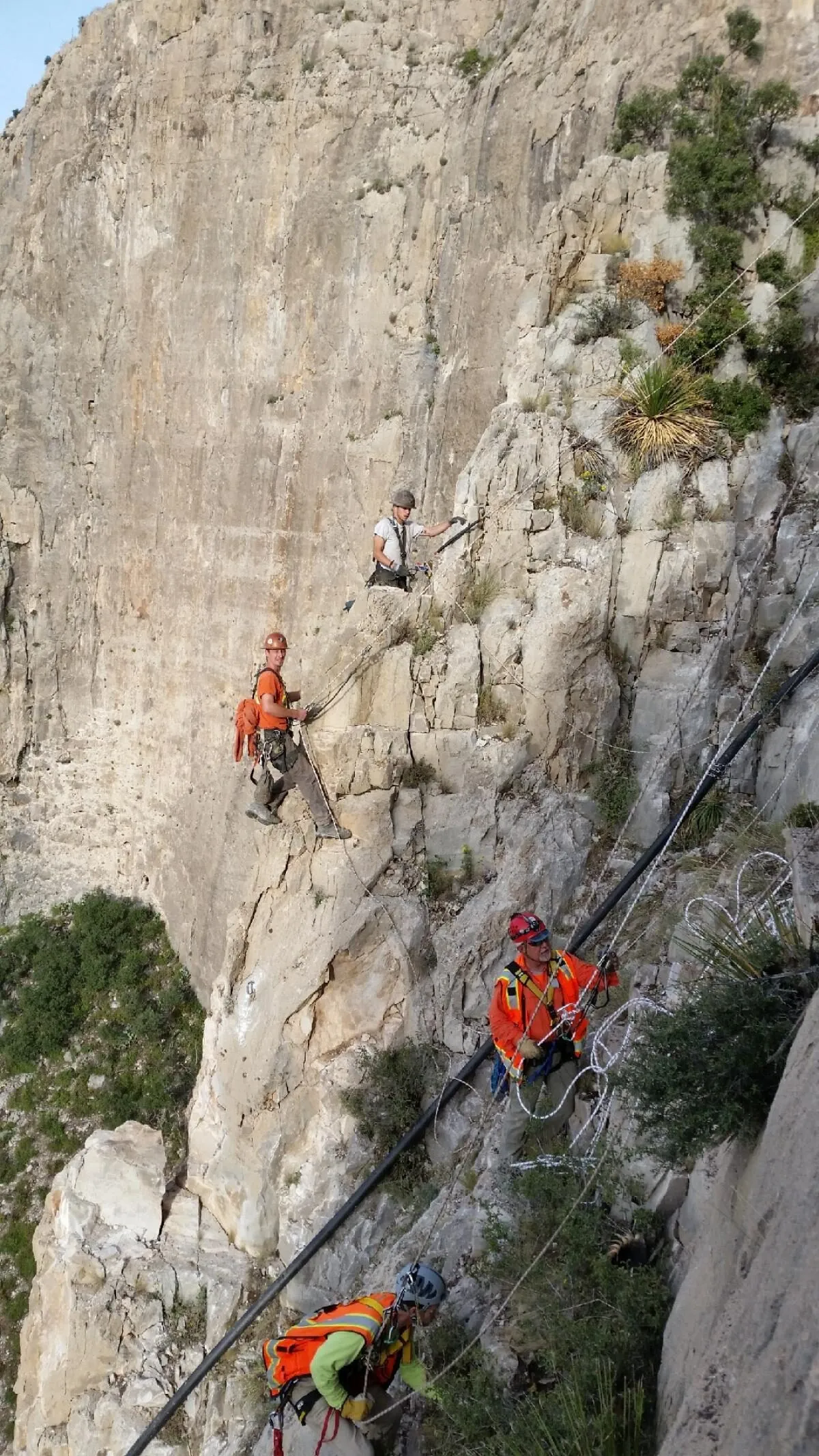
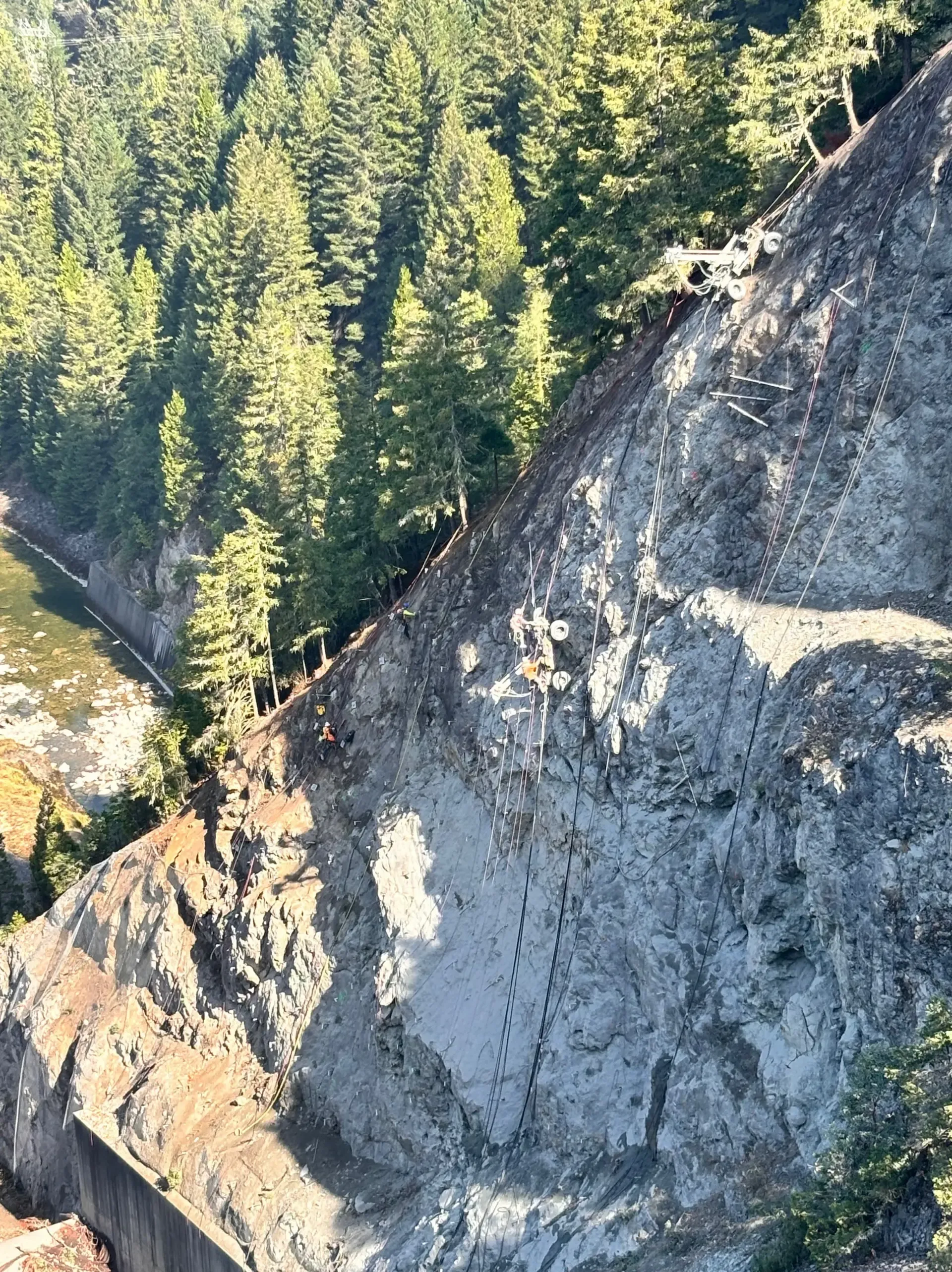
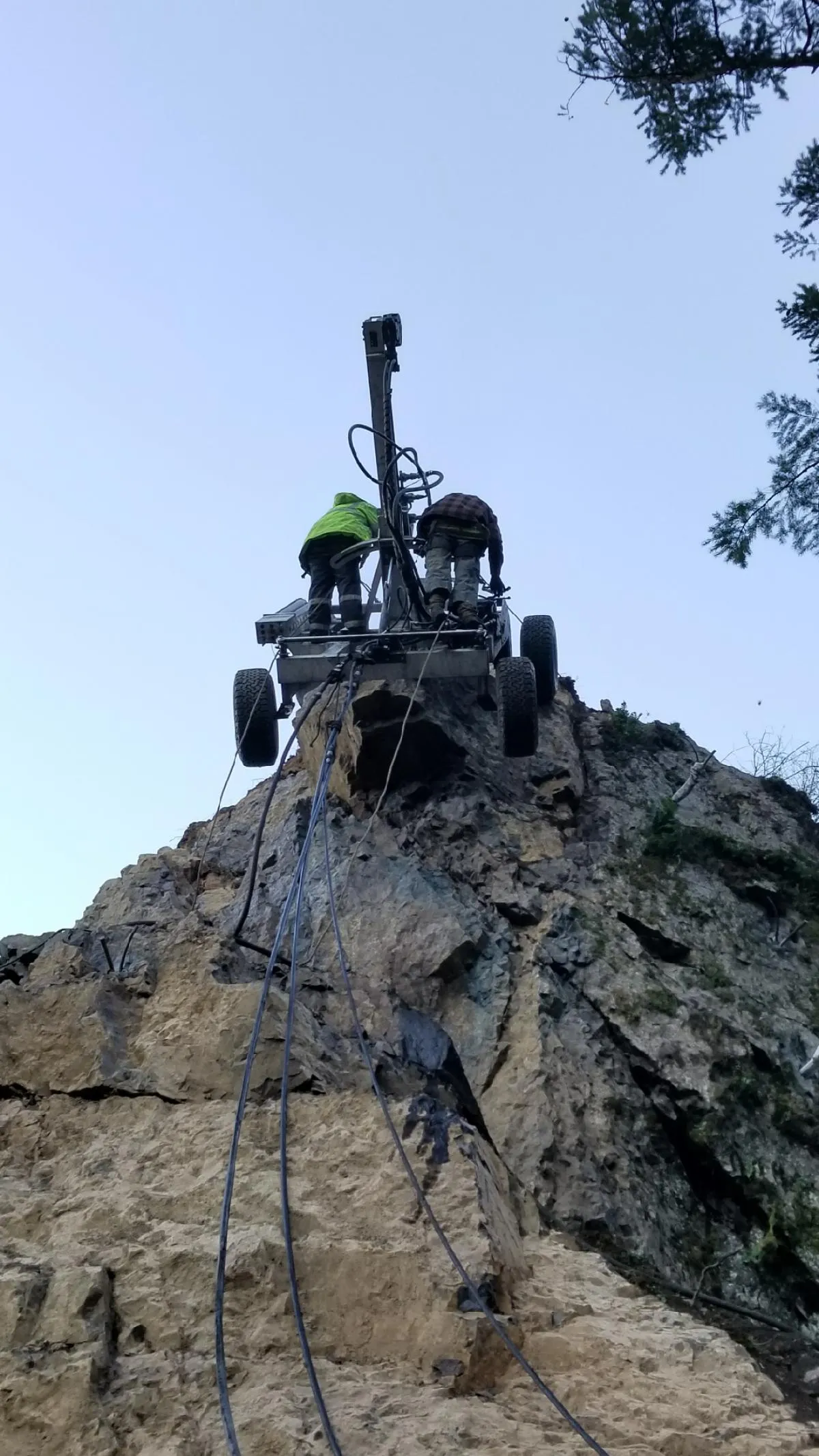
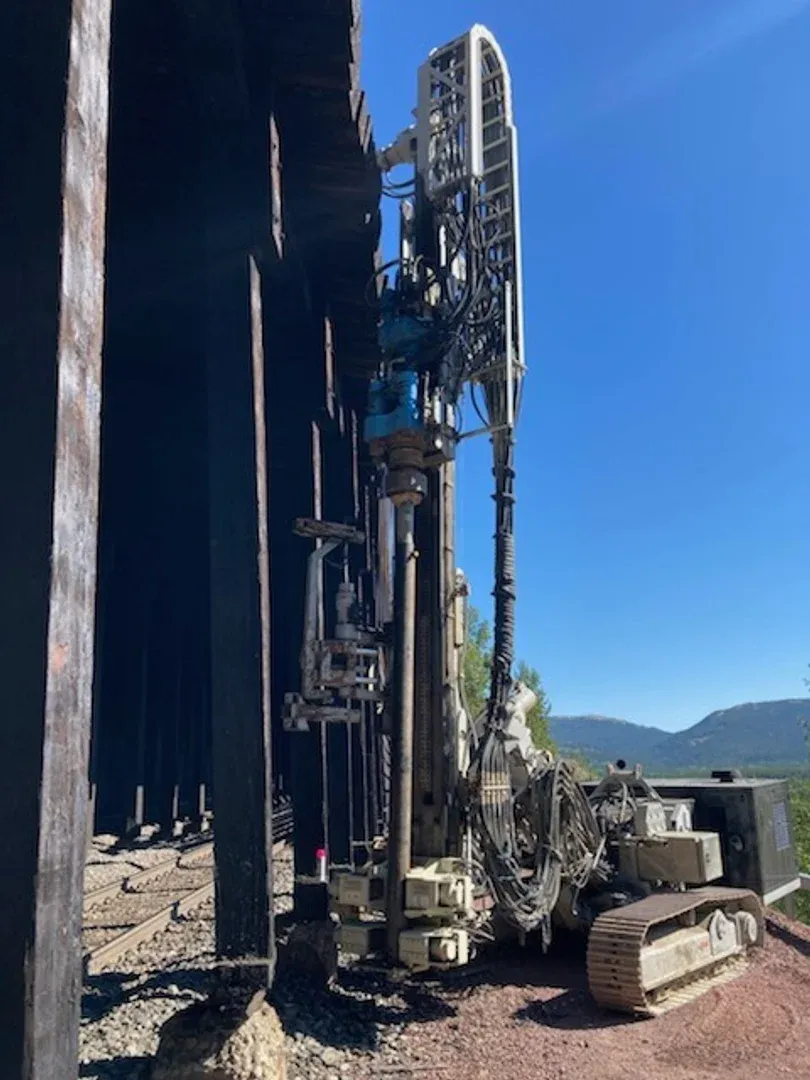
Rock Supremacy works with infrastructure owners, transportation agencies, and general contractors to plan and carry out rockfall mitigation. We scope construction around the exposed road, railway, facility, or work area, the available access, and the project engineer's requirements. Our rope-access crews and drilling services support work on steep faces and remote cuts.
At US-95 near Riggins, Idaho, our crews combined blasting, scaling, and cable netting bolted to the rock face as part of the response to a highway-blocking slide. That project illustrates how removal and installed protection can be coordinated on a constrained corridor.
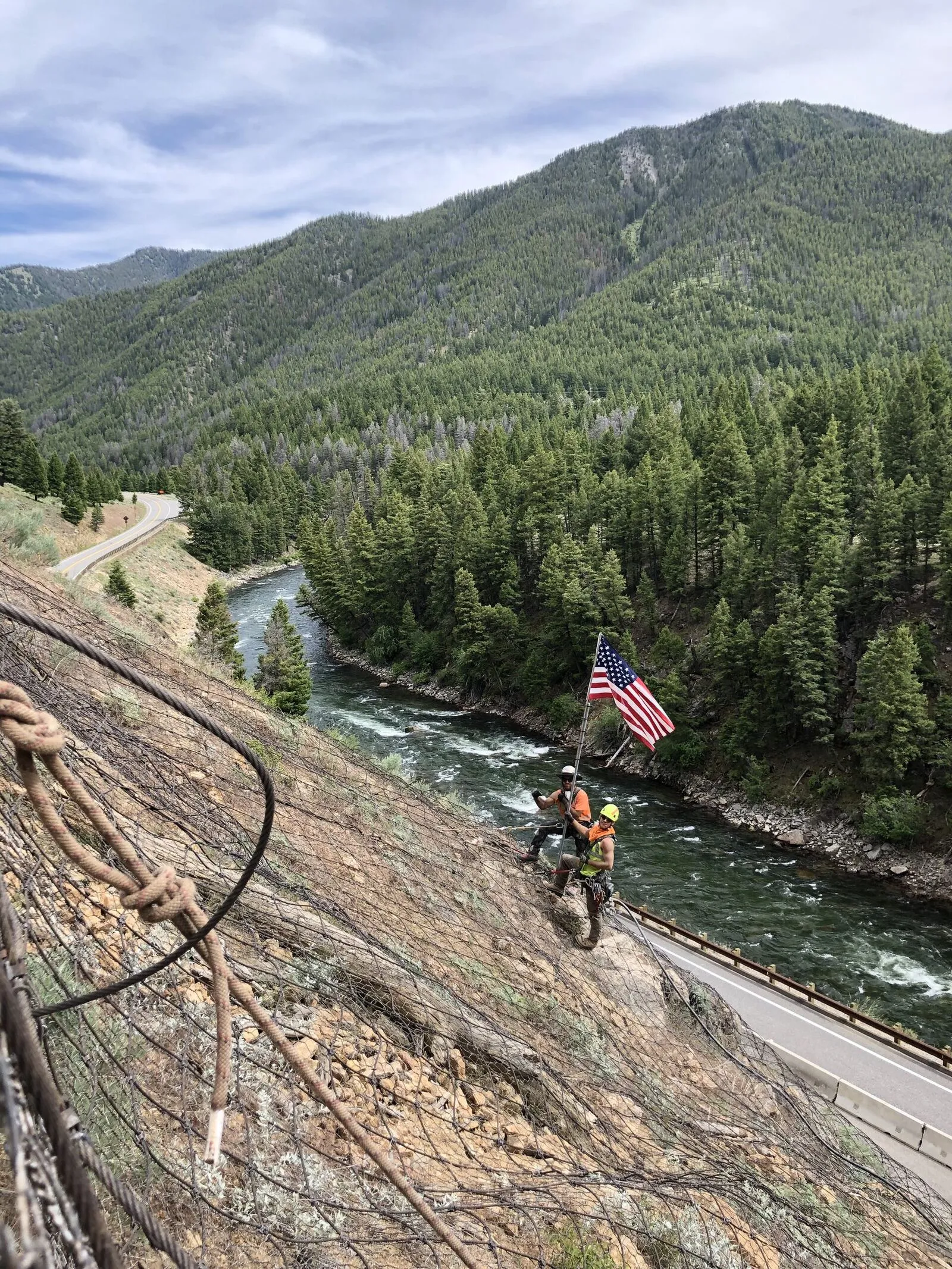
The construction scope may include rock scaling services to remove loose material, rock anchor installation to reinforce selected rock masses, and mesh and barrier installation to manage falling debris. Compare draped mesh, pinned mesh, and rockfall barriers when reviewing the methods in your design.
To discuss a project, send the location, photos taken from a safe position, available engineering reports or drawings, access information, and your schedule. Include traffic or rail work windows and any known restrictions. Contact our team for planned work, or use our emergency response contact for an active incident.
When Rockfall Mitigation Is Needed
You may need rockfall mitigation when you observe: loose or fractured rock on steep slopes; recent rockfall events or debris accumulation at the slope base; freeze-thaw damage, post-fire cracking, or newly exposed faces; erosion or undercutting at the slope toe; overhangs or key blocks visible from the roadway; or infrastructure located directly beneath a rock face. If even small blocks reach a roadway or facility, the risk of a major rockfall event is already present.
Without proper intervention, these conditions typically worsen over time. Early assessment and appropriate remediation can prevent costly emergency repairs and protect the assets and people that depend on stable ground.
Common Causes
- Freeze-thaw weathering and ice jacking in fractures
- Root penetration wedging blocks apart
- Water infiltration reducing friction on joint surfaces
- Seismic activity and vibration from blasting or traffic
- Post-wildfire thermal fracturing and deterioration
- Chemical weathering and mineral dissolution
- Natural joint expansion and block detachment
- Stress relief from adjacent excavation or erosion
- Construction activities disturbing slope geometry
- Erosion or undercutting at slope toe
Layered Protection Strategy
We employ a combination of active and passive systems to provide comprehensive rockfall protection. Active systems stabilize rock at the source to prevent detachment. Passive systems intercept and contain rocks that do release. Most sites benefit from multiple layers of protection working together.
Hazard Assessment & Trajectory Analysis
Our geologists conduct detailed slope assessments to identify unstable rock masses, evaluate failure potential, and model rockfall trajectories. We use Colorado Rockfall Simulation Program (CRSP) and similar software to predict bounce heights, velocities, and impact energies at potential barrier locations.
System Design & Engineering
Based on hazard assessment and trajectory modeling, we design protection systems that match the energy levels, trajectory heights, and site constraints. Design considers rock block sizes, drop heights, slope geometry, and required catchment effectiveness for cost-optimized protection.
Source Treatment & Scaling
Rock scaling removes loose and overhanging material that poses immediate hazard. This reduces the rockfall source volume and can eliminate the most dangerous blocks before they become falling hazards. Scaling is often the first step in any comprehensive rockfall program.
Active Retention Systems
Where feasible, we stabilize loose rock at the source using rock bolts, anchors, cable lashing, and pinned mesh systems. Active retention prevents initial detachment, the most effective form of protection because rocks never become projectiles.
Passive Catchment Systems
Barrier fences, catch ditches, attenuator systems, and draped mesh intercept and contain rocks that do release. Barrier selection matches site-specific energy requirements from trajectory analysis. Systems are positioned to maximize catchment effectiveness.
Installation & Commissioning
Crews install systems per manufacturer specifications and engineering design. All connections, tensioning, and anchoring are verified. Post-installation inspection confirms proper installation for warranty and performance assurance.
How We Deliver
Our field services deliver comprehensive solutions tailored to your specific site conditions and requirements.
Why Choose Rock Supremacy
Techniques We Use
Proven engineering methods that deliver long-term stability and protection.
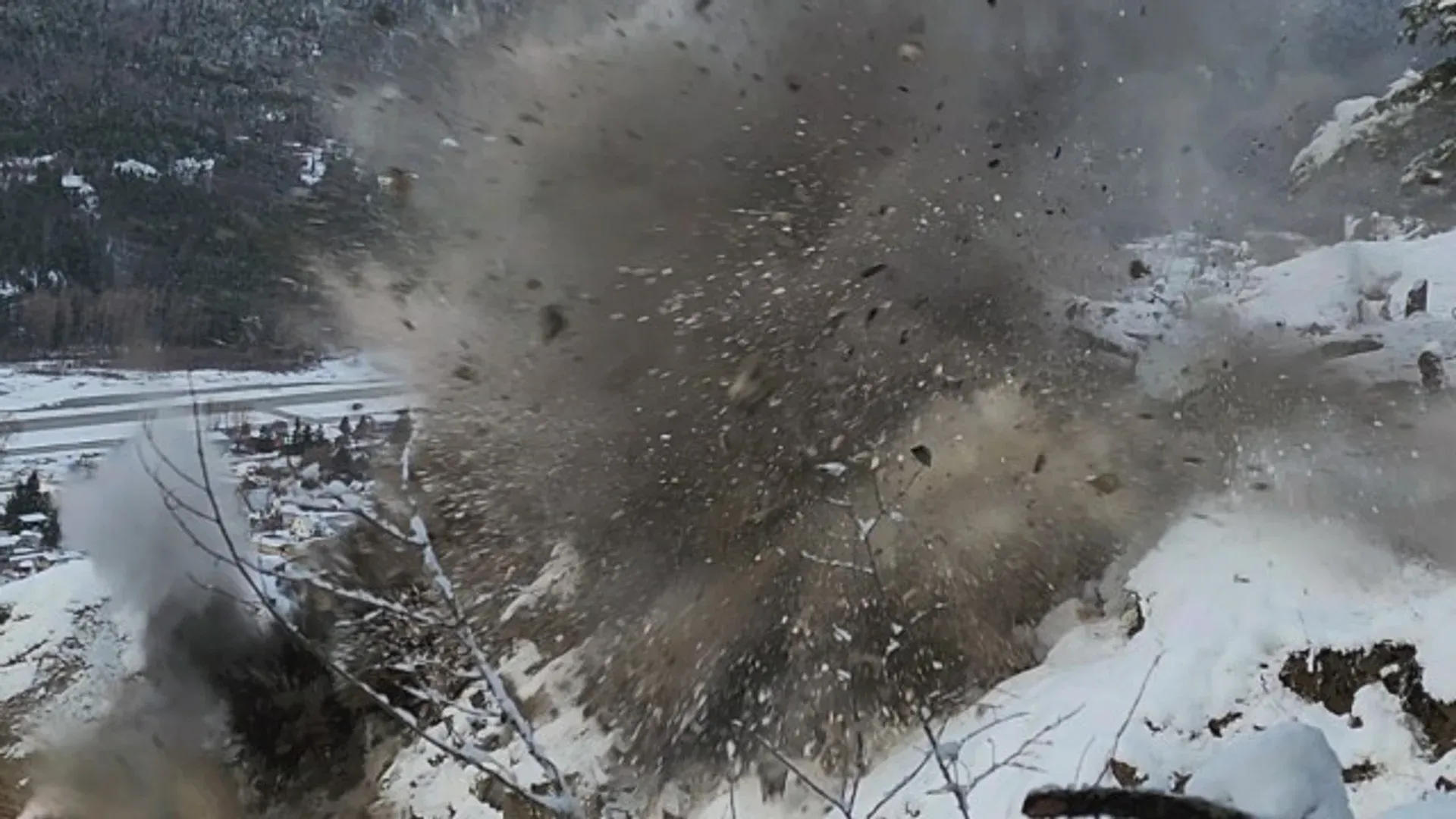

Blasting & Boulder Busting
Rock blasting uses planned explosive charges to break or remove rock. The method and controls depend on the excavation, nearby structures, and site restrictions.
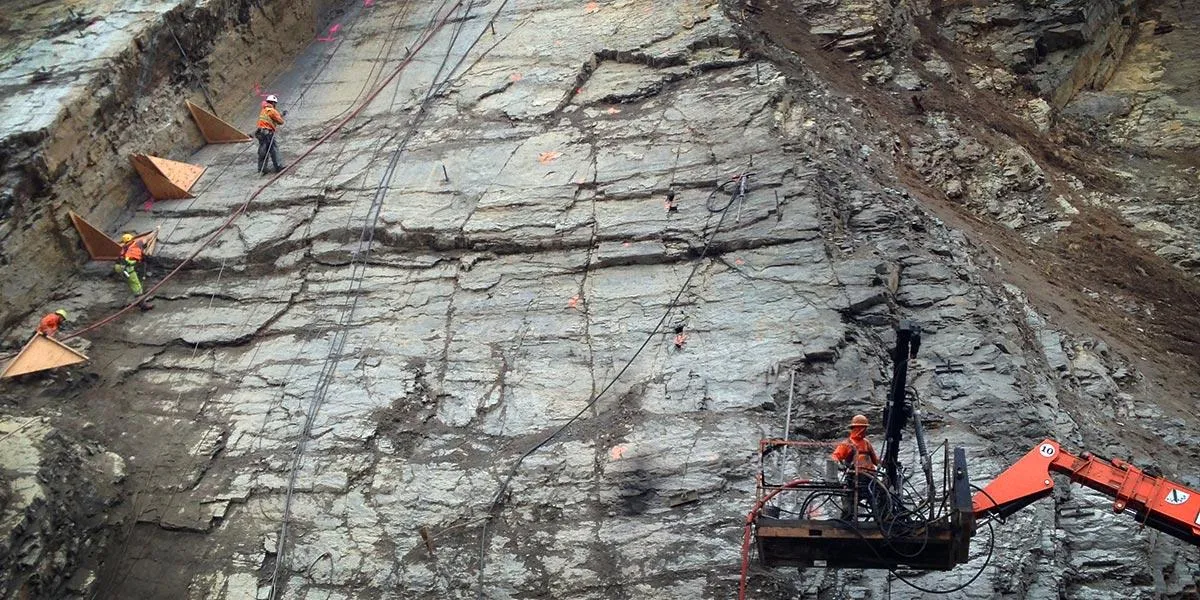

Cable Anchors
Cable anchors use steel strands installed and tensioned in the ground to hold large loads. They can support dams, retaining structures, unstable rock masses, and other heavily loaded works.
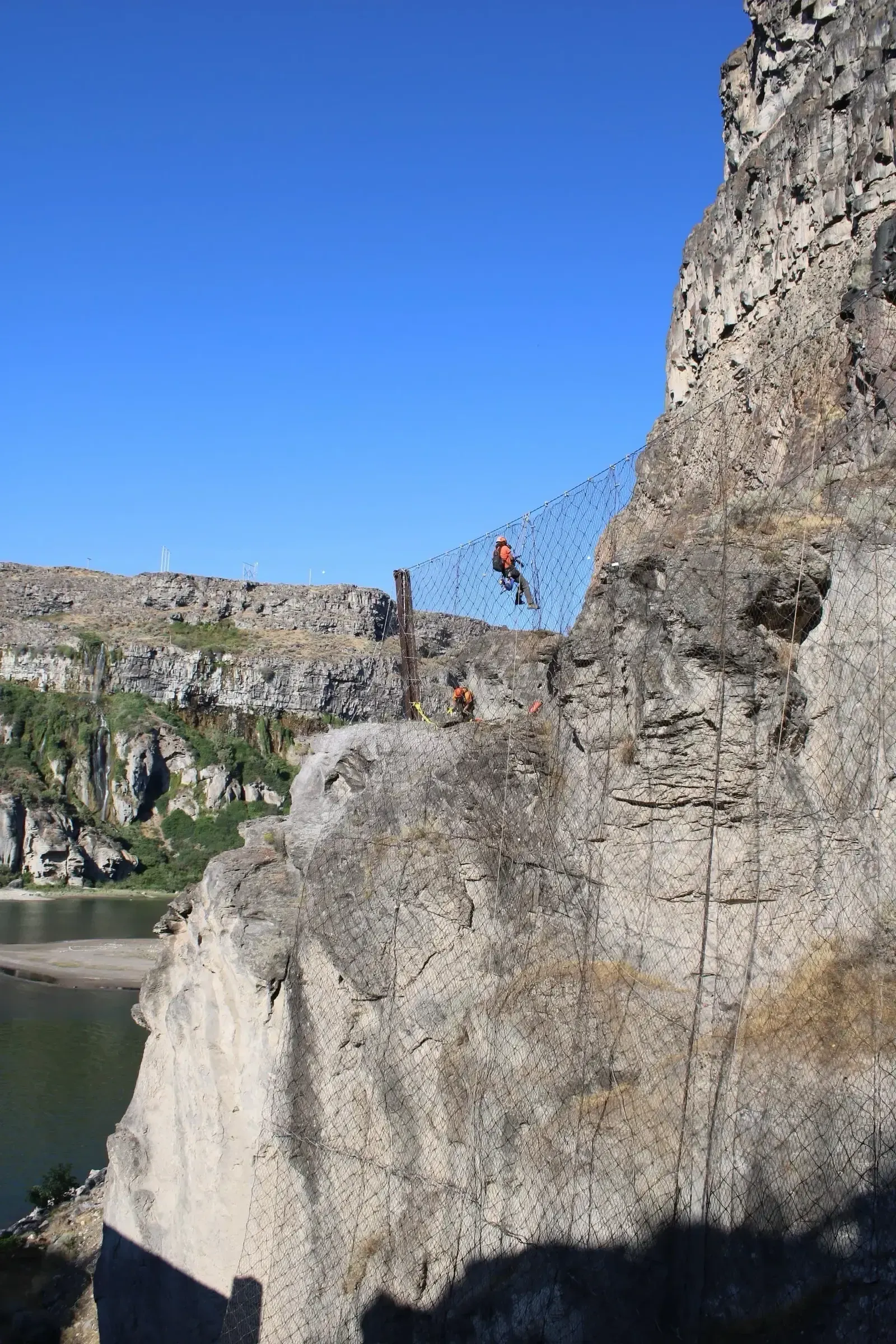

Draped Mesh Systems
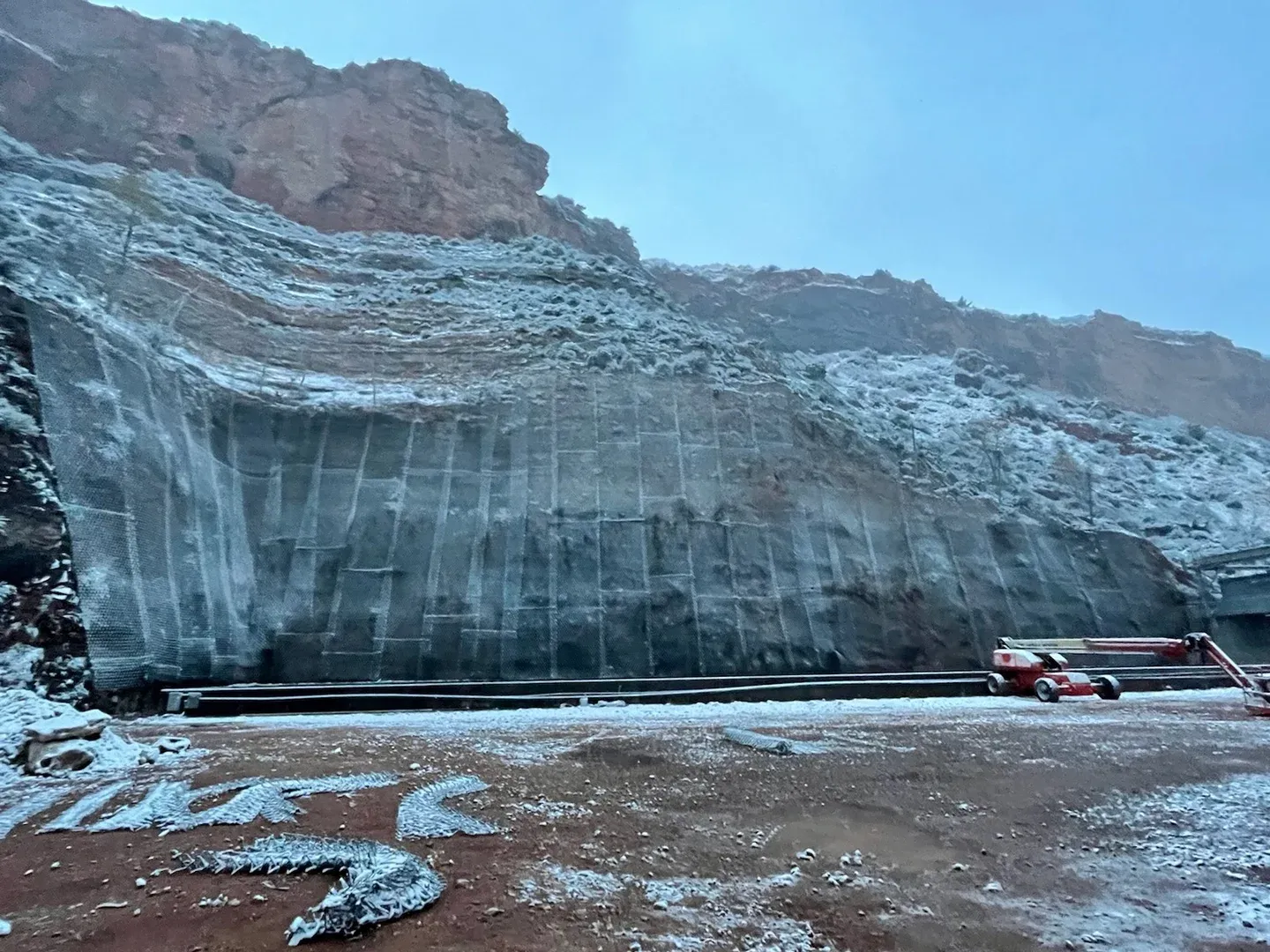
Draped mesh hangs over a rock slope to guide detached rock toward a collection area at the bottom. It requires space for that collection area and access to remove accumulated material.
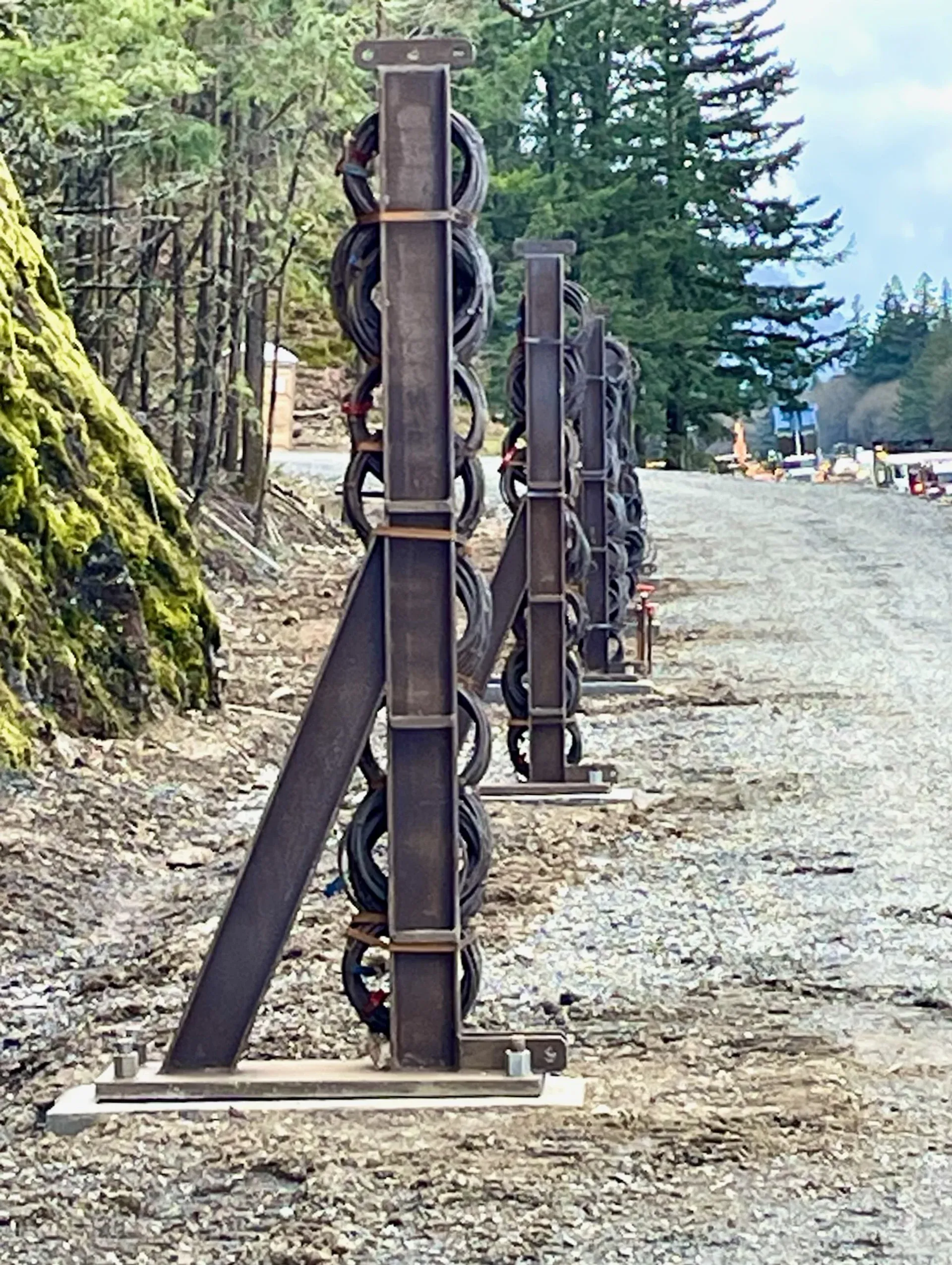

High-Energy Rockfall Barriers
High-energy rockfall barriers catch falling blocks using flexible nets, support cables, and components that absorb impact. The system must suit the expected rockfall and the space available behind the barrier.
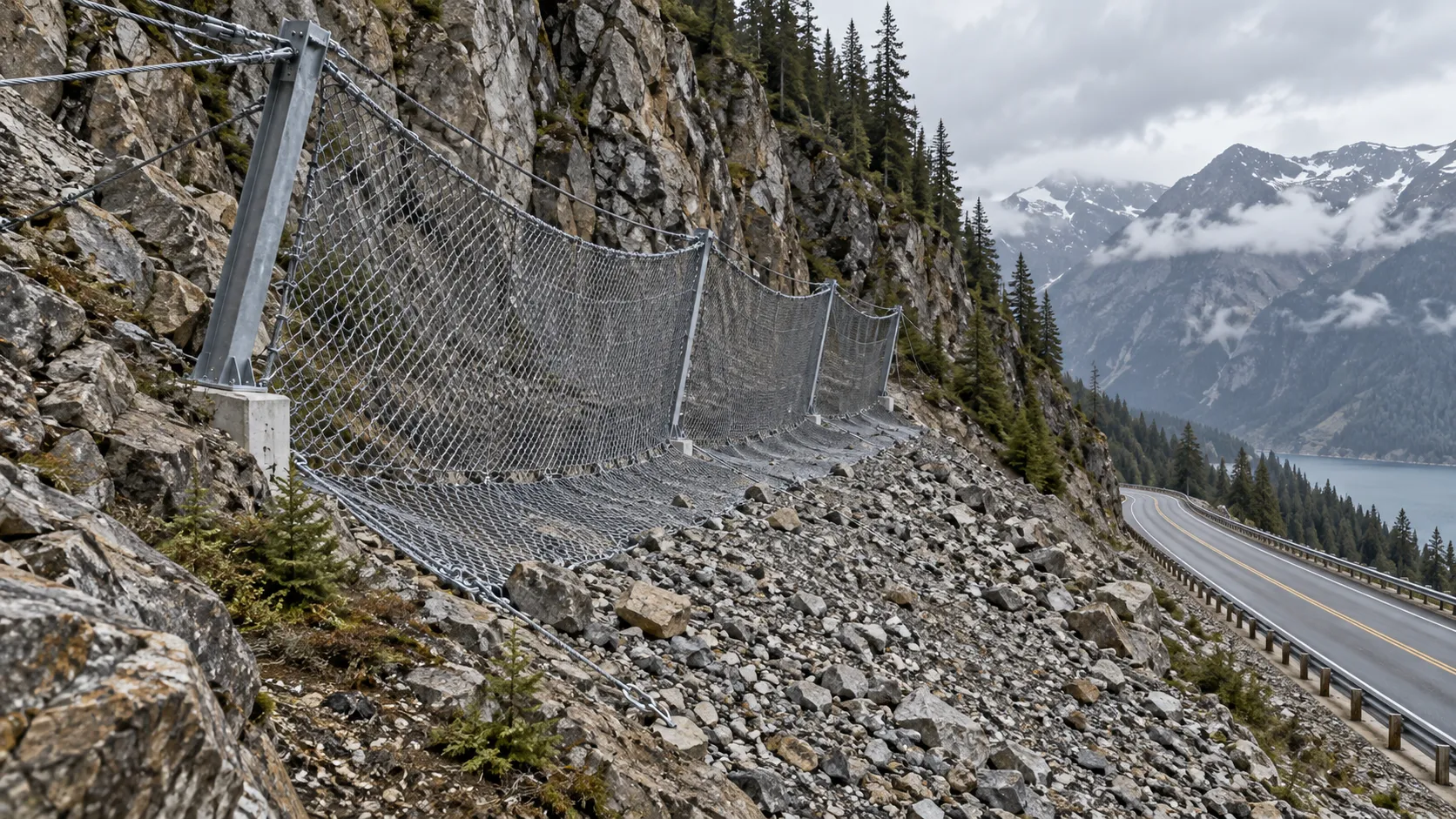

Mid-Slope Attenuators
Mid-slope attenuators are flexible rockfall systems placed partway down a slope. They slow and guide falling rock toward a planned collection area below.
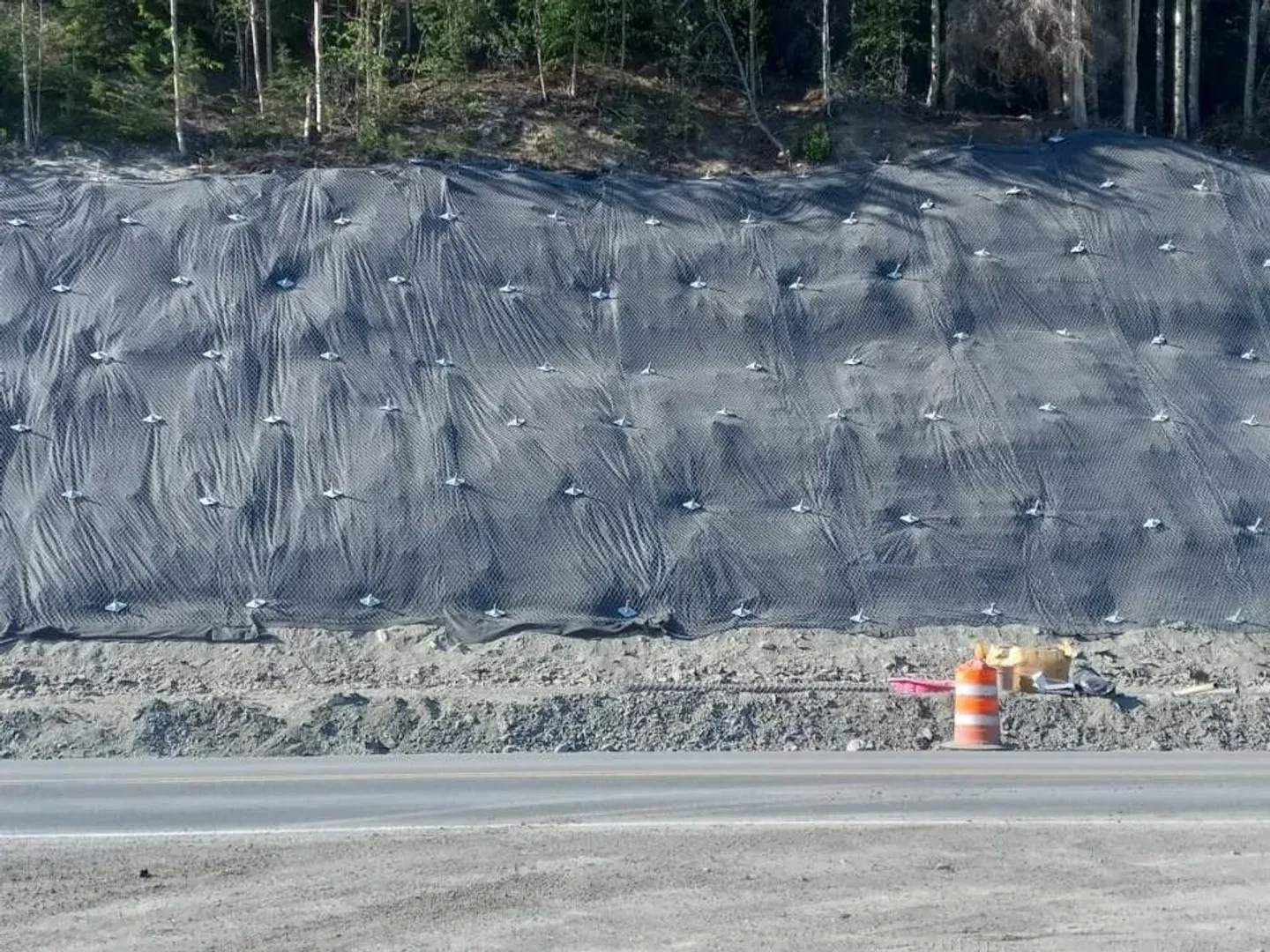

Pinned Mesh Systems
Pinned mesh holds loose rock and soil against a slope using steel mesh secured with nails or bolts. It helps control material before it falls toward the area below.
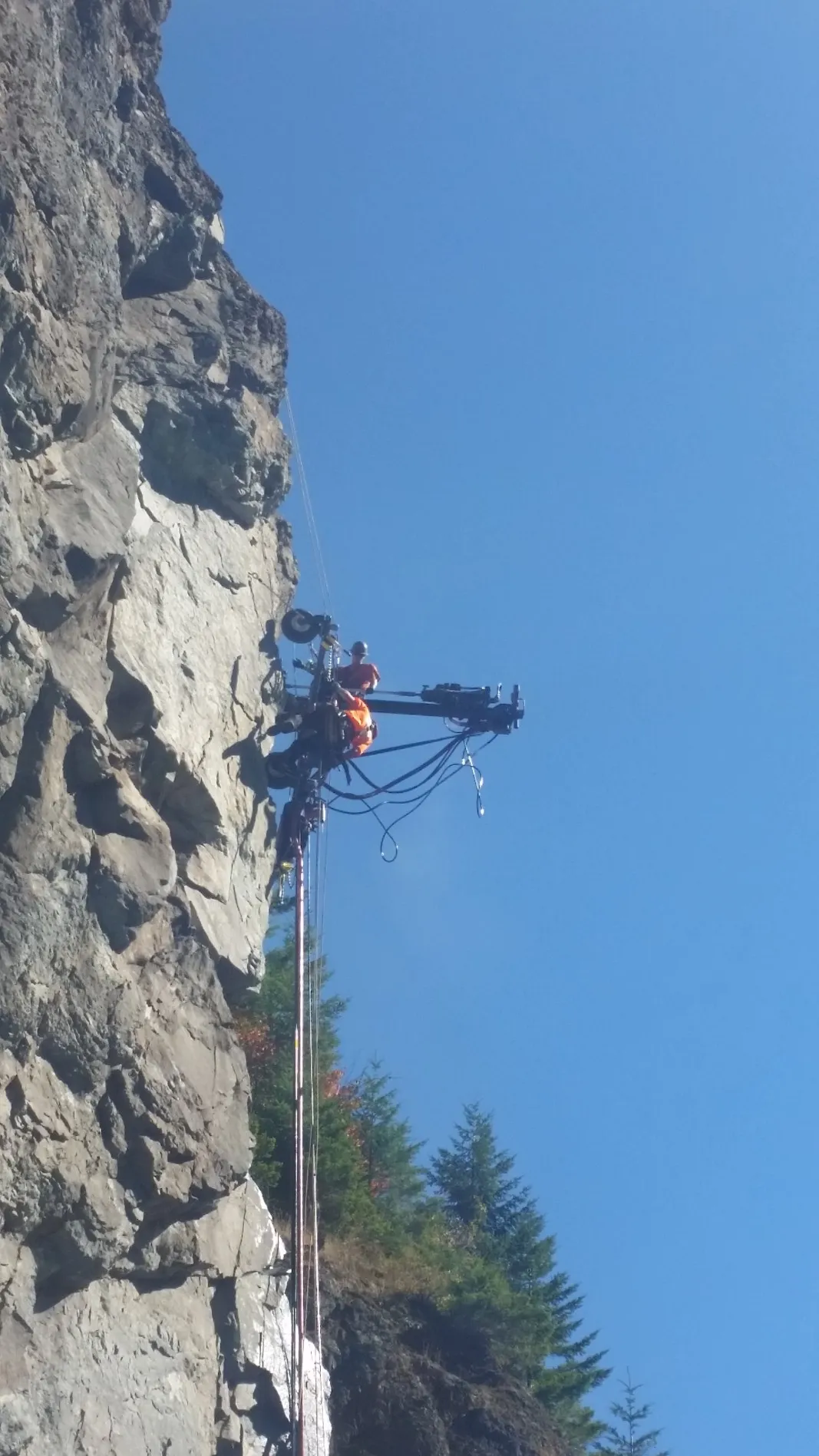

Rock Bolting
Rock bolting stabilizes fractured, jointed, or unstable rock masses by anchoring steel bars deep into competent rock. By tying loose blocks back to stable substrate, rock bolts improve the overall strength and cohesion of slopes, cuts, tunnels, and vertical faces.
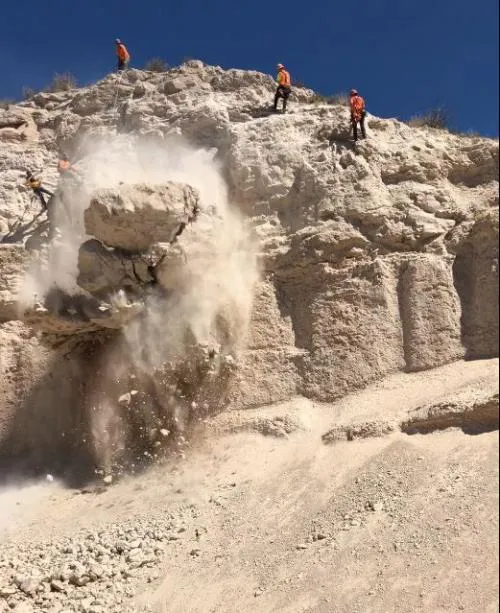

Rock Scaling
Rock scaling removes loose or unstable rock from slopes, cuttings, and highwalls. Explore manual and mechanical methods, their applications, and how scaling fits into a rockfall mitigation project.
Rockfall Barriers & Fences
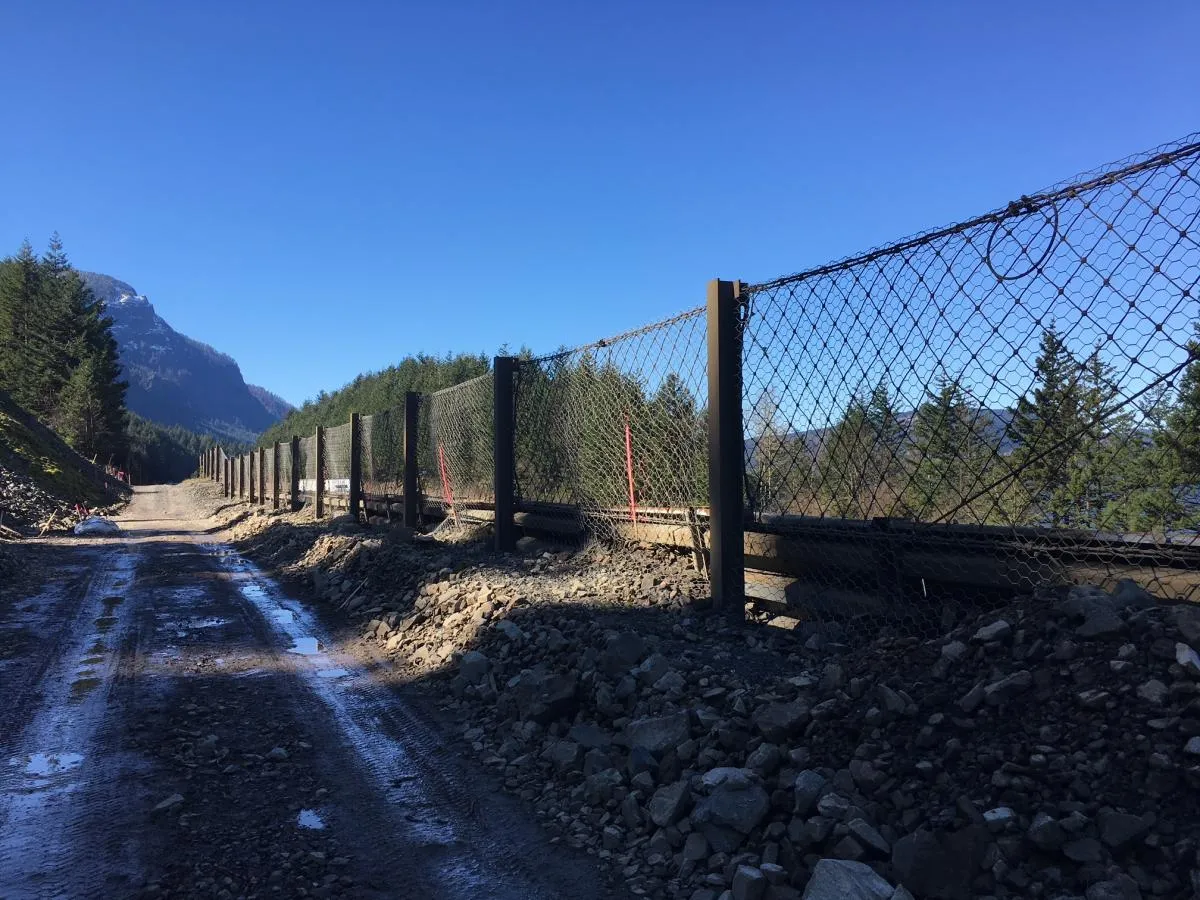
Engineered catch systems that intercept falling rock before it reaches roadways, railways, or infrastructure. Flexible posts, energy-absorbing brake elements, and ring or cable nets dissipate impact energy through controlled deformation.

TECCO Mesh System
TECCO is a steel mesh system made by Geobrugg for stabilizing rock and soil slopes. Plates and ground anchors secure the mesh against the face to help hold loose material in place.
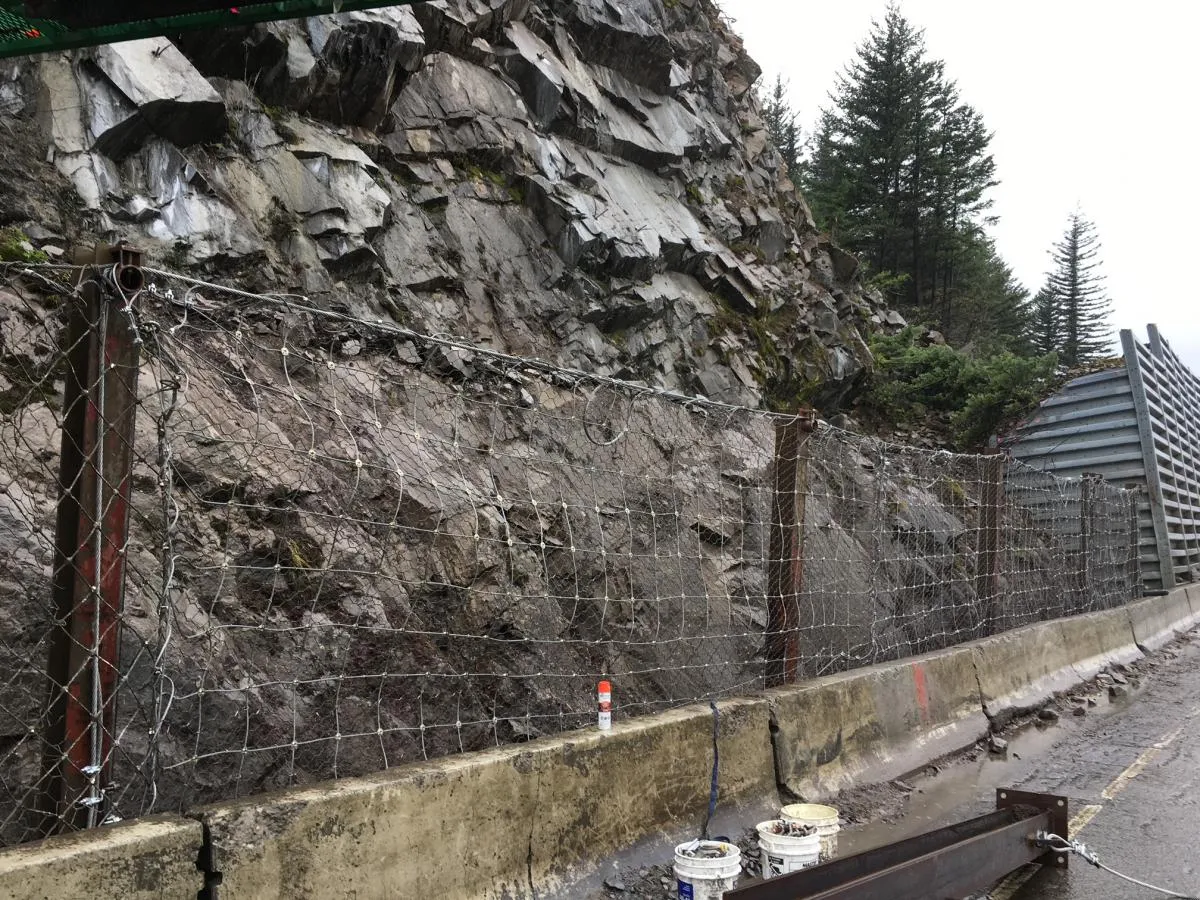

Wire Rope Netting
Wire rope netting uses a network of steel cables to help contain loose rock. The net, anchors, and connections are selected for the rock size and forces expected at the site.
Industries Impacted
We serve these sectors with specialized expertise in their unique challenges and regulatory requirements.
Our Work
See how we've delivered this solution for clients across the country.
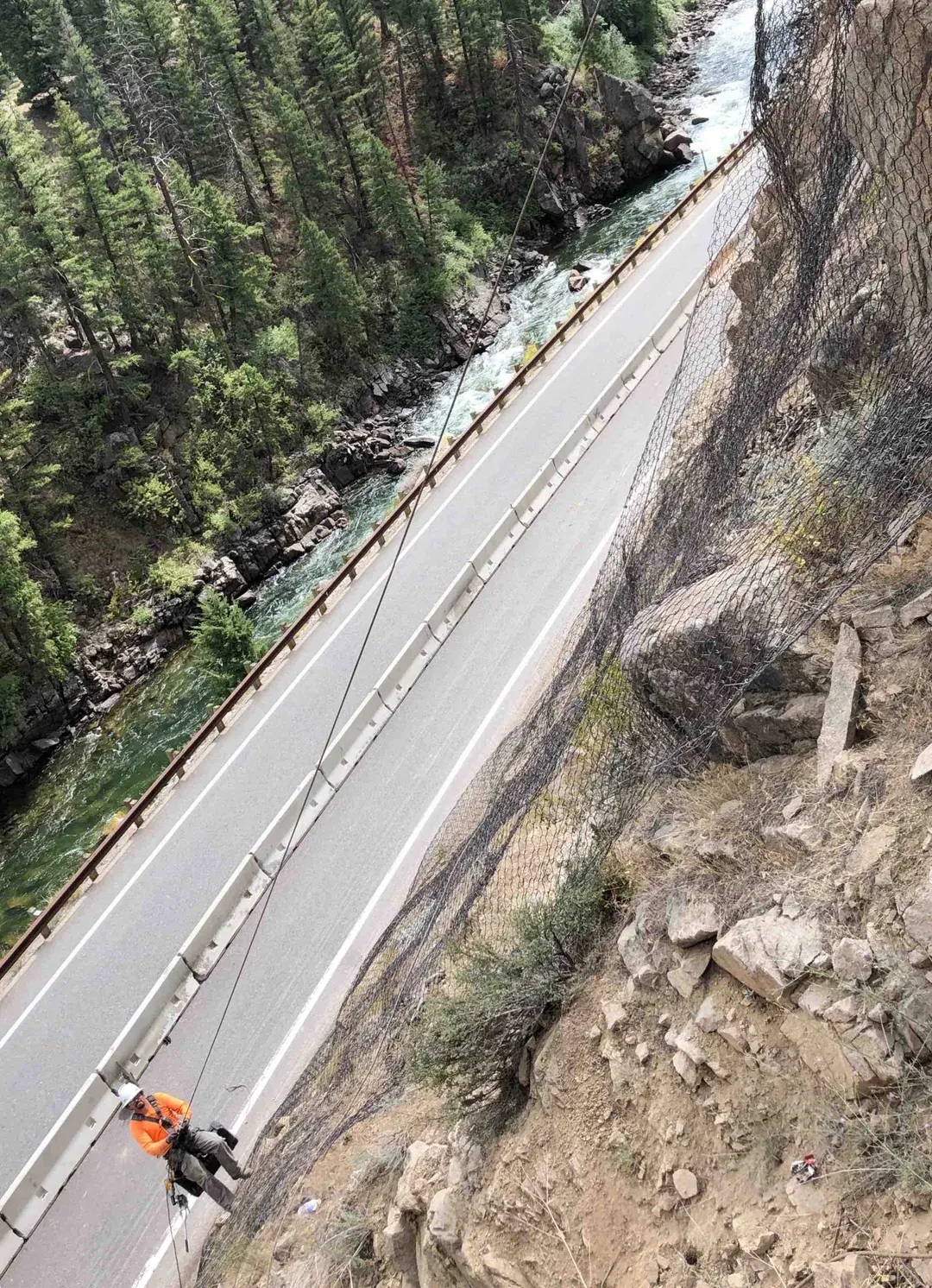
I-70 Corridor Stabilization
Installed 50,000 sq ft of high-tensile mesh and performed extensive scaling after a major weather event.
Ketchum-Challis Highway Scaling
Large-scale rock scaling and mesh installation along 3 miles of Highway 75 through the Sawtooth Mountains.
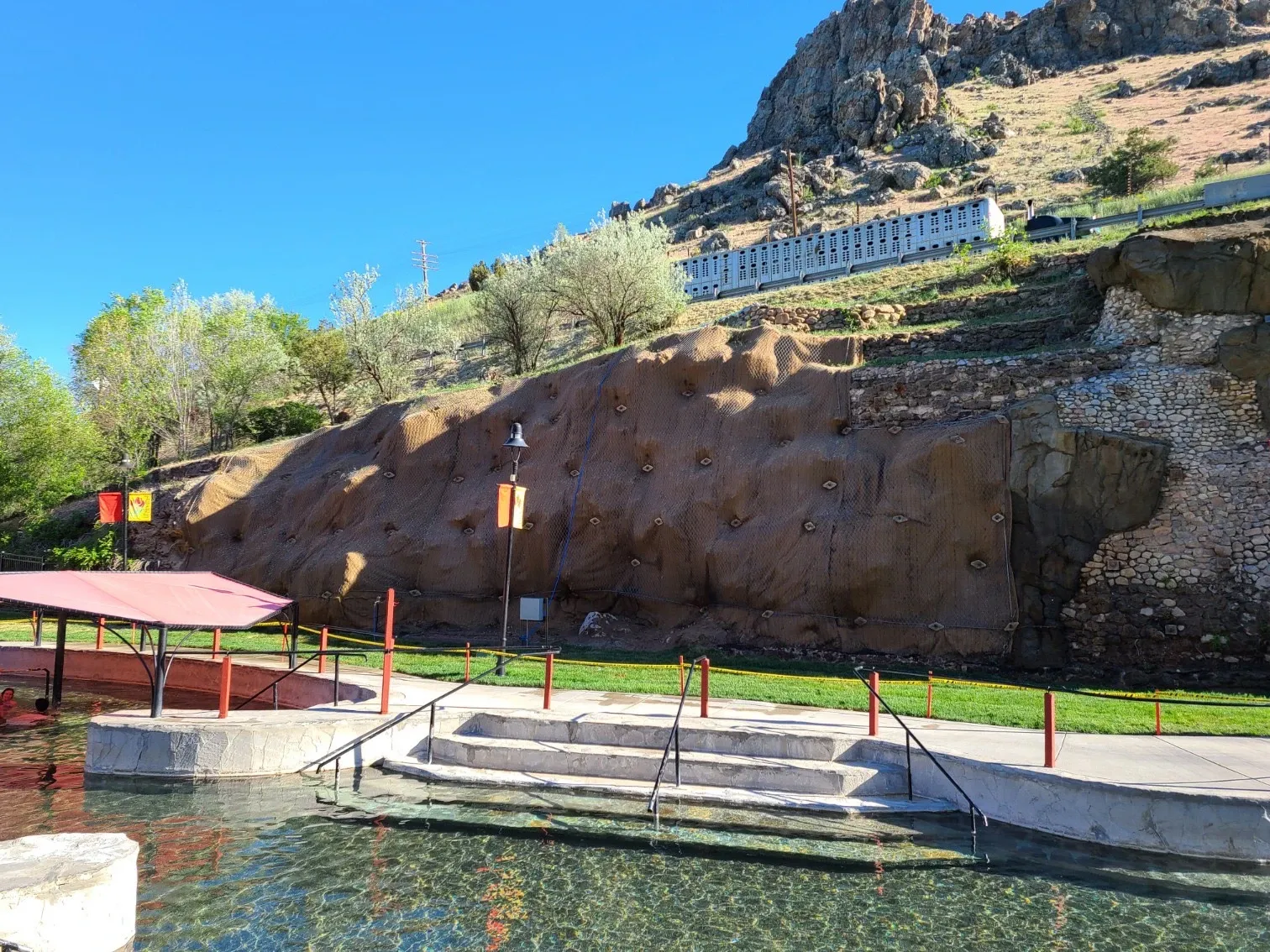
Lava Hot Springs Slope Stabilization
Multi-phase slope stabilization project protecting the historic hot springs resort and Highway 30 from an active landslide.
Rockfall Mitigation FAQ
Our Service Area
Rock Supremacy supports projects across the United States from divisions in Bend, Oregon, and Blountville, Tennessee. Contact us to discuss your location, access, and scheduling needs.
For an active incident, call our team. Dispatch and arrival depend on the hazards, location, access, equipment needs, and crew availability.
Western Division (HQ)
Eastern Division
About Rock Supremacy
Founded in 2011, Rock Supremacy specializes in rockfall mitigation, slope stabilization, and geotechnical construction.
From the steep canyons of Colorado to the coastal bluffs of California, we've developed proven methodologies for stabilizing slopes and protecting critical infrastructure. Our crews are trained to work in the most demanding vertical environments.
Learn More About Us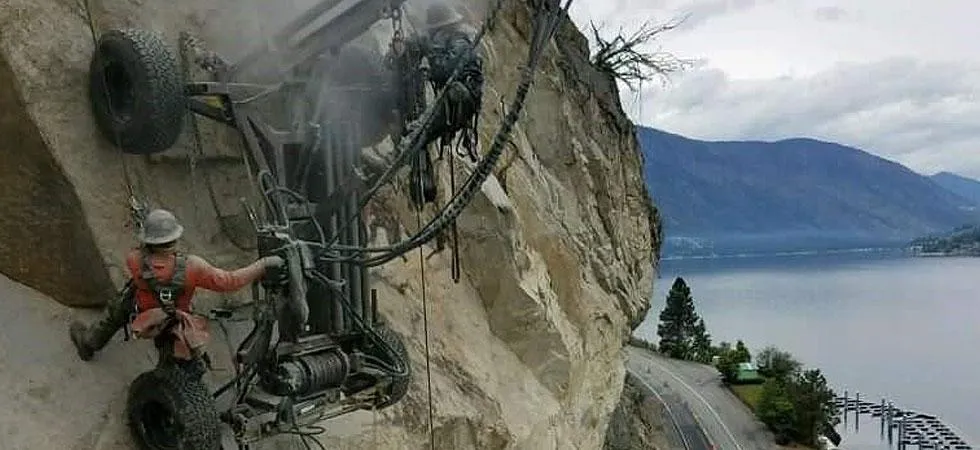
Planning for Safe Work
Site hazards, access, rescue arrangements, and nearby operations shape the work plan. Our crews use safety briefings and equipment inspections to prepare for the work ahead.
Include site induction, training, and crew qualification requirements with your project information. We review these with the owner and construction team before mobilization.
Our Safety ProgramClient Testimonials
Trusted by DOTs, engineering firms, and property owners nationwide.
Deploy Us
Ready to discuss your project? Our team is standing by to assess your site conditions and develop a custom rockfall mitigation solution.
Include any licensing, insurance, and crew qualification requirements in your inquiry so we can review them for the project.
Request Consultation
Ready to Get Started?
Our team is standing by 24/7 for emergency response or to schedule a site assessment for your next project.